
Loading cart contents...
NYFF62 CURRENTS: Program 3: Signal to Noise
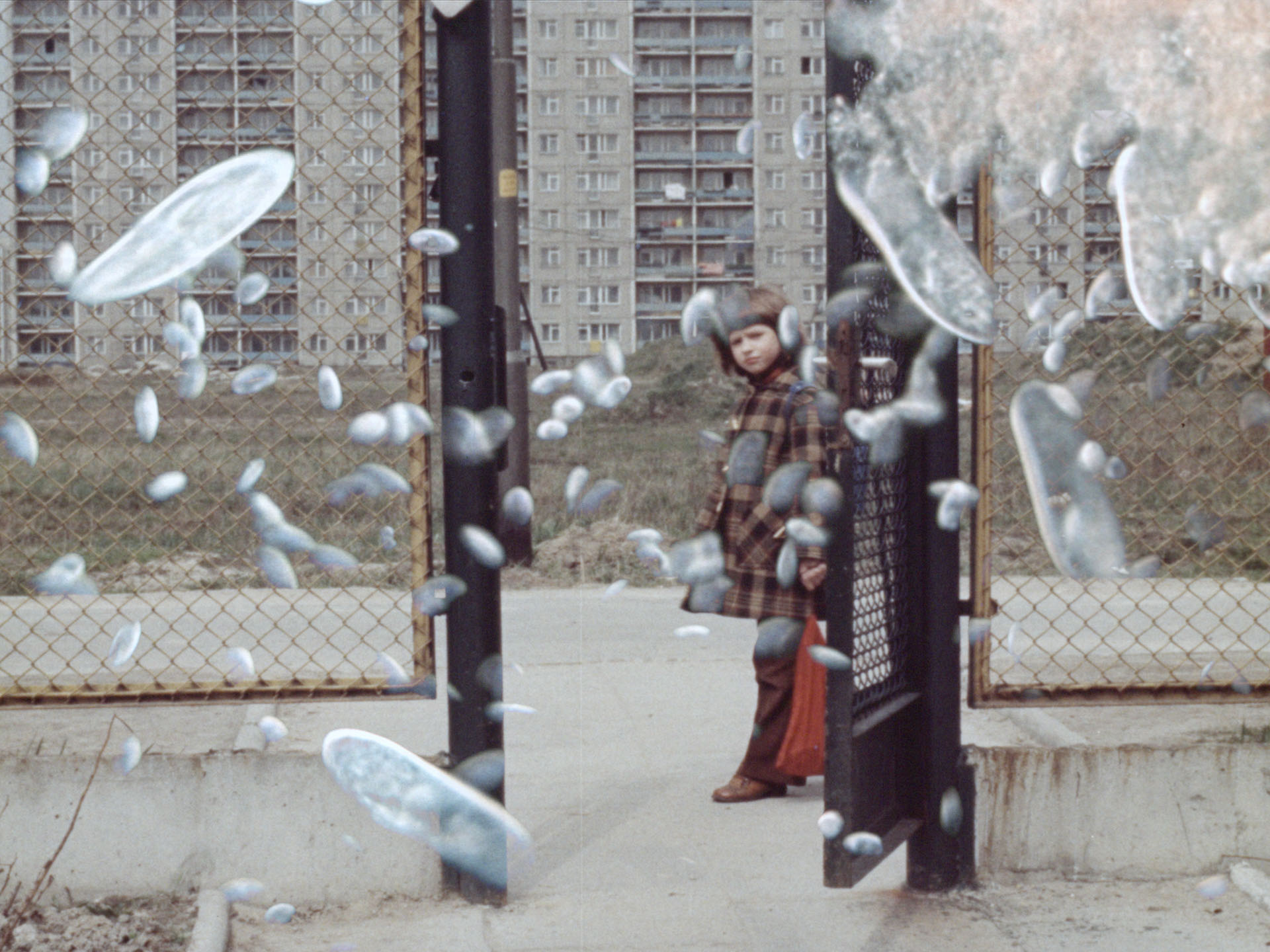
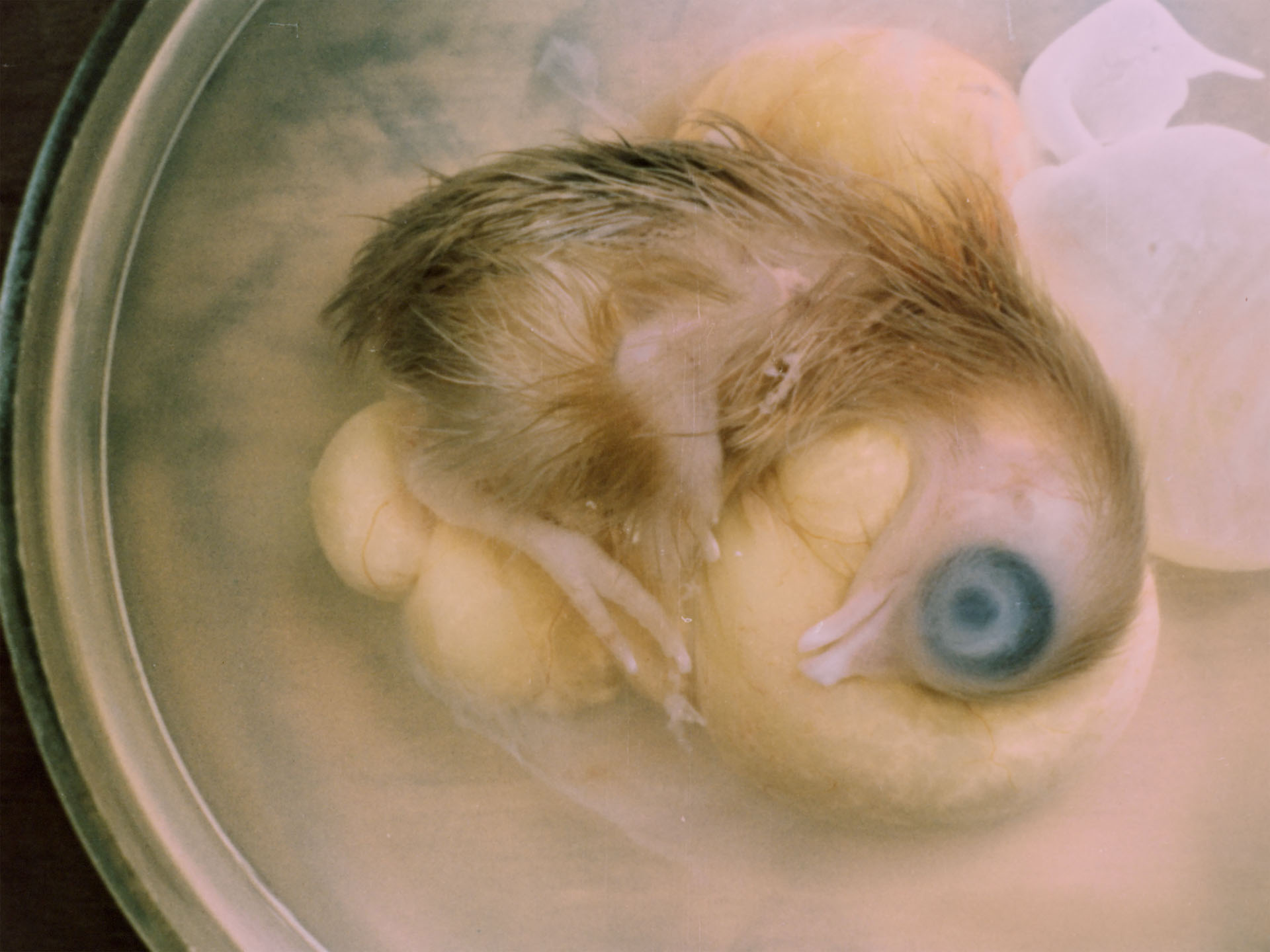
In these two films, Grandmamauntsistercat (2024), by Zuza Banasinska, and Like an Outburst (2024), by Sebastián Schjaer, signal and noise are intertwined, such that the instrumentalizing impulse driving the distinction between them is queried. The duality of nature and artifice is dissolved and re-formed, loosely along the lines of the fashionable concept of entanglement in physics, though here extended to embrace the wider world in order to dissolve traditional models of observer and observed. In both films this is done through conventional montage, the juxtaposition of shots of landscape or technology with microphotography of amoeba or embryos. Both films make use of archive footage, which is recontextualised by contemporary footage or voiceover.
Grandmamauntsistercat, by Zuza Banasinska, was developed at the Visual Narratives Laboratory: Essay Film Studio of the Film School in Lódź, (the school that fostered the important group of experimental filmmakers in the 1970s, including, most famously, Zbigniew Rybyczyński and Josef Robakowski, whose name appears in the end credits as the author of one of the clips that appears). Grandmamauntsistercat is a montage compiled from cold-war era films made at the Educational Film Studio of the same institution. Thus, on one level it functions as a retrospective reflection on how attitudes were expressed in film at the time, and which in both manifestations— the original and the re-worked— address questions of formation, self-image and the ideological character of education.
Much of the material consists of scientific and medical experiments and school scenes, as well as shots of the urban landscape, cars (Polski Fiats) and buses. What emerges in looking at this often-banal material now is how strongly linked it is to an image of Eastern Europe as austere and plain but also ambitious, represented by scenes including robot arms and computer labs. A curious sense of the uncanny arises from the banality of the imagery. Children play at being adults–smoking unlit cigarettes and drinking imaginary beer while complaining about the brakes on the car. Occasionally the footage has been filtered to look as if it’s reflected in distorting mirrors. It’s unclear why this was done, since it already has the strangeness that inadvertently arises from viewing imagery from the recent past. The story of Baba Jaga, a mythic, earth mother-like figure in Slavic folklore, runs through the film as a narration. She is a sorceress who lives by her own rules in a forest hut and who eats principally young girls, though she is also sometimes known as a kindly old witch who helps the hero in myth. Her disruptive character manifests in the teeming natural forces embodied in images of multiplying cells and liquids pulsing through channels in microscopic matter. She represents the monstrous feminine, an unruly presence running counter to the orderly, patriarchal society of well-drilled children and beauty queens who populate the screen.
The film offers a feminist critique of what now manifest as laughably sexist and patriarchal views. At one point a confident male voiceover declares: “A woman is a well- made head, face and dress.” Thus the film is focused on the way misogynistic attitudes, expressed in the historical representations of Baba Jaga as hideous and repulsive, persist in the present via the juxtaposition of the myth with the overwhelmingly genteel contemporary material of the film.
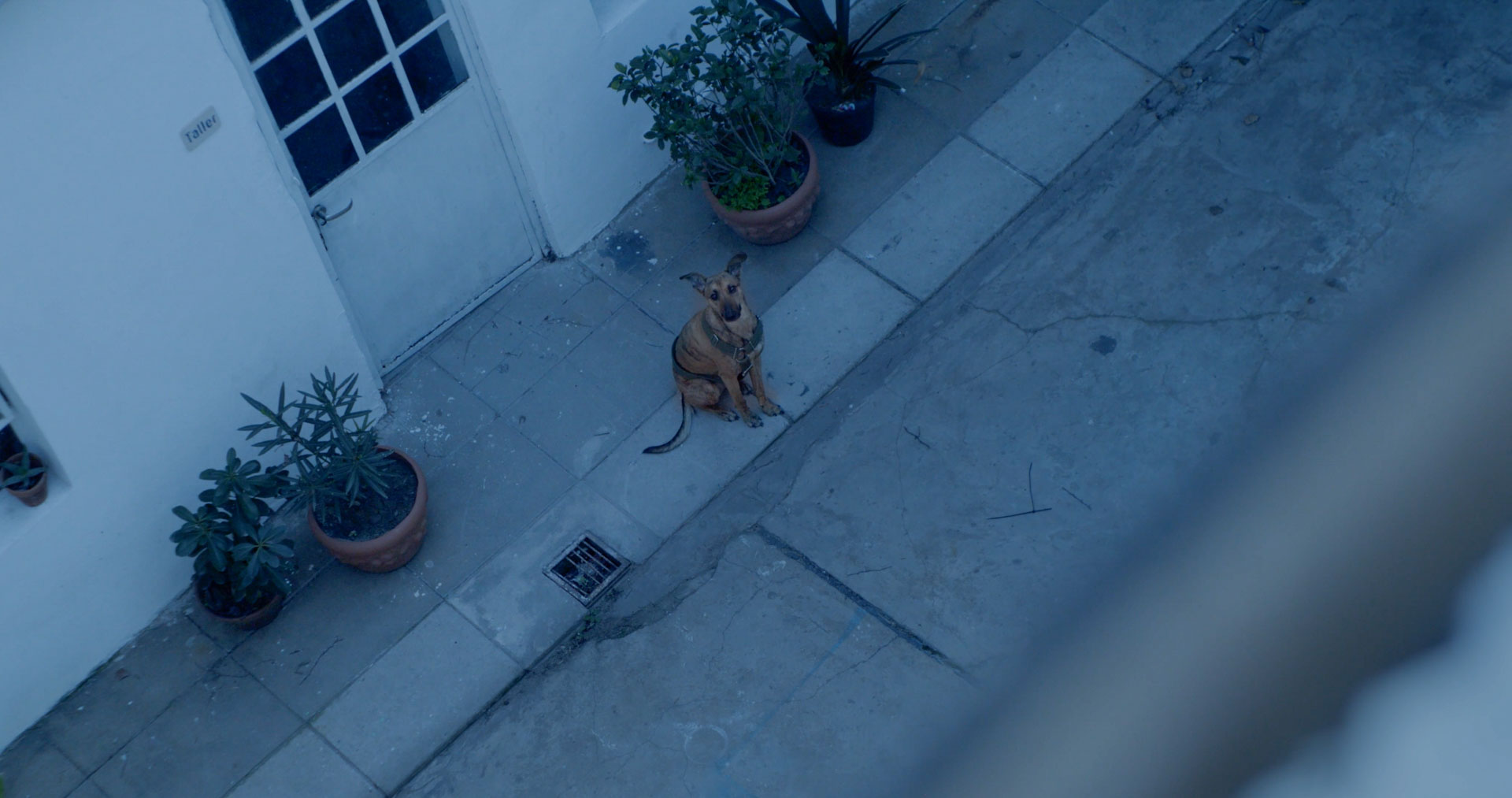
The first shot in Like an Outburst by the Argentinian filmmaker Sebastián Schjaer, is of an airplane view of clouds in a pastel pinkish-orange sky, ambiguous in that it could be negative or positive. The subsequent sequence is reminiscent of Antonioni’s Red Desert in its distanced, static conjuring of a landscape at once familiar and alienating; upward looking views of communications masts with their blinking red lights, silhouetted against a darkening sky, accompanied by a soundtrack of birdsong mixed with bleeps and other abstract noises. These wide shots are intercut with downward looking close ups of a dog and a cat. These candid shots are always partially occluded by objects in the extreme foreground, stressing the position of the camera and imparting a furtive, voyeuristic sense. A cryptic conversation overlays a similarly shot sequence, in negative, of two workmen removing lumps of concrete from an urban space. This is followed by a microscopic image of amoeba, which immediately gives way to found footage of a road trip and what look like abandoned workers’ huts in a semi-desert landscape.
At the end we return to the opening shot of clouds, by now confirmed as a negative image, when a bird, in the form of a white silhouette, flies through the scene. The final, static image appears to be a plastic button but is revealed, through refocusing, to be the moon. Thus, the film conjures up ideas around levels of comprehension and assumption, almost as an informal psychological test, reminding us of the cognitive processes we bring to bear in watching films. Equally the way the natural and artificial are inevitably entwined is stressed, even as they are conventionally contrasted in the opening sequence. Yet even here the artificial—the communications masts—is dominated by the sky around them, and the animals form part of the urban fauna, which includes the many other animals less frequently seen (mice, rats, foxes, etc.). The film is deft in demonstrating these entanglements, but what does this point to?
Both films fit into the context of current thinking around feminism and ecology respectively, but the question is how can arguments be developed and focused? Banasinska’s film is the more resolved, since it strongly implies the ongoing problems with repressive representations of women. Although it’s using old footage, it’s forward looking in a political sense, even if it’s unable to suggest how such problems might be definitively resolved.
Review by Nicky Hamlyn
Disclaimer: This page is for your personal use only. It is not to be duplicated, shared, published or republished in whole or in part, in any manner or form, without the explicit permission of the publisher, author, and copyright holder(s) of the images.