
Loading cart contents...
NYFF63 CURRENTS: Back Home
Courtesy of Film at Lincoln Center
It has been over ten years since Malaysian-Taiwanese veteran director Tsai Ming-Liang wrote a script. Ever since Stray Dogs (2013), he has adopted a quasi-documentary style rooted in an ascetic pursuit for developing a cinema beyond the contemporary film industry’s myriad of constraints. This has most often resulted in non-theatrically released works, only on view at festivals, museums, or retrospectives, and special installations in which he exhibits his own writings alongside his moving image — such as at the Kaohsiung Museum of Fine Arts in Taiwan this past May, with his monumental monastic marathon piece, Walker.
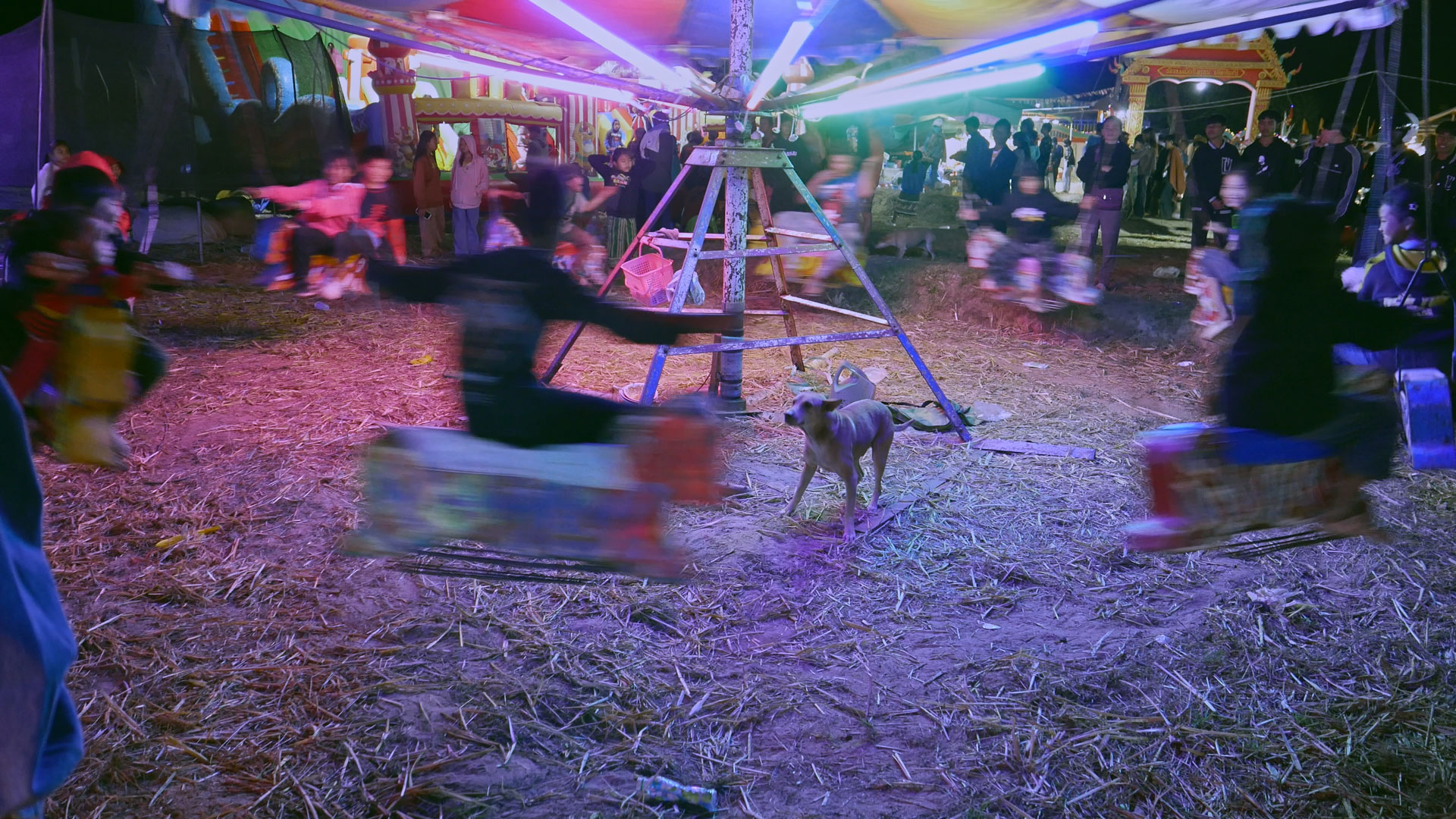
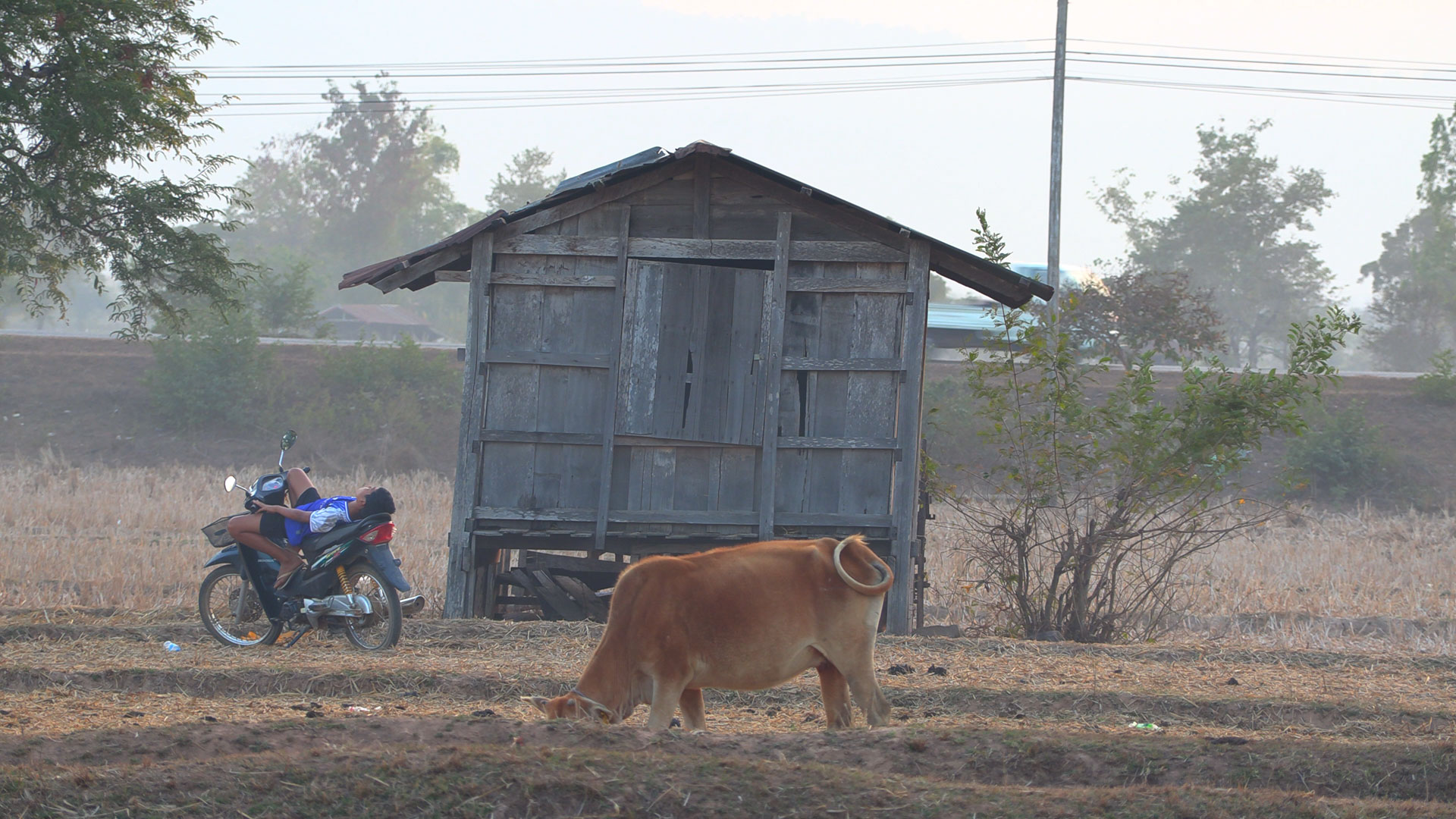
His latest film Back Home (Hui Ja), which debuted out of competition at Venice before its North American premiere at NYFF, is another such manifestation of his longing for greater filmmaking freedom. Featuring his Days (2020) star Anong Houngheuangsy, Tsai documents Anong’s return to his home village in Laos. At just 65 minutes, with no dialogue, no voice-over, no text on screen, no conventional information, this spare and contained film offers an open portrait of a landscape seemingly bucolic yet mundane. Anong appears only twice in its entirety, once at the beginning, of his face while sleeping on a moving vehicle, and later in a scene where he shares a meal with his family. Images of idiosyncratic building exteriors, endless rice fields, crowded marketplaces, cemeteries, Anong’s family home, a variety of livestock, and roadside activities, fill the rest.
Courtesy of Film at Lincoln Center
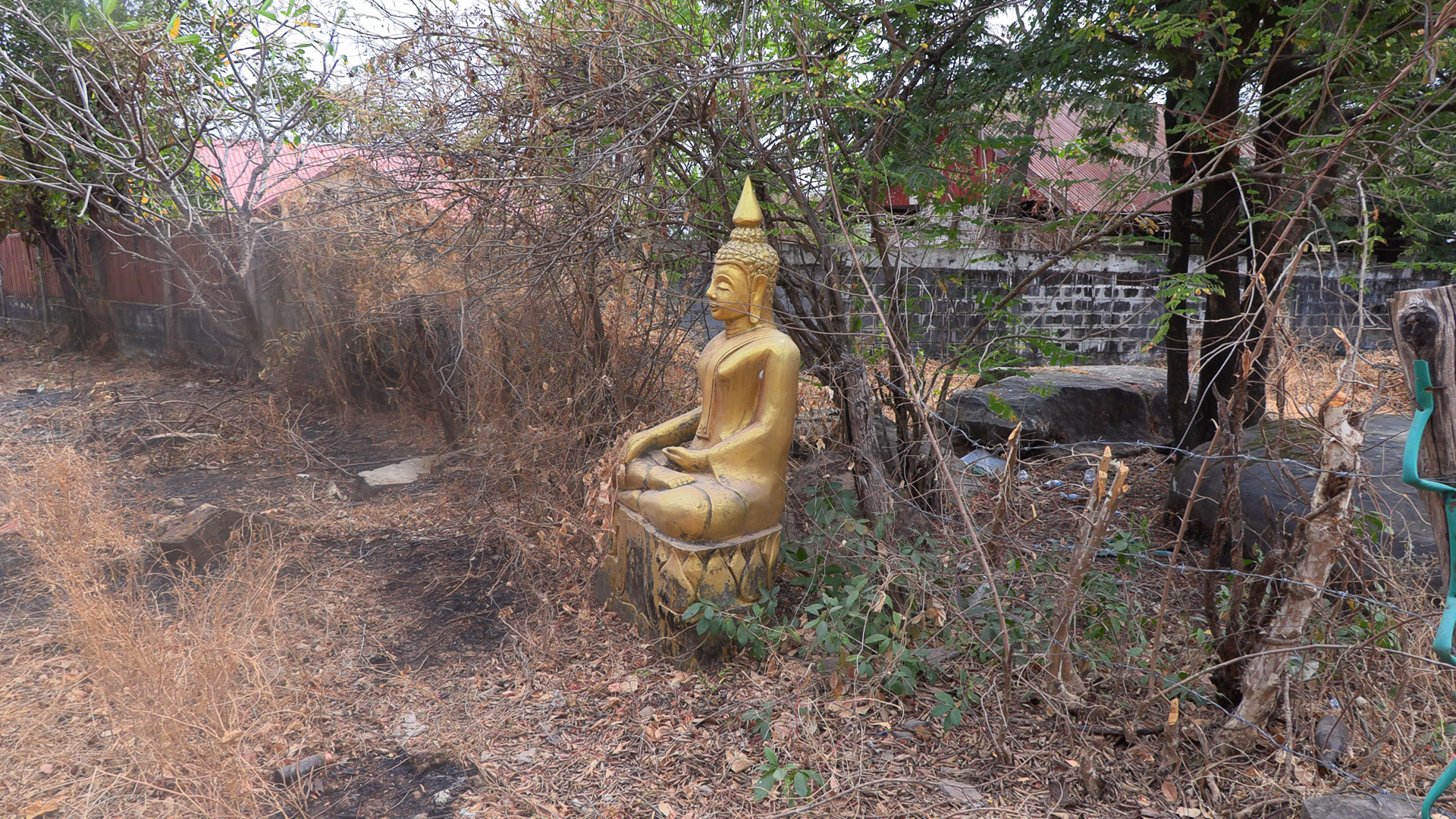
In a signature Tsai sequence that procures the uncanny through peculiar behavior, a scene develops of a group of men, fully clothed from head to toe, as they wordlessly carve several statues of Buddha by the side of a road. The statues are in various stages of completion, from untouched stone blocks to half-chiseled forms and others pre-painted in gold. An incessant drilling dominates the diegetic soundtrack; drilling that could be taken for a construction of a high-rise, or a significant road repair, reveals to be the making of these holy figures. What has possibly led to this circumstance? We see the finished sculptures left standing unassumingly in unspecified yards and streets.
Tsai shot the entire film over two weeks on a small Canon camcorder and a Leica camera and has called it an example of his “Handsculpted Cinema”. However pared down from his earlier narrative-driven legacy, what resurfaces, consistent with his broader body of work, is the idea of an outsider with a home that is neither in the flesh nor a space. The cinematography particularly denotes this mystery as the film is composed of images that are slightly askew; the various building exteriors, often made of wood and metal, elevated on bamboo stilts, are never photographed level. It is in a minor slant that makes you vaguely tilt your head. Partly askance, as if a place is never the same as you had once remembered, or having one leg that is longer than another, this return to a homeland is suggested as a somewhat strange and fragile experience.
Courtesy of Film at Lincoln Center
In fact, in the synopsis, Tsai describes how he accompanied Anong to Laos in early 2025, noting that “before long, we found ourselves leaving again.” People often end up inevitably in a different place than where they are from. For reasons that remain silent and unspoken, even in a moment of return, there is already a reason to leave.
Back Home premiered at this year’s New York Film Festival in the Currents section along with the short film Ecce Mole (dir. Heinz Emigholz).
Review by Yuka Murakami
Disclaimer: This page is for your personal use only. It is not to be duplicated, shared, published or republished in whole or in part, in any manner or form, without the explicit permission of the publisher, author, and copyright holder(s) of the images.