
Loading cart contents...
Anne Waldman’s Continuing Voice in Outrider
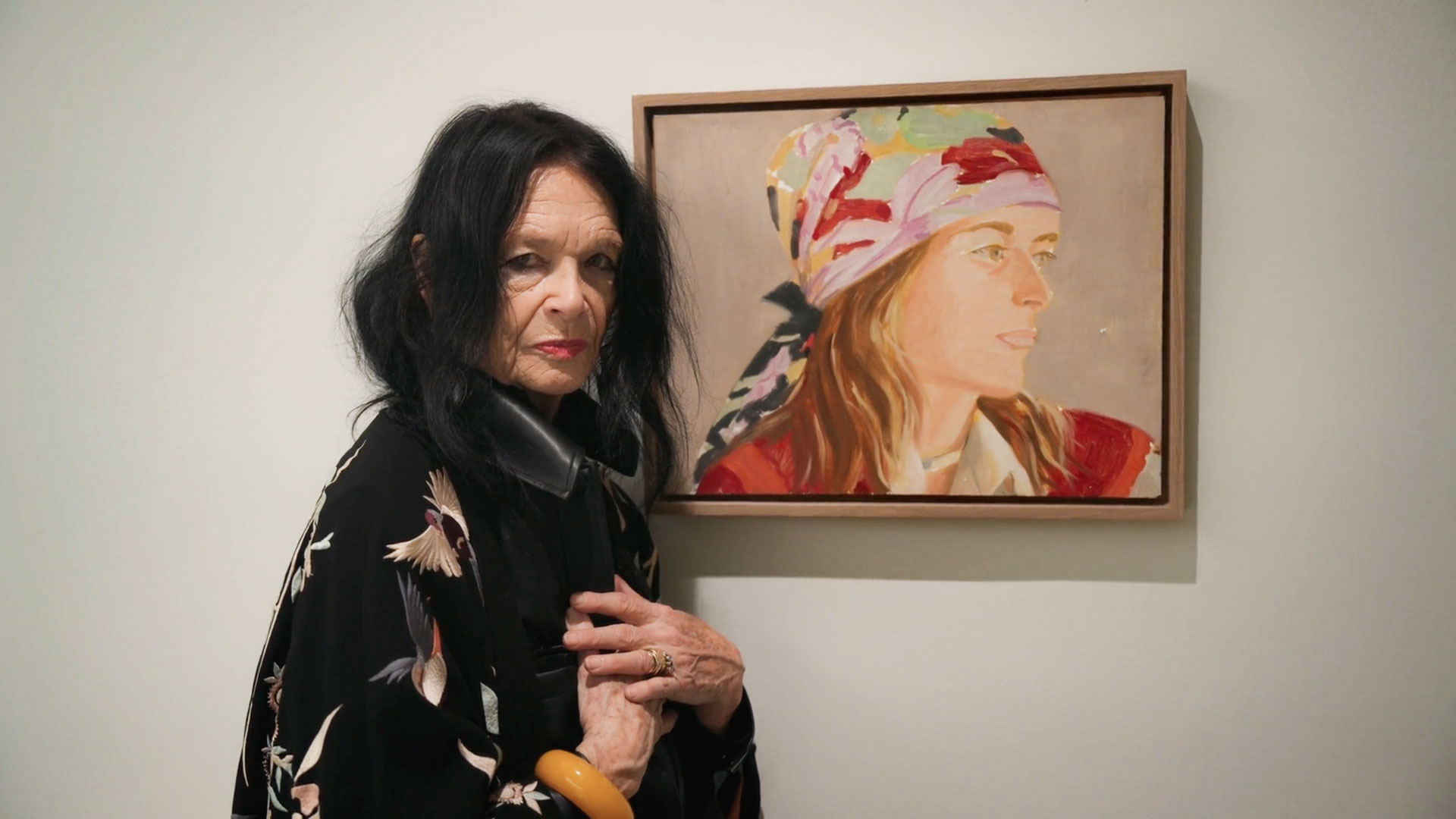
Anne Waldman is the legend, the poet, the voice that has echoed across decades of performances, of a woman speaking, and one who has embodied activism on personal, political, and spiritual levels. On April 4, 2025, at a screening at Anthology Film Archives, Outrider, a new documentary by Alystyre Julian, celebrated Waldman’s life and career. The theater was packed, and the feeling was joyous as the crowd sat enthralled at this film by Julian, a talented and dedicated young woman filmmaker who successfully presented the work of a now 80-year-old Waldman, a poet who continues to inspire all those who love the magic of the word.
And that evening was no exception. During the question-and-answer period, for example, the response from the audience was enthusiastic, but questions from two young women raised a central concern. The women asked variations on, “How do I deal with the hesitation, the loss of confidence, in the process of writing?” And while a friend of mine was impressed that the young women had found the courage to ask the question, the answer is also important. Waldman’s response was directed to the form of speech itself, to the work of it, and in having something to say. “Only you can say it.” Waldman has given such responses to other aspiring poets over the years, as the founder in 1965 of the Poetry Project Marathon at St. Mark’s Church in Manhattan, and then as the Director of the Poetry Project from 1968 to 1978, and as a co-founder and professor at Naropa University’s Jack Kerouac School of Disembodied Poetics in Boulder, Colorado.
Important too are Waldman’s professional relationships with Beat poets such as Alan Ginsberg, William Burroughs, and Jim Carroll. As Outrider demonstrates, being one of the only women in this august male group, a fact commented on by Ginsberg himself, should come as no surprise. In the documentary we see Waldman speaking for herself, and in poetry, and as a body in motion, always at work, across expressions of joy, rebelliousness, and even motherly care. In Outrider we encounter a receptive cinematic vision of one of America’s most important women poets.
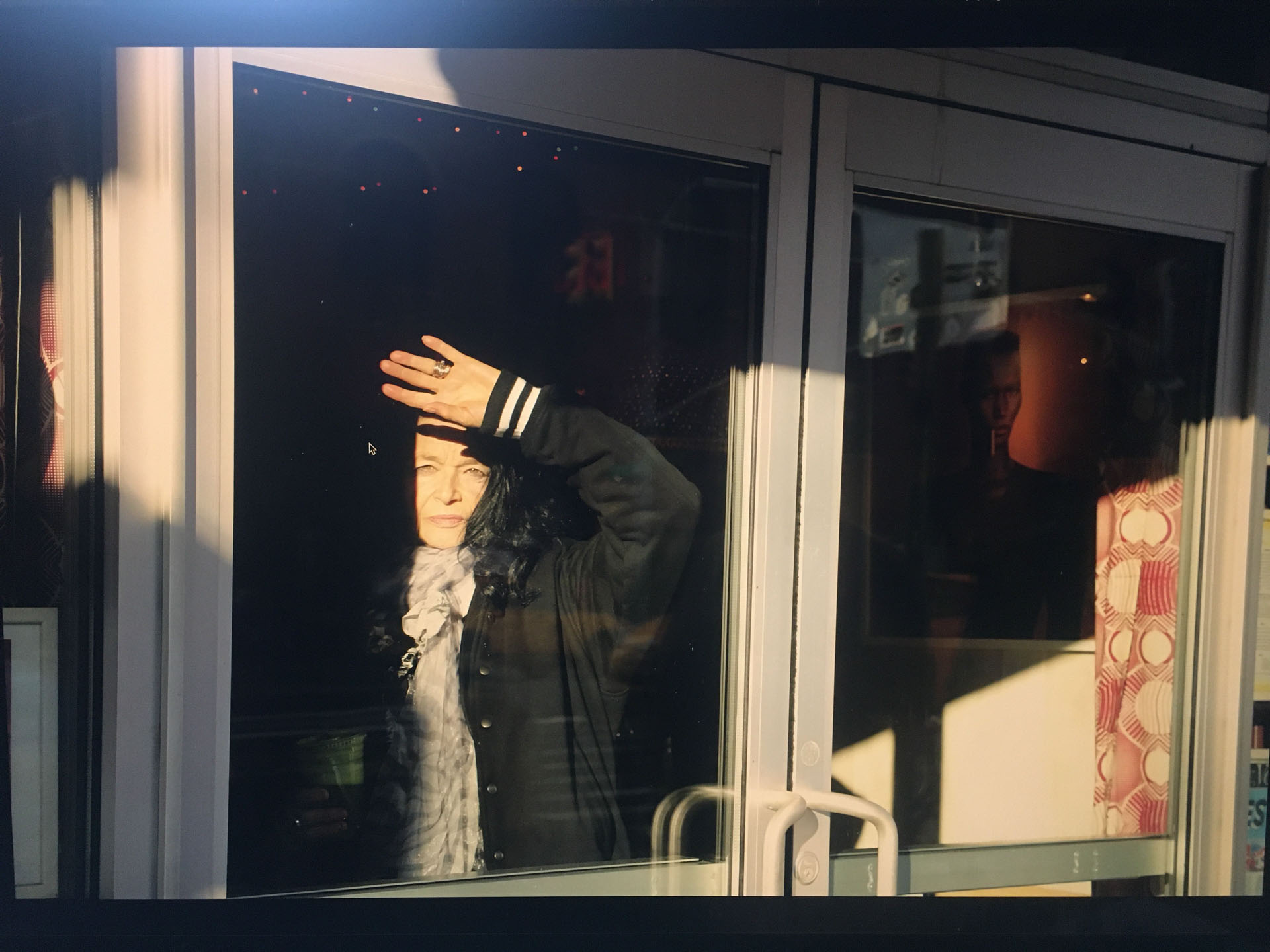
Outrider is distinctive in its rhythm. Waldman provides the first-person voice-over narration, and Julian acts as an omniscient observer, bringing us images and sounds of Waldman through varying stages of her life. In one interesting sequence, Waldman recalls growing up in New York’s Greenwich Village in the 1950s. We see and hear the jazz clubs and the bohemian communities, but we also encounter the post-WWII practice of having children wear dog tags to school to identify their bodies in case of an atomic blast (!). Waldman remembers that this elementary school practice frightened her, but not enough, and we can now see this as an interesting backdrop for the poet’s later growth. The young Waldman was further shaped by a GI father and a stay-at-home mother with intense but stifled creative aspirations. The daughter soon grew into the rebellious 1960s, making her ferocious poetic voice heard, along with her decisive sense of the body, with expulsions of breath, both on paper and in performance. For Waldman the pain, power, and potency had to be expressed.
In Outrider we see Waldman as she engages her performances with intonations and strides captured on camera. One of her poems, “Fast-Speaking Woman” (1978), influenced by the chants of Mexican poet Maria Sabina, rails against society’s restrictions on women’s identities, with Waldman voicing alternate views.
Excerpts of this poem, the entirety of which lasts nearly 30 minutes, are presented at intervals throughout Outrider:
I’m the gadget woman
I’m the druid woman
I’m the Ibo woman
I’m the Yoruba woman
I’m the vibrato woman
I’m the rippling woman
I’m the gutted woman
I’m the wounded woman
The above excerpt comes from the Bob Dylan-directed film, Renaldo and Clara (1978), for which Waldman provided the poetry. Throughout Outrider, a thrilling mix of Waldman’s poems, as well as a jazz, score accompany the images, giving a context, but also an emotional backdrop, to Waldman’s free-flowing world.
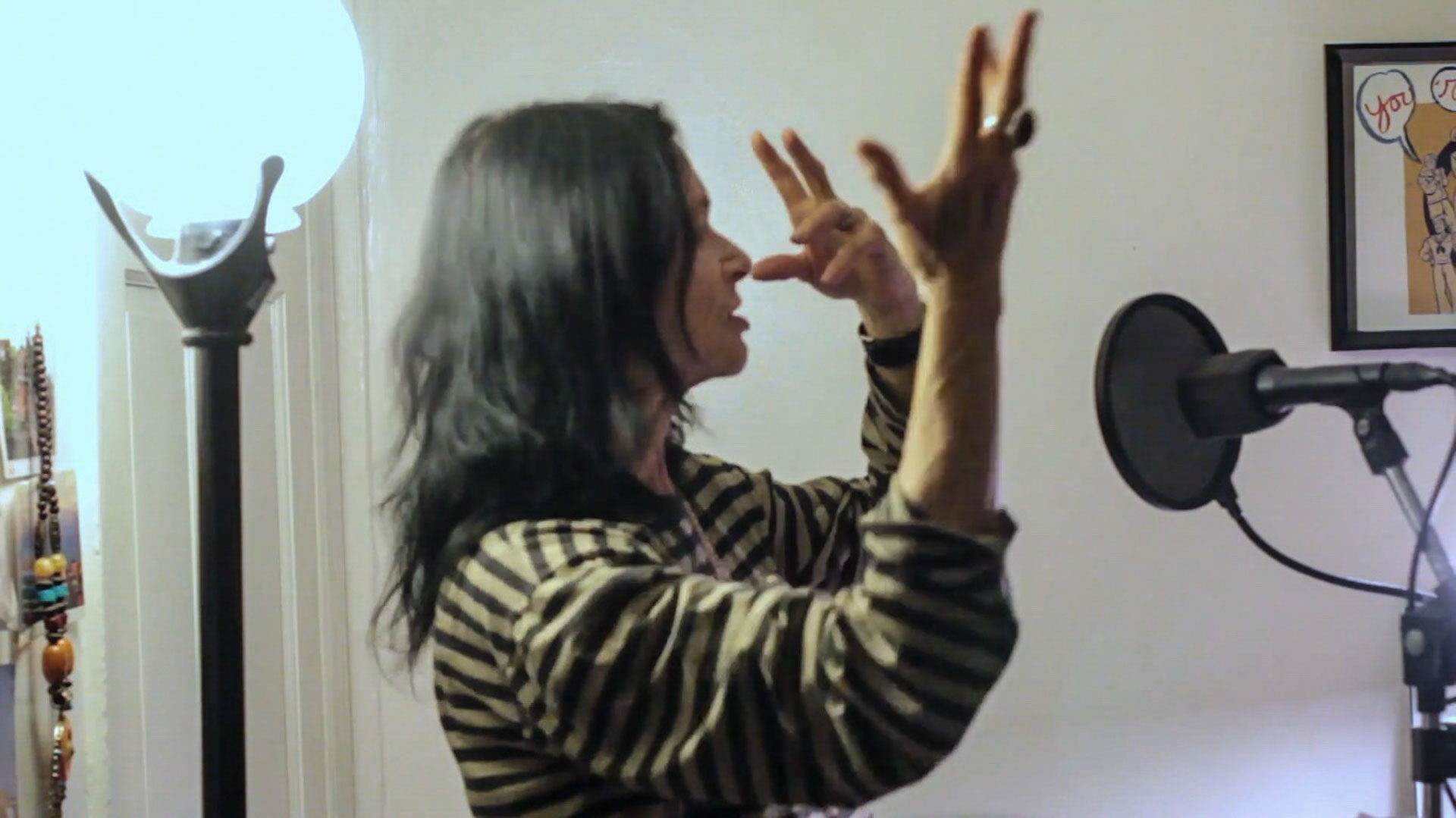
In Outrider we see different stages of the poet’s life, as a lovely young woman with fire in her belly, and as an older woman with a wrinkled skin, but all the more beautiful for it. Other recollections include Waldman’s travels abroad, along with her heartbreaking poetry, the pleading for Gaza, the serenity of a Moroccan home, the fears for the Manatee as an endangered species, and the poet’s cry for justice by leading a crowd of demonstrators in a call-and-response interchange. Waldman asks: “What will they say about us centuries hence?” And then she continues by answering, as the crowd repeats each phrase:
They let the animals die.
They let the plants die.
They killed the air.
They killed the water.
They killed each other.
They killed language.
Julian takes us through the stages of Waldman’s life while showing us the poet still wandering through time. A song and a chant and a vision coming to us by the inspired filmmaking—Julian is a documentarian who understands Waldman’s passion, as stated by the poet herself, for “the word in public space.” Julian features Waldman in performance, in rehearsal, at home, and on walks in the country. We experience the locations and spaces and the people who gather there. There is a physicality to the film, underlined by the sonorous quality of Waldman’s elocution throughout, providing a confrontation with the poet’s spirit, her intelligence, and her art.
Review by Vera Dika
Disclaimer: This page is for your personal use only. It is not to be duplicated, shared, published or republished in whole or in part, in any manner or form, without the explicit permission of the publisher, author, and copyright holder(s) of the images.