
Loading cart contents...
NYFF63 CURRENTS: Program 1: Below the Surface

Basma al-Sharif, Morning Circle (Morgenkreis) (2025), frame enlargement. Courtesy of Square Eyes.
In “Archive Fever (1995)”, Jacques Derrida posits the archive’s function as determining the “question of the future”. That question reverberates throughout the first strand of shorts featured in this year’s Currents section of the New York Film Festival. By collectively formalizing the curatorial necessity of cataloging (counter)narratives, these films deftly and implicitly contravene the resurgent fascist orthodoxy currently vying for supremacy over our planet’s future.
Morning Circle (Morgenkreis) is Basma al-Sharif’s latest exploration of the fraught psychogeography of exile. The morning ritual of a political refugee (Panos Aprahamian) in Berlin taking his son Adnan (Mohammad Ali) to Kindergarten hews closer to a linear narrative than usual for al-Sharif. Yet the film is peppered with visual and aural interventions, notably the offscreen questions from a state official (Philip Widman) about the father’s affinity to “our way of life” and television broadcasts of the genocide in Gaza.
The camera in Morning Circle initially assumes a surveillant role as it circles its human subjects. Yet the film’s climax, when Adnan escapes his Kindergarten with the help of his classmates, superimposes Adnan’s circular descent down the school stairs over the bedlam of his classroom, transfiguring the film’s circular motif into a liberatory movement. Al-Sharif’s final juxtaposition with archival footage of Palestinians returning to their homes this past spring enshrines a form of escape that is only sealed by a return, physically or otherwise, to a concrete conception of home.
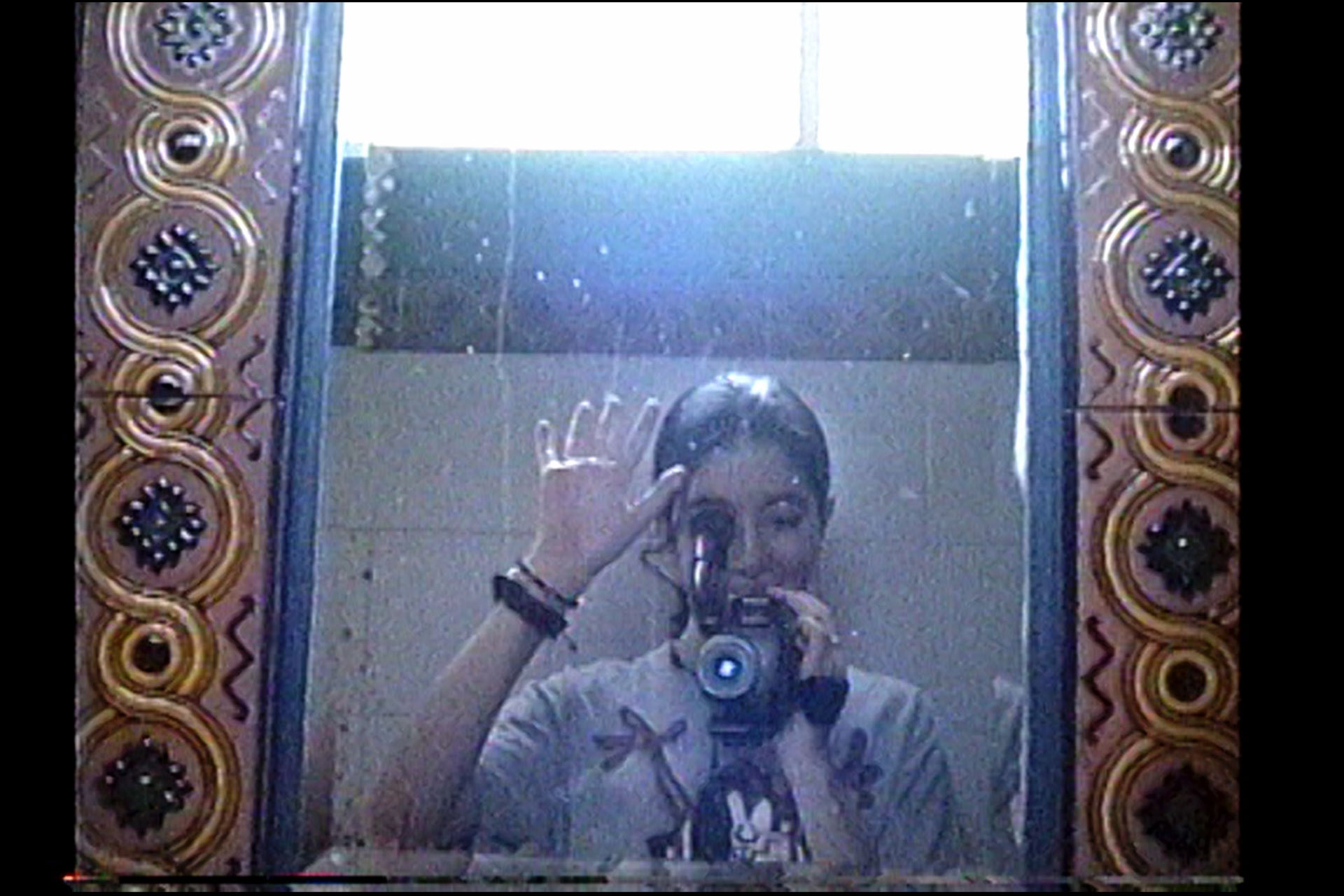
Oscar Ruiz Navia, Tigers Can Be Seen in the Rain (2025), frame enlargement. Courtesy of Square Eyes.
A different sort of homecoming, Tigers Can Be Seen in the Rain narrows this scope to an intensely personal level. Oscar Ruiz Nava crosscuts between camcorder home movies of his sister to the snowy, eerily depopulated streets of Montreal rendered in the deceptively haptic warmth of 16mm. The present-day footage, noticeably informed by Anita’s absence, is accompanied by aural excerpts from calls and voice messages that obliquely chronicle her death from cancer.
The film is hermetically sealed by design, fitting within Hamid Naficy’s designation of an accented film that freely employs nostalgia to generate a sense of spatiotemporal displacement from a stable grasp of “home”. Yet Ruiz’s embalmment of time is guided by memory as much as reality, the hauntological dimensions of public space informed by the sister who called him Papeto. Tigers Can Be Seen in the Rain slowly reveals its raison d’etre as an act of custodial care, enshrining the memory of one human being as a node within a grander network of cultural history.
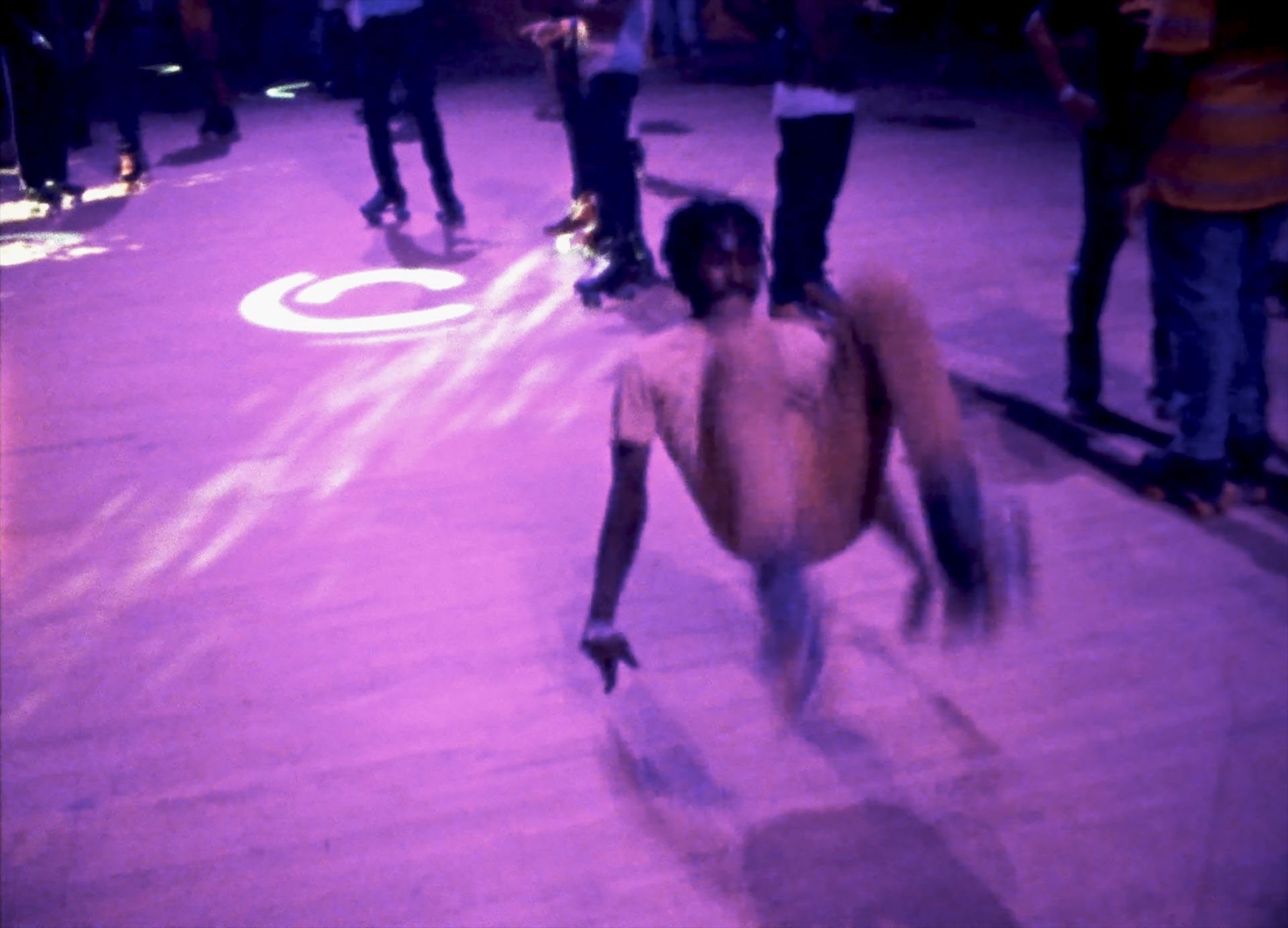
Kevin Jerome Everson and Claudrena N. Harold, Dooni (2025), frame enlargement. Courtesy of Picture Palace Pictures.
Kevin Jerome Everson and Claudrena Harold’s Dooni picks up on this theme by revolving around the legacy of black musical icon Sylvester. Everson and Harold accompany footage of young dancers with a recitation of Sylvester’s eulogy, continuing their focus on black historicity vis-a-vis third spaces. In this regard, the film serves as a companion piece to the duo’s Chelsea Drive from earlier this year, yet Dooni foregrounds performativity, both in the specter of Sylvester and through the recitation of his eulogy by Timothy Johnson.
By creating a parallel narrative to the words of the eulogy, the colorful splendor of these third spaces bolster mythologies of black joy. I was reminded of So Mayer’s words that “Archiving and classifying, as acts of domination, speak of their fear of what they are trying to contain. The anarchive is the record of that uncontainability.” With Dooni, Everson and Harold provide another addition to their own anarchive.
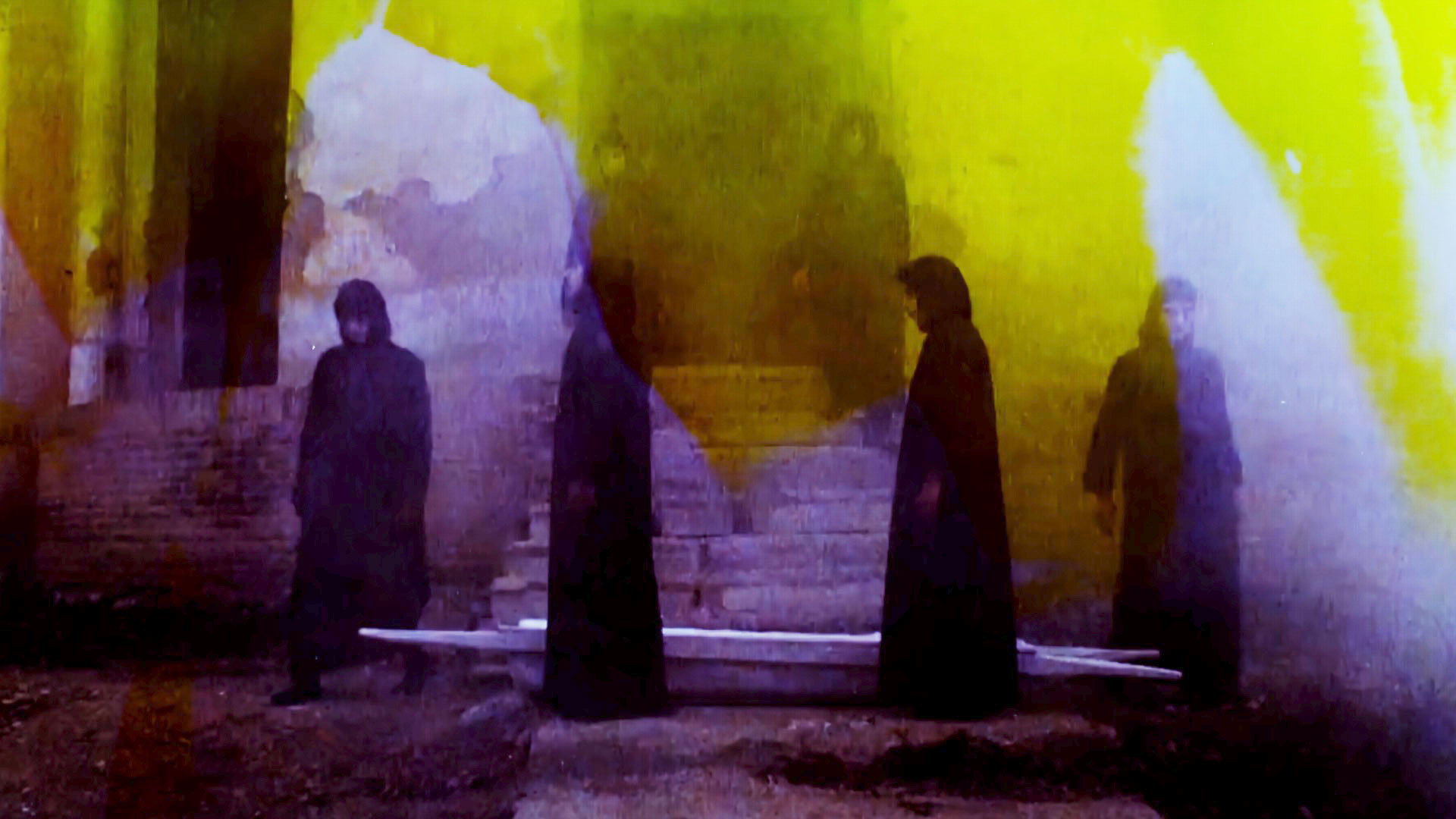
Maryam Tafakory, Daria’s Night Flowers (2025), frame enlargement. Courtesy of Square Eyes.
Maryam Tafakory has also constructed her own anarchive through a filmography that freely culls clips from Iranian Cinema. Daria’s Night Flowers is her latest act of repurposing the archive, in this case to construct a narrative about a writer whose story of queer love sends her husband into a jealous rage, leading to medical suppression of her desire. His efforts, we’re told, culminate in violence.
The film’s citation of Dioscorides harkens to a pre-Islamic Iran while simultaneously intersecting with historical trauma (the Iran-Iraq War) caused by nationalist dogma. History and memory are explicitly evoked, all for the purpose of reconceptualizing care and healing that exists beyond the constraints of patriarchal oppression. One of Tafakory’s angriest works, its floral motifs of renewal contain promises of violent retribution unique in her corpus. Contained in that rage is a yearning for an elemental power mediated by a semiotically reconstituted cinema.
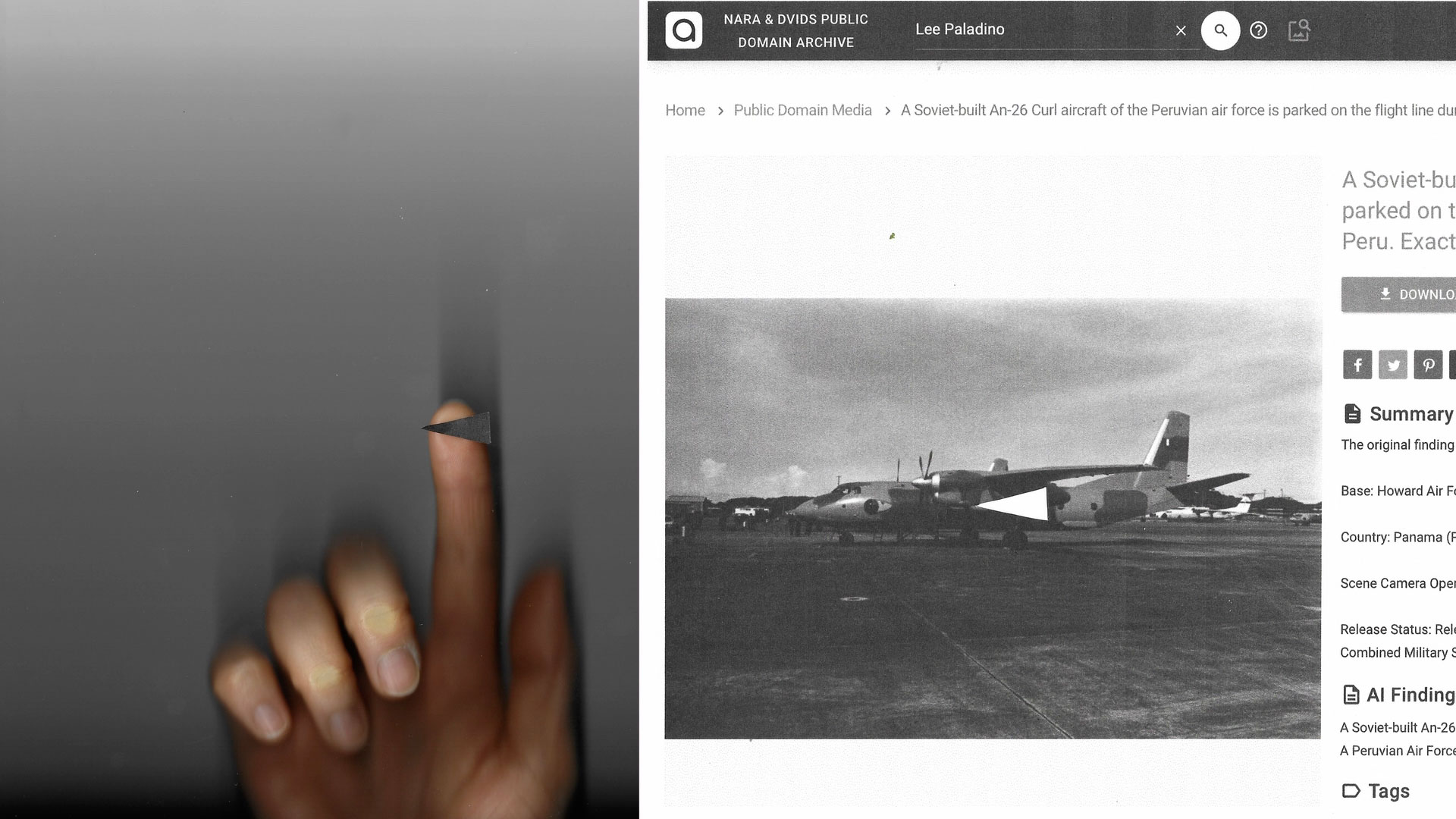
Justin Jinsoo Kim, A Real Christmas (2025), frame enlargement. Courtesy of Film at Lincoln Center.
Justin Jinsoo Kim’s A Real Christmas forgoes the elemental in its investigation of a noticeably digitized archive that contains and atomizes personal histories. The history in question belongs to Lee Kyung Soo, an orphan adopted by a U.S. Navy officer during the Korean War. Kim’s Google search for Lee yields scattered news clippings that give fitful shape to his biography. Enlarged, pixelated segments of these clippings are overlaid with simple shapes that flit across the screen to the tinny music of American cartoons.
Kim’s playful manipulation of Americana is shaded by a steady undercurrent of melancholy. The black triangles and ovals that flit across the screen are visual interventions that evoke a childlike quality, embodying the boy whose archival existence ends in 1967 after he became a scene camera operator for the army. This ironic wrinkle underscores how Lee’s perception of the world remained firmly contained under the umbrella of empire, and Kim’s implication of technology within the obfuscation of his subject’s identity confronts a timely topic with a lightness of touch.
Review by Nick Kouhi
Disclaimer: This page is for your personal use only. It is not to be duplicated, shared, published or republished in whole or in part, in any manner or form, without the explicit permission of the publisher, author, and copyright holder(s) of the images.