
Loading cart contents...
Prismatic Ground: Los Angeles, The Mills, and A Moon
It is the age of found footage. Whatever that hopelessly diluted term now means, it is clear that nearly every kind of film production is dominated by the reuse of images. Streaming services are flush with documentaries sourced from moving image archives. The internet has wrought a remix culture, an endless recycling of memes, sounds, and clips. Found footage also remains a favorite of the experimental filmmaker, who is often both limited in budget and fascinated by broader questions of image circulation. With each year, the amount of repurposed footage seen in festival films—small and large, independent and commercial—seems only to grow. Even the online-dominant form of the video essay, as the critic Savina Petkova recently observed, is increasingly finding a home on festival screens.1Savina Petkova, “The Video Essay Finds Its Place at Film Festivals,” Talking Shorts, September 6, 2025, https://talkingshorts.com/the-video-essay-finds-its-place-at-film-festivals.
Clearly, there is a strong appetite for works that try to make sense of a world drowning in images. At this year’s Prismatic Ground, three standouts emerged, not only for their substance, but for their wonderfully dissimilar rhetorical approach to the filmic vernacular of our time.
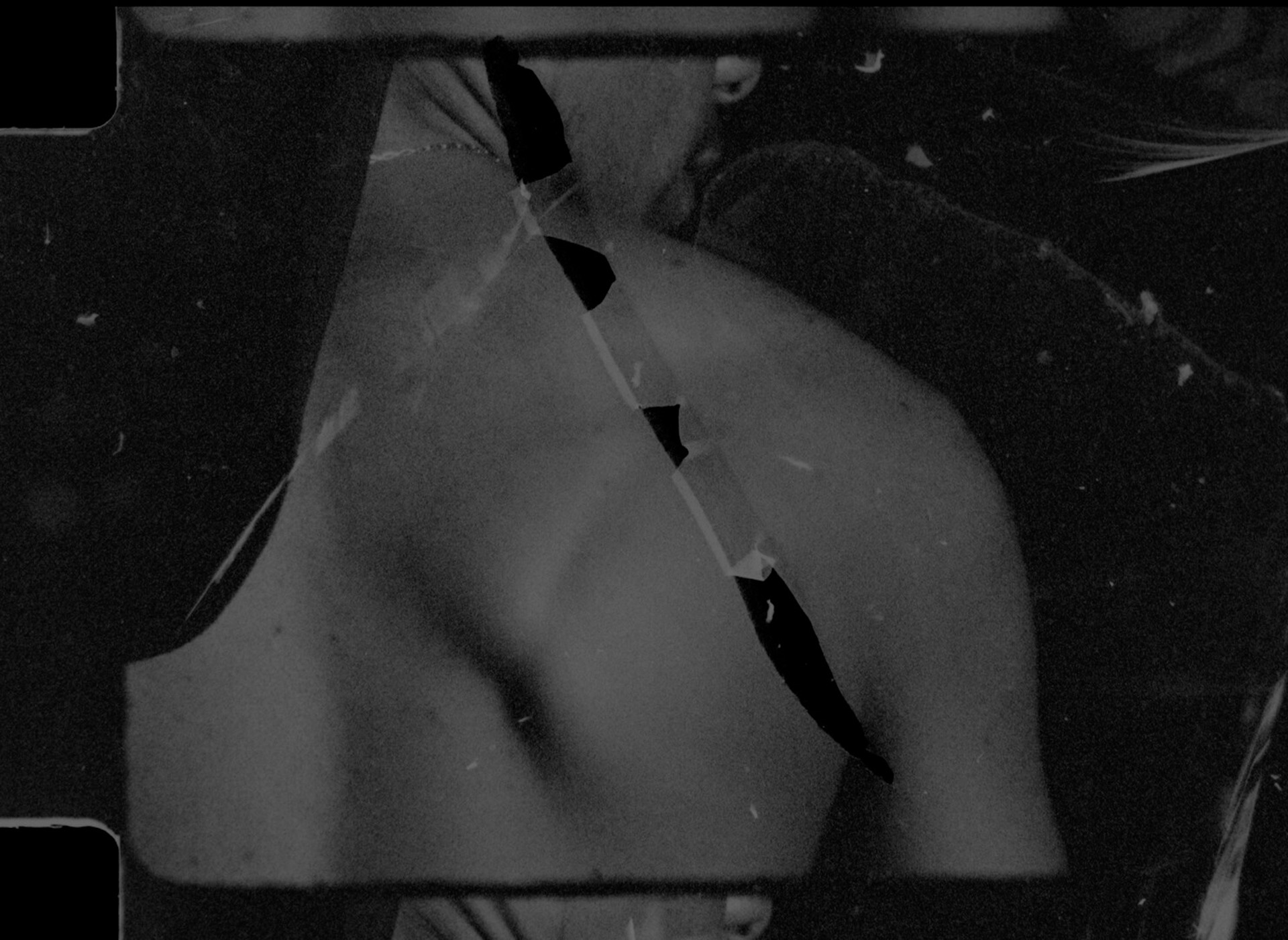
The World Doesn’t End When You Do begins with the most venerable four columns on the World Wide Web: the façade of the building that houses the Internet Archive. Next comes the logo of the African American Home Movie Archive, founded in 2014 by archivist Jasmyn R. Castro. And then the final credit: “From Prelinger Archives San Francisco.”
With a bibliographic introduction, marlow magdalene powerfully subverts the usual form of citation (if it comes at all) for found footage filmmaking. He foregrounds the archives, making clear the film’s appropriations in a way that previews, and thus centers, its broader treatment of the cyclical recycling of history. To see the physical space depicted in the logo of the Internet Archive is to imagine the literal flow of knowledge, a physical coming and going that, in turn, leads to building and understanding.
The throughline of the 10-minute film is Los Angeles, magdalene’s hometown, which he captures, via the archive, in all its complicated glory. Skateboarders, video gamers, and shots of the Pacific Ocean rub against images of violence, from fires and riots to newspaper clippings with transphobic headlines. Spliced throughout is footage from an abattoirmeat plant, evoking once again a feeling of raw assemblage not unlike the film’s own creation.
And then comes a shift. The medley of found materials gives way to original, scratchy film stock, capturing magdalene himself before the camera, from a distance, his body and face partially revealed. He paces back and forth. Then turns and stares. Cut back to a found image, this time a pair of disembodied, interlaced black and white legs, kicking as the image spins. It is a powerful juxtaposition, as the filmmaker literally inserts himself into the archival record, all part of an effort to grapple with the history of one’s home from within.
The physical relationship between film and filmmaker(s) manifests quite differently in the expanded 16mm film performance, Thunderland, as a matter of fact (Y’a Matière au Pays des Éclairs). Expanded cinema performances have become a staple of Prismatic Ground. Last year, it was a double projector performance from Arc. In 2023, Gaëlle Rouard wowed the audience by herself running the original copy of her handmade film, Darkness, Darkness Burning Bright, through the 16mm projector. This year, it was Charles-André Coderre and Frédéric Boisclair’s turn to take over Light Industry, the cozy East Williamsburg screening room that has housed all three performances.
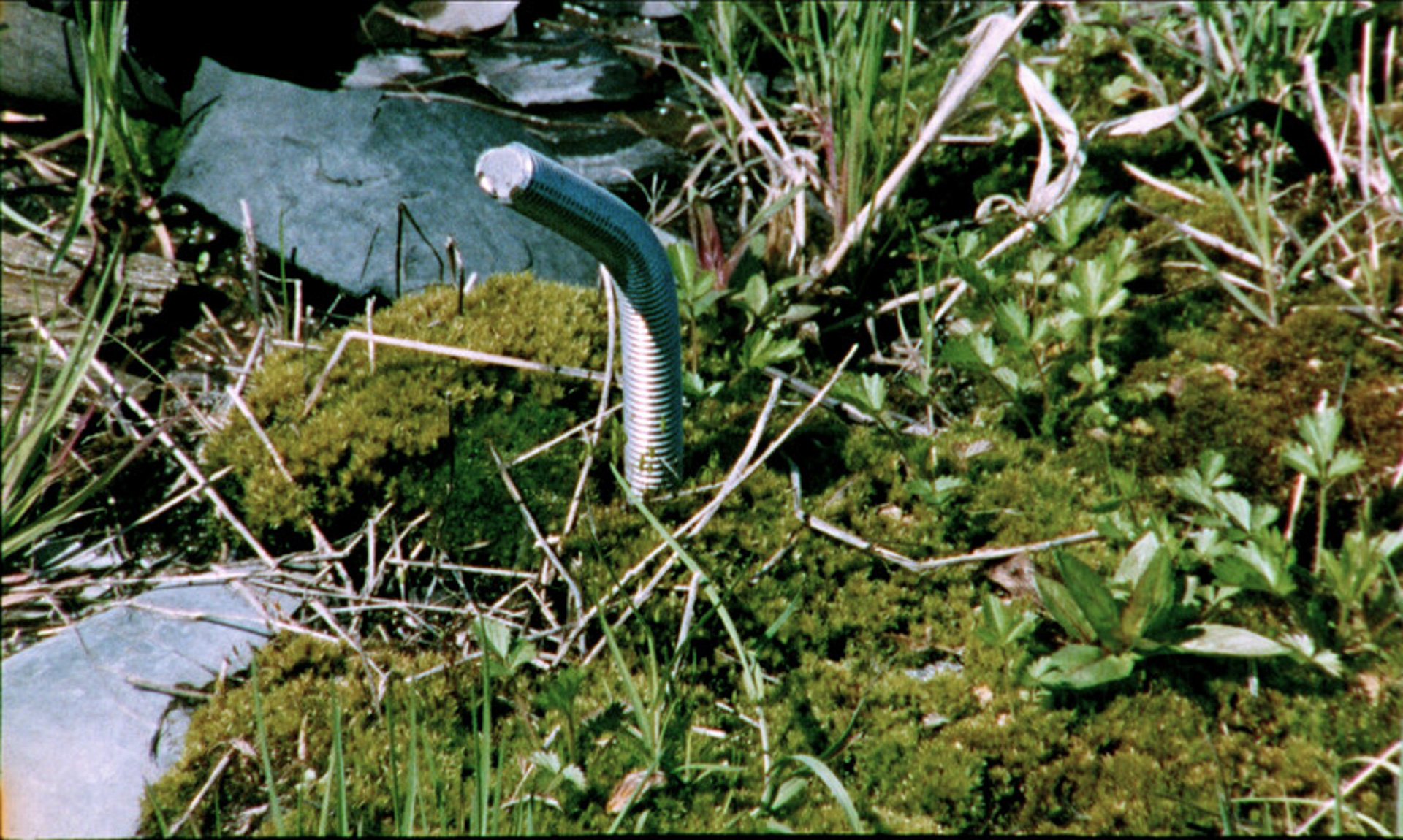
For Thunderland, the musician Boisclair and the filmmaker Coderre came together for a performance that stretched across multiple projectors and an original soundscape, all performed by the creators themselves. The origins of this 45-minute performance trace back to the city of Shawninigan, near the Saint-Maurice River in Quebec. The filmmakers’ discovery of 1970s corporate films documenting the labor of workers in the region’s hydroelectric, aluminum, pulp, and paper plants led to their returning to the vacant sites to shoot footage of what remains. Shot by amateur filmmaker Yvon Leclerc, the footage was simply labeled: “scraps.”
Thunderland blends a decades-long film corpus to create a hypnotic mix of past and present. The film performance simultaneously evokes decay (of both film stop and physical space) and the proud histories of these sites. Boisclair, himself a descendant of plant workers, creates a stunning soundscape that echoes the sounds of the plant, giving them a modern feel that aims not to replicate, but reimagine in the service of this new, celebratory creation. Even at its most expressive moments, the presence of the filmmakers makes this personal connection visceral by reviving this labor through the very act of performance.
And then there is the moon. Whereas magdalene turned to the images of a few archives, and Boisclair and Coderre to the discarded images of their province, Tadhg O’Sullivan’s To The Moon collects images of that lovely rock from across global film history. A crew of 14 cinematographers contributed a medley of original footage, thus offering its own sacrificial addition to the body of films that take up the moon as its subject.
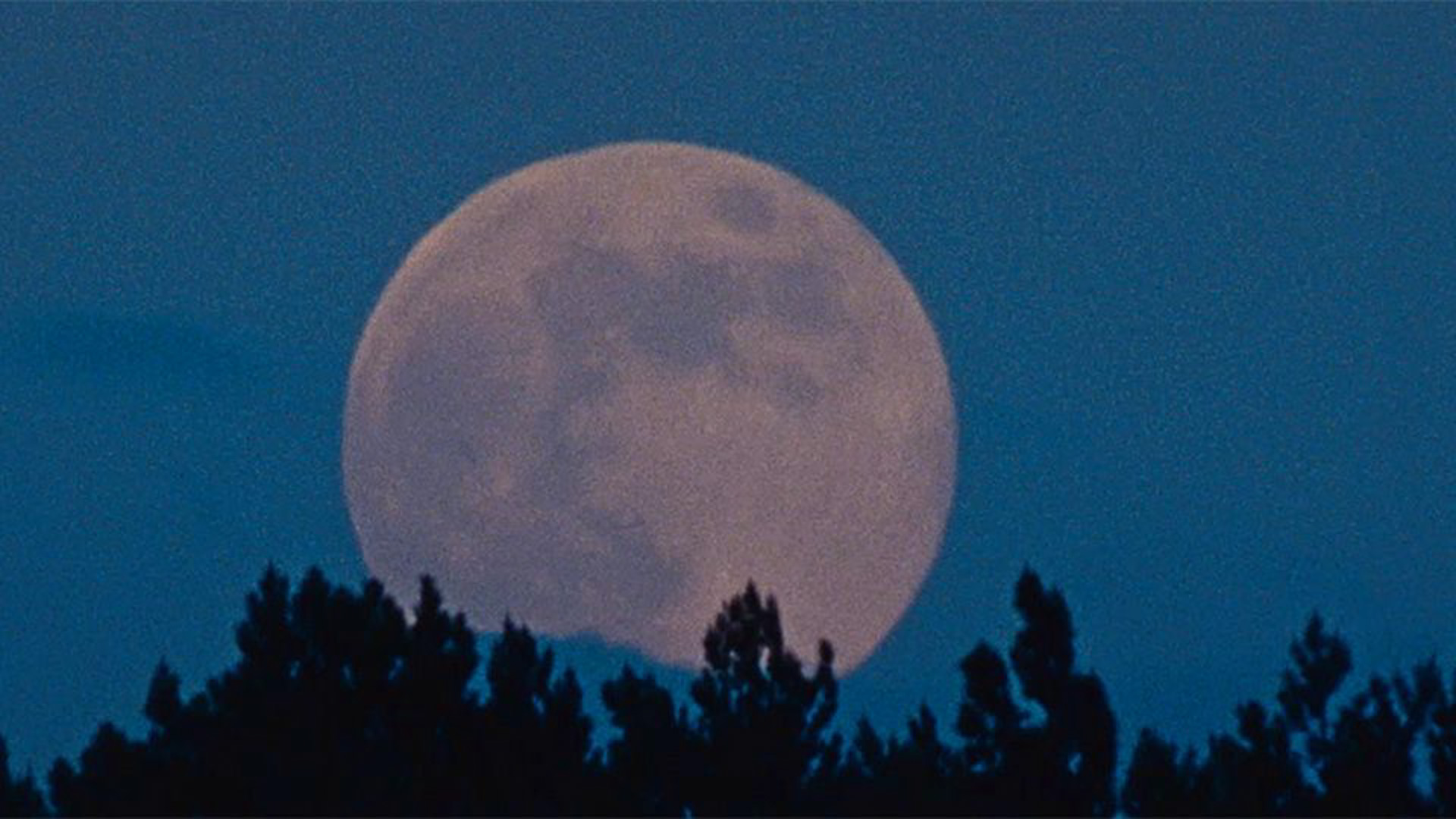
With a team of three dozen credited archival researchers, O’Sullivan has created a work in the tradition of Thom Andersen’s Los Angeles Plays Itself (2003) and Christian Marclay’s The Clock (2010), which coincidentally wrapped up a run at the Museum of Modern Art this spring. To The Moon, however, contains neither the essayistic narration of Anderson’s film, nor the sometimes effective, sometimes tiring gimmick of Marclay’s epic. Instead, it sits somewhere in-between, opting instead for a hypnotic meditation of both the cinematic moon and the real one up above.
Structured as a full lunar cycle, this “ode” to the moon compresses 29.5 days into a capricious 76 minutes. A shot of two young lovers in Kinuyo Tanaka’s The Moon Has Risen (1955). The demonic moonlight of Murnau’s Faust (1926). And a haunting sequence performed by Magda Vášáryová in Petr Weigl’s Rusalka, an adaptation of Antonín Dvořák’s opera, are but a few of the scenes that depict the moon and the range of human emotions it evokes and inspires: lust and mania, birth and death.
What the film renders so clearly is how our relationship with the moon is both allegorical and biological. It is cinema, as To The Moon shows with each passing cycle, that allows for a unique, sensorial reckoning of the great orb’s impact on the lives of others, and our own. And it flickers too.
Review by Will DiGravio
Disclaimer: This page is for your personal use only. It is not to be duplicated, shared, published or republished in whole or in part, in any manner or form, without the explicit permission of the publisher, author, and copyright holder(s) of the images.