
Loading cart contents...
Film Distribution and the Critical Edition
The artists of the New American Cinema often treated advocacy and film distribution as one and the same. The Film-Makers’ Cooperative catalogue bore descriptions, usually written by the filmmakers themselves; Canyon Cinemanews, published by Canyon Cinema, collated reviews, letters, manifestos, interviews, and rental information. In doing so, these organizations preserved the evidence of a critical culture that was also a vernacular one. These forms have endured through these and other organizations, joined in complement by Light Cone, the Collectif Jeune Cinéma, LUX, and the Canadian Filmmakers Distribution Centre, all of which remain central to artist-film distribution, maintaining catalogues and collections and presenting programmes and publishing writing on the work that they circulate.¹
The number and variety of channels through which films move have changed. Erika Balsom distinguishes distribution from circulation: institutions and individuals distribute through particular infrastructures, while works circulate within and across them. A title might move into circulation via a co-operative rental, a festival screening, a commercial disc, a streaming link, a torrent, but these methods of circulation do not work in the same way.² File-sharing trackers and streaming links can make work newly available, yet within the neutral bounty of social media, films become content, plentiful and decontextualized. The home-video release keeps an older bargain: like the screening, the disc presents a film within an assertion of its worth. A disc made this way is a critical edition: the film is joined by an editorial apparatus of textual history, documentation, and commentary. The release makes the case for its significance.
The New York Film-Makers’ Cooperative distributes work without juried gatekeeping. In place of editorial selection, its catalogue has relied on descriptions written by filmmakers or taken from press copy. These were often the only public comment a film received. Readers of Canyon Cinemanews from Edinburgh to Omaha came to know films they had not seen and might never see. While such organizations did not work uniformly, the distribution and criticism that they facilitated were a collective labour, demanding the same intelligence, the same partisanship, the same will to send an unlikely film out to viewers prepared to receive it.
The Private Screen
In the late 1960s, Barney Rosset’s Grove Press began selling 8mm prints of Stan Brakhage’s films through its Evergreen Book Club. Grove had acquired the Cinema 16 library and developed a substantial film-distribution operation alongside its books, literary magazine, and club. Erika Balsom situates the Brakhage prints in the tradition of the artist’s multiple: a film made in a measured run, like any print given an edition, for sustained private viewing in place of the theatrical experience. She describes Brakhage as pursuing the mass-distribution model of publishing. Films could be bought in a bookshop or record shop, held in a private collection, reopened, worn and loved like a paperback or album. Grove’s wider publishing machinery made Brakhage’s proposition possible.
The material particularity of film projection kept most experimental filmmakers from seeing the arrival of video art as anything but a rival, and a lesser one. The emergence of home video served the mainstream art film long before it reached underground film. Mystic Fire Video was the rare exception: its founder, Sheldon Rochlin, had made underground films of his own in New York in the 1960s, and the catalogue he assembled put some of the earliest commercial VHS editions of films by Kenneth Anger, Maya Deren, and Shirley Clarke into circulation, alongside a wide range of documentaries on mysticism. Mystic Fire proved that home media could represent the experimental film, even as a partial experience, the medium not yet equipped to reflect film’s aesthetics.
Home media began to show its critical potential through the work of the Voyager Company. Voyager’s Criterion Collection, on laserdisc, had innovated the form through audio commentaries and through its advocacy that films be presented in their original aspect ratios. The commentary, in which a critic or maker accompanies the film in real time, offering trivia or reflection as it runs, was an extension of the personal appearance and the review to an exhaustive length, kept in time with the rhythms of the work. It was closest to the illustrated lecture of the classroom, but under a Cagean constraint: the remarks last exactly as long as the experience of the work. The Criterion Collection continued even after Voyager collapsed, migrating the commentary track and the video essay from laserdisc to DVD, Blu-ray, and streaming. The disc essay does in prose or in montage what the catalogue and the programme note do. What separates such work from a studio’s press kit is whom it is built for: the viewer who has seen the film and returns with questions, not the one who may never see it at all. In clumsier hands the distinction collapses, and the supplement becomes no more informative than a press kit.
The term critical edition, however, demands more than a generous supply of extra features. Michele Canosa draws it from textual scholarship: a critical edition establishes and presents a text while supplying an apparatus that accounts for the evidence and for the editor’s decisions. Restoration attends to the material conditions of surviving film elements. The edition identifies those elements, distinguishes variants, records reconstruction, and makes conjecture possible. Canosa is blunt that supplements alone do not constitute a critical edition. The apparatus becomes critical through its relation to the text. Valerio Sbravatti warns that a DVD, Blu-ray, or stream is not a transparent copy but a textual witness, liable to alter colour, suppress grain, to remix sound, to present a variant cut.³ The home-video edition can place the film and the history of its transmission on the same wavelength.
Re:Voir, founded in Paris by the filmmaker Pip Chodorov, vastly expanded the availability of experimental film through home video. Its catalogue holds work by Jonas Mekas, Len Lye, Stan VanDerBeek, Marie Menken, and Michael Snow. The booklet for Anticipation of the Night collects, in their customary bilingual format, commissioned and excerpted writings from Scott Hammen, P. Adams Sitney, Patrice Rollet, Scott MacDonald, and Brakhage himself, educating the viewer in what the experience will leave unresolved, a narrow focus that present-day print criticism can seldom afford to treat at length. Criterion curated repertory cinema for the shelf, and Re:Voir did the same for the avant-garde object. In doing so, it brought the co-ops’ bargain into the living room, where circulation became inseparable from advocacy. Re:Voir belongs to a wider system that keeps that bargain alive: Chodorov’s FrameWorks listserv has for three decades served the role that community bulletins once did. What I would later build at Black Zero takes this model to a marginal national cinema that had its own distributors and archives, but which seldom had sustained critical attention for its experimental film.
Rarities
When preservation and access have loomed as priorities for Canada’s film heritage, more value has been placed on narrative and fiction film than on the experimental film. When I began to study the subject, I found that the films of John Hofsess, Robert Cowan, Larry Kardish, and the wider field were often unavailable. I came to restoration by necessity: to study Hofsess’s Palace of Pleasure, I first had to restore it. As Haidee Wasson has argued, the programming and circulation decisions made at the Museum of Modern Art have determined what films reach critical attention, what was studied and taught.⁴ A field shaped by a narrow curatorial devotion can leave a vacuum, and even celebrated work that goes without recurrent advocacy can fall out of history. Black Zero, which I founded in Toronto in 2022 as a home-video label and media collection, tackles the practical consequences of that vacuum. Each edition seeks to repair a particular failure, be that of survival, of interpretation, of inherited misreading.
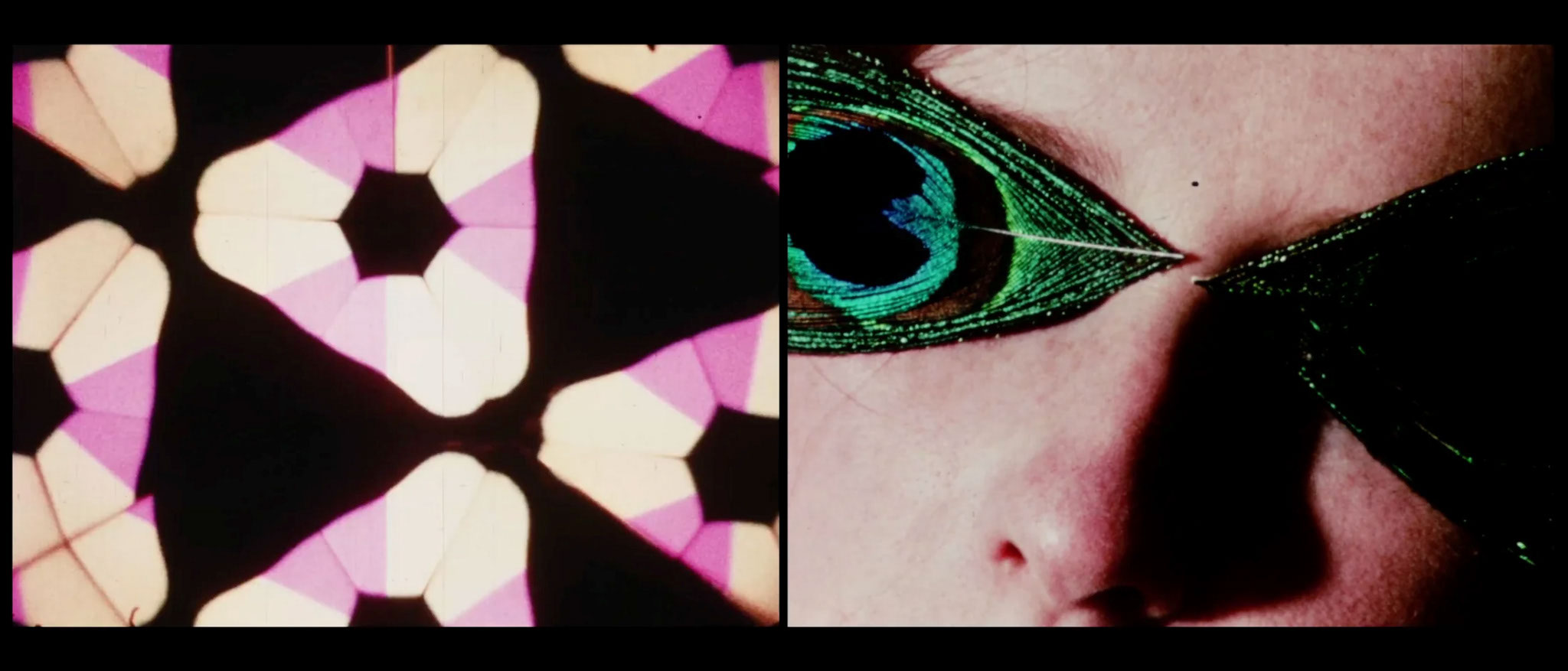
John Hofsess made Palace of Pleasure (1967) on a conservative provincial university campus at a moment when experimental film had almost no circulation in Canada. It was made by a mature student who held that cinema could treat the neuroses of its viewers, a therapeutic forum for confrontation and exorcism. Intended as a trilogy and finished only in its first two parts, it is spread across two projections, volleying between psychedelic abstraction, impressionistic drama, and slogan. It won notoriety and some circulation, and then Hofsess abandoned it for larger projects; the next, Columbus of Sex, became the first Canadian film ruled obscene by a court. Palace of Pleasure went out of circulation, surviving in two versions, neither complete.
The restoration I completed in 2007 reconciled materials at Library and Archives Canada with fragments the filmmaker and his collaborators had kept, into a director-approved version. The disc that followed fifteen years later included an original film that I made in memory of Hofsess, a speculative reconstruction of the lost Columbus of Sex, a commentary track, a video essay on the making, and texts by Hofsess and myself. These do not all occupy the same evidentiary ground. The restored film, the speculative reconstruction, and the memorial film are identified as such. Conjecture does not pass unannounced into the work it claims to recover. The edition makes the film’s allusions and post-Freudian ambitions available to a viewer while maintaining the gaps in its transmission.
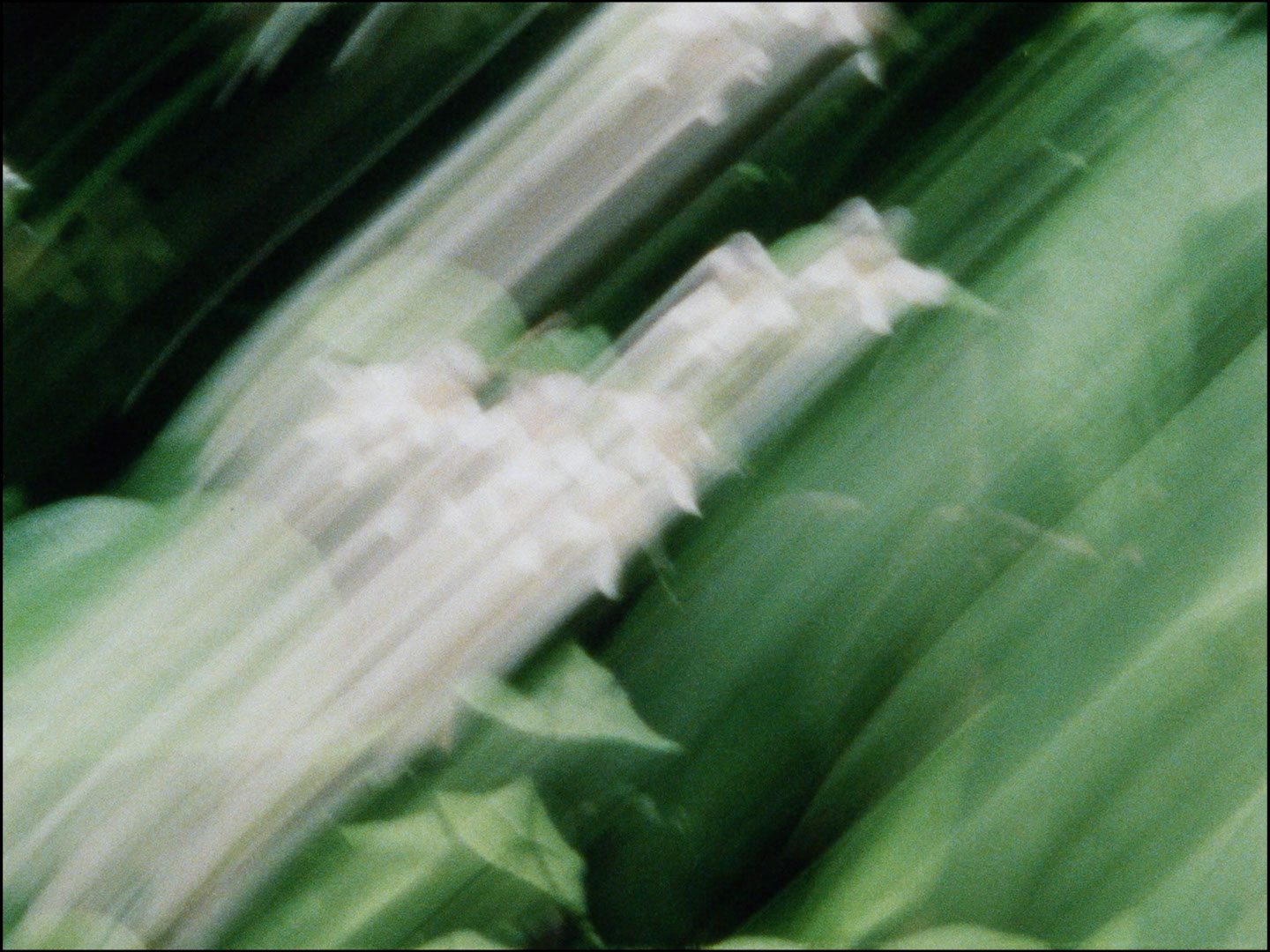
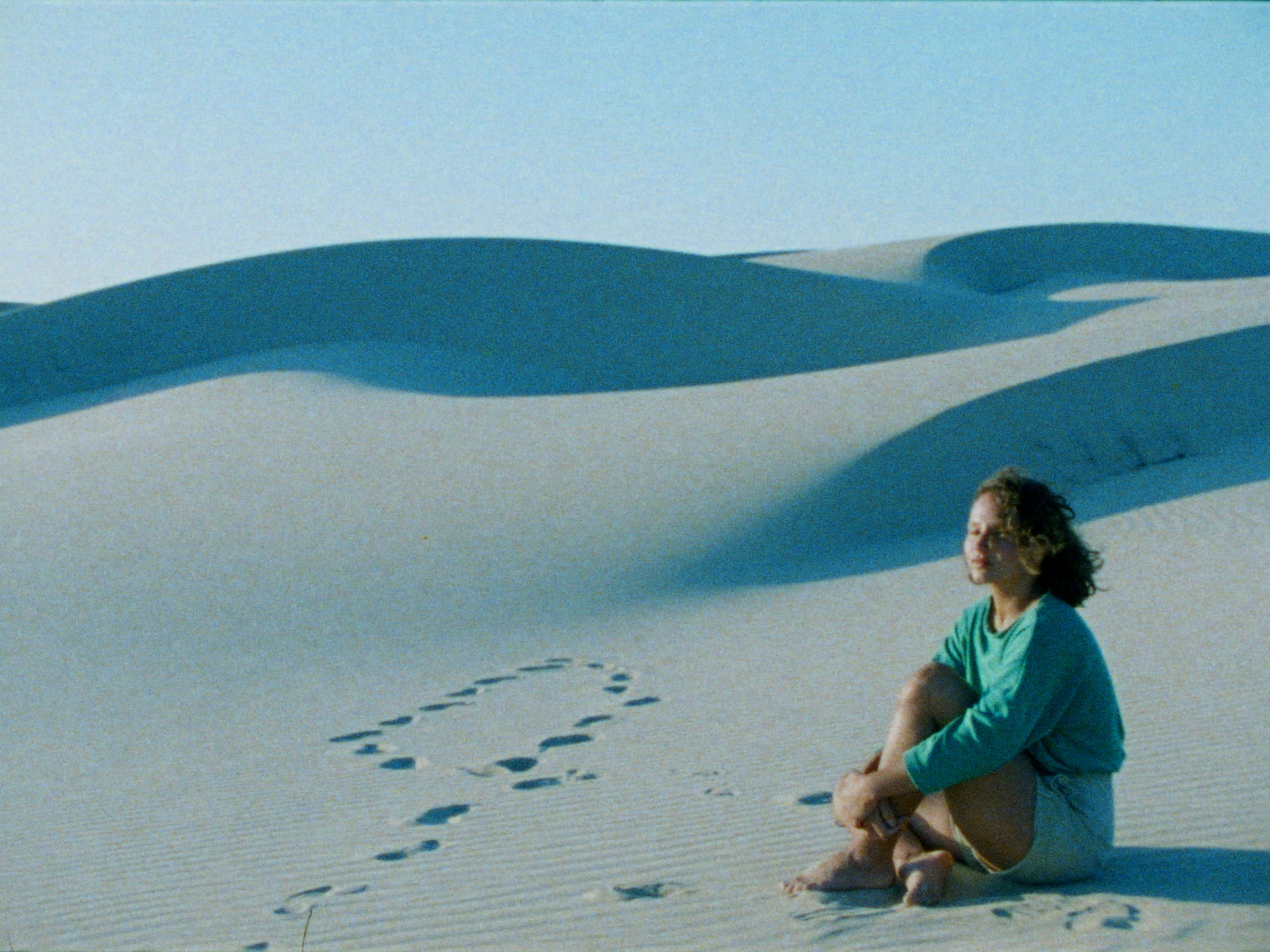
Josephine Massarella’s films have suffered a subtler neglect. She was not passed over by artist-run institutions. Her work was distributed by LUX, the Canadian Filmmakers Distribution Centre, and Canyon Cinema. She screened widely and participated in community organizations, as a programmer and board member at the Factory Media Centre in Hamilton, Ontario. Her final film, 165708, won Best Experimental Film at Ann Arbor in 2018. Nonetheless, distribution, community participation, and festival recognition did not produce a sustained critical account of her films. Black Zero’s Josephine Massarella: Green Dreams gathers her eight mature films and four student films, alongside an archival interview in which she describes her process in her own words and a video essay that covers the thematic arc of her films. The disc gives each title its own commentary track, featuring a critic or fellow filmmaker, and in this way, the disc contains a greater diversity of critical responses than most films will ever receive. Gathered, Massarella’s films show the antithetical formal influences of Chantal Akerman’s long duration and Rose Lowder’s single-frame interval, reconciling the two into a cinema of environmental passion and urgency. The edition does not discover films that distributors and festivals had ignored, but it does bring dispersed films into relation and offers a critical history.
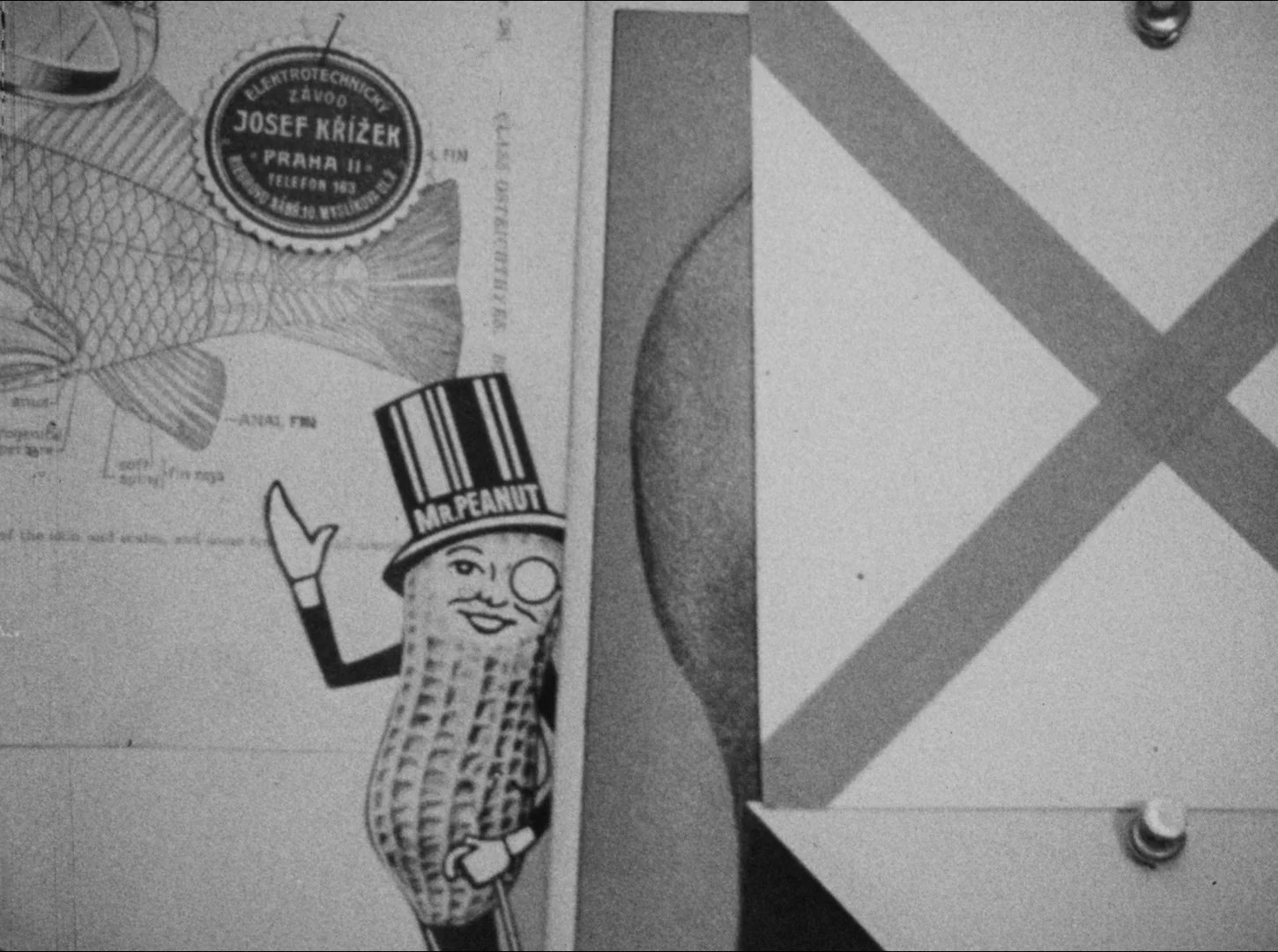
Black Zero released Arthur Lipsett’s Strange Codes (1975) as a standalone title, a controversial choice for a twenty-three-minute film, but a deliberate one: to refuse the compilation in which short films are usually gathered was to insist that the short commanded the structural attention owed to any feature. Its disc includes a shot breakdown that runs eighty-four minutes. Does a supplement that outlasts its film strip that film of its mystery? The release wagers that the mysteries of Strange Codes are inexhaustible.
The edition also fights the tendency to read the film backwards through Lipsett’s psychiatric troubles, poverty, and death. For many viewers, those facts would settle the meaning of the work without serious reflection. The release posits instead that the film runs on an absurd humour that was itself a form of resilience.⁵ Reviewing the release in Cinema Scope, Joshua Minsoo Kim called the shot breakdown commendable, but also called it “overkill,” an explanation so extensive that it threatened to strip the film of its intrigue.⁶ His objection clarifies the risk of the critical edition: an apparatus can press so heavily upon a film that it mistakes interpretation for settlement. It can also, as this shot breakdown does, leave its arguments open to dispute.
Every Black Zero release is pressed in an edition of a thousand, hand assembled. The model descends from the Grove prints: the work exists as a multiple, made in a measured run, for private viewing. To make a film available is the beginning of a distributor’s obligation, not the end of it. Black Zero is what Janine Marchessault refers to as a counter-archive, one of those collections that “historicize differently” and “disrupt conventional national narratives, writing difference into public accounts.”⁷ It changes what can be taught, cited, and seen. Every edition is also an intervention, partial by necessity—bounded by the materials that survive and by the reflections its makers bring. A disc reproduces a film the way a museum catalogue reproduces a painting, and, like the catalogue, is worth more than the fidelity of its images. The avant-garde film has rarely hung in a gallery at all; the disc gathers it the way Malraux’s musée imaginaire gathered its plates. Like the book, the disc places a film among its variants, its sources, and the criticism written on it, in relations no single screening could stage.⁸
Access and Accountability
The file-sharing underground holds, in aggregate, far more experimental and avant-garde film than legal archives can make public, and in many cases pirated films are the only copies in circulation. Much of that is generous work—preservation by other means, rescue done in the face of institutional neglect. A poor transfer may be the only accessible witness to a film. Teachers have built courses from such copies, viewers far from specialized cinemas have encountered histories otherwise closed to them, and files have survived because someone ignored the terms under which they were meant to disappear. Such circulation argues that access should not depend entirely upon geography, institutional permission, or the market.
Lucas Hilderbrand describes the visible and audible losses of bootleg video as an aesthetics of access. In a 2006 discussion on FrameWorks, a Portuguese instructor sought better copies of Peter Kubelka’s films for teaching; Kubelka had refused to authorize video transfers, maintaining that projection was a necessary condition of the work. The exchange set access against fidelity, authorization, artist income, and the conditions of pedagogy without resolving one into another. Hilderbrand finds the same conflict in UbuWeb, whose low-resolution streams greatly enlarged the audience for avant-garde film and video while tending to disregard authorization and medium-specific qualities.⁹ Pirate circulation is not necessarily distribution without criticism: its communities can generate provenance, technical discussion, and interpretations of their own.
Preservation without access is pointless, but access does not settle every question of transmission. Paolo Cherchi Usai is wary of the digital marketplace and its promise of access on demand. A reproduction, he insists, is not the film, and curatorship is not satisfied by mere availability. Leo Enticknap makes documentation and curatorial labour part of preservation itself, alongside restoration and the making of access copies.¹⁰ The issue is not whether a viewer can comprehend a film without a distributor’s essay, but whether the copy identifies its sources, alterations, permissions, and editorial decisions accurately enough for the viewer to judge what precisely has been made available.
The disc as critical edition puts that obligation into circulation. It can name the element used for transfer, distinguish restoration from reconstruction, identify missing passages, state what decisions were made and by whom, and attribute the interpretations that the release comes bearing. These records do not make a difficult film comprehensible in a final and settled way, but they do make the act of distribution accountable. Unofficial files often lack such records, although the communities around them may supply them. Authorized editions can also fail when their transfers and the editorial choices surrounding them remain opaque.
The scale of the enterprise makes no difference to the obligation: a label that presses one copy at a time meets the same standard a larger house meets, because the standard is critical and not industrial. A booklet essay, a commentary track, or a video essay held to the standards of print criticism may be part of that work, but explanation is not the only task. An edition may establish a version, disclose a restoration, recover a dispersed body of work, or commit an interpretation to dispute. Its seriousness lies in showing what it has done. Distribution can therefore approach publication without superseding the co-operative, the archive, the festival, the screening, or the unofficial file. Each puts a film into different relations. The critical edition places a specific copy among its variants and sources, and makes the distributor answerable for that arrangement. That engagement is one of the forms by which a film is guarded from disappearance.
- On the New York Film-Makers’ Cooperative’s open, non-juried distribution and its filmmaker-written catalogue descriptions, see Jonas Mekas, Movie Journal: The Rise of a New American Cinema, 1959–1971 (New York: Macmillan, 1972); on Canyon Cinema and Canyon Cinemanews, see Scott MacDonald, Canyon Cinema: The Life and Times of an Independent Film Distributor (Berkeley: University of California Press, 2008).
- Erika Balsom, After Uniqueness: A History of Film and Video Art in Circulation (New York: Columbia University Press, 2017), 10–11, 55–79. Balsom distinguishes the infrastructures of distribution from the trajectories works take through and across them; on Brakhage, Grove Press, and the reduction print as artist’s multiple, see chapter 2, “8 mm and the ‘Blessings of Books and Records.’”
- Michele Canosa, “A piè di schermo: A proposito di edizioni critiche dei film,” in “DVD ed edizioni critiche,” Cinergie: Il cinema e le altre arti, old series, 13 (March 2007): 52–53; Valerio Sbravatti, “Home Video Philology: Methodological Reflections,” Cinergie: Il cinema e le altre arti 7:13 (2018): 47–52, https://doi.org/10.6092/issn.2280-9481/7878
- Haidee Wasson, Museum Movies: The Museum of Modern Art and the Birth of Art Cinema (Berkeley: University of California Press, 2005).
- On the corrective account of Lipsett against the sentimental-victim narrative, see Stephen Broomer, Secret Museums: The Films of Arthur Lipsett (Waterloo, ON: Wilfrid Laurier University Press, 2025). For an account that places Lipsett’s post-NFB work within a chronology of psychological decline, see Brett Kashmere, “Arthur Lipsett,” Senses of Cinema 32 (July 2004).
- Joshua Minsoo Kim, “Nothing and Everything: Black Zero Begins,” Cinema Scope 94 (Spring 2023).
- Janine Marchessault and Susan Lord, eds., “Archive/Counter-Archive,” special issue, PUBLIC: Art/Culture/Ideas 57 (2018).
- André Malraux, “Museum Without Walls” in The Voices of Silence, trans. Stuart Gilbert (Garden City, NY: Doubleday, 1953).
- Lucas Hilderbrand, Inherent Vice: Bootleg Histories of Videotape and Copyright (Durham, NC: Duke University Press, 2009), 157–60.
- Paolo Cherchi Usai, David Francis, Alexander Horwath, and Michael Loebenstein, Film Curatorship: Archives, Museums, and the Digital Marketplace (Vienna: Österreichisches Filmmuseum / SYNEMA, 2008); Leo Enticknap, Film Restoration: The Culture and Science of Audiovisual Heritage (Basingstoke: Palgrave Macmillan, 2013); Giovanna Fossati, From Grain to Pixel: The Archival Life of Film in Transition, 3rd rev. ed. (Amsterdam: Amsterdam University Press, 2018).
Essay by Stephen Broomer
Disclaimer: This page is for your personal use only. It is not to be duplicated, shared, published or republished in whole or in part, in any manner or form, without the explicit permission of the publisher, author, and copyright holder(s) of the images.