
Loading cart contents...
72nd Oberhausen Kurzfilmtage: Charlotte Pryce rips through the veil of invisibility
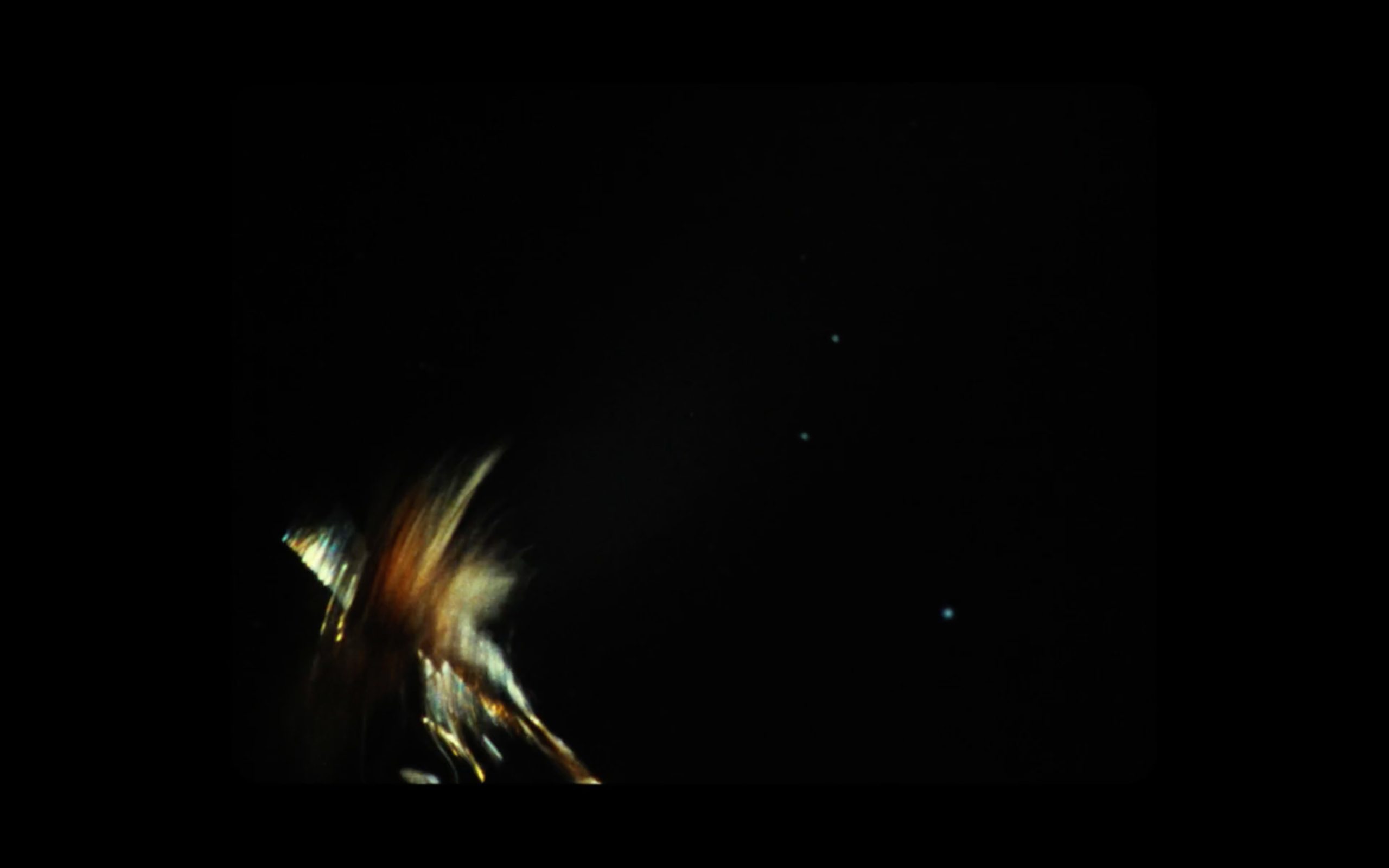
Watching Charlotte Pryce’s body of work is giving oneself completely over to reverie. In a way, it’s about re-learning how to see, how to forgo reading and soften the edges of the moving image enough for the subconscious she vivifies to penetrate the body. In the frantic point of view of a butterfly mid-flight indoors (Concerning Flight: Five Illuminations in Miniature, 2004), the fledgling desire of a fly walking on a glassy surface (The Parable of the Tulip Painter and the Fly, 2008), an insect beating its wings as if it’s made out of paper streamers (Of This Beguiling Membrane, 2020), there’s always a hidden narrative. Pryce, a London-born filmmaker based in LA, who has been teaching and mentoring students at CalArts since 2004, has been a trailblazer in experimental cinema since the late 1980s. What her work reveals is a shared universality in terms of our relationship with the natural world and its biological topography. Following recent career retrospectives at Rotterdam International Film Festival, Centre Pompidou in Paris, Bozar in Brussels, and Mostra de Cinema Periferico in Spain, there could be no better place than the 72nd Oberhausen Kurzfilmtage to profile her “optical objects,” as she calls them, in a programme named “Charlotte Pryce: Alchemistic Transformations and a Magic Lantern,” which consisted of four sessions, showing films from 2004 through her latest 2025 film, The Gloaming. Oberhausen has long been the sanctuary for a spectrum of short films, including those that include hand-processing. Pryce’s films are known for being as soft as they are meticulous, the filmed footage combined with manual manipulation. Given how Pryce is so rooted in nonconformity and imagination, her attention to the surface of the film’s skin stands out. By themselves, her films are all-consuming handcrafted windows into unpeered realms that may reach the audience in layers. But when together and in conversation with each other, her films can, at last, free themselves of the memory of having been touched (on their way to becoming something else), and take on as many meanings as possible. From a single subject – whether an animal, a plant, a book, or an obscure unnamed substance – many others follow suit and open the field of vision. Pryce looks at the craft as an artisan storyteller. It takes both control and attentiveness to let go and fully embrace the multi-sensory act of discovery of these constructed fictions, especially because “projection grants presence only through absence,” as filmmaker Rouzbeh Rashidi has said. The film only moves forward by disappearing, like an illusionist’s trick.
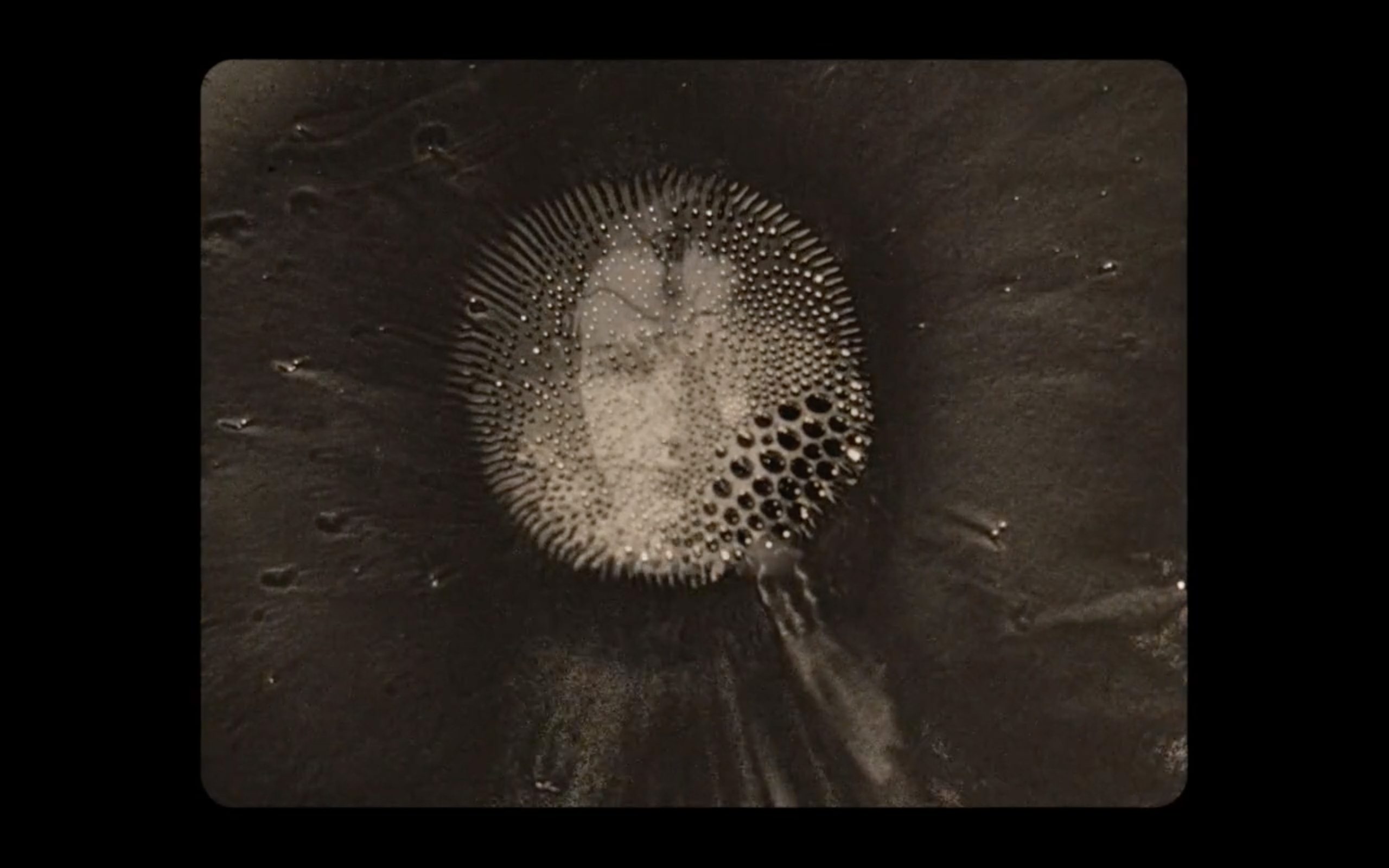
In one of Charlotte Pryce’s most searing films, Pwdre Ser: the rot of stars (2018), she looks microscopically at ‘star jelly,, a substance that has long been witnessed falling from the skies, combining coronal Kirlian photography with her own hand-processed images. A human comes across this otherworldly substance and tries to collect it in a glass jar in order to touch it and hopefully understand it. But the substance doesn’t let itself be caught. There’s an arresting quality to the film that proves the filmmaker’s intense ambition in drawing lasting pictures, as a poet would: using indirectness to illustrate basic desires. In other words, what she does is birth a sensorial gesture that forms a language universally recognisable. She does in her practice what we see her doing in this film: catch ideas or objects that fight confinement. At one point further on in the film, a substance fizzes in a petri dish fashion on top of the strip, releasing bubbles, and a woman’s face appears, superimposed, with the traces of a landscape circling her. “I feel myself propelled by an irresistible energy into the darkness, and then beyond into the unknown,” her voice tells us. There’s a tale of rebellion here; both artist and matter (film) confound the ritual of storytelling and become an act of resistance, a means of liberation from what they were originally intended to do. The incantations don’t stop here. And the further we travel, especially chronologically, the more the mythological musings turn into linear fables. The Gloaming (2025), and and so it came about (A Tale of Consequential Dormancy) (2023) nurture the idea of what a story arc may look and feel like, in their shared portrayal of survival. Whereas The Gloaming is more of a tale about change, and so it came about (A Tale of Consequential Dormancy) trespasses two worlds, the awake and the latent. Pryce incorporates voiceover more and more (most of her films are silent) in this recent work, and what once carried the shadow of ecological doom now feels more beguiled by the moment of revelation, of what might be unveiled and felt, not just looked at. “Come closer and I will tell you how this fate befell me,” is heard at the beginning of The Gloaming. In this film, she will make leaves rustle, superimpose naked feet stepping on them, and then have all kinds of insects (a dragonfly, a family of beetles) walk on top of those feet. We are in this body. Those feet become ours.
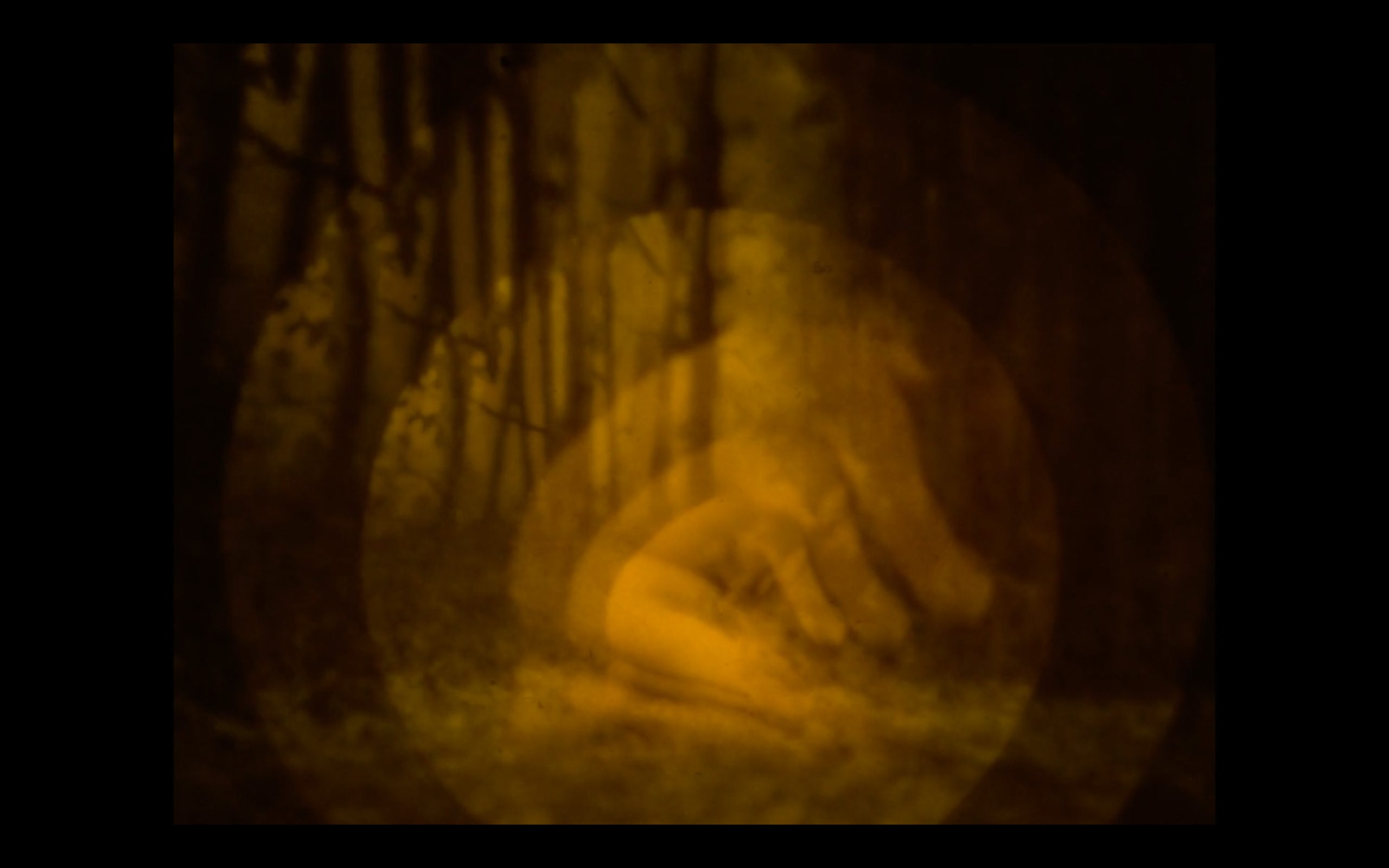
As Pryce moves between the human and the animal worlds, she recalibrates perception. What appears at first as a fixation on light and colour patterns – being present for their changes, witnessing animals in their natural habitats, the inside of a flower, or the impressions left by birds on a tree trunk – shifts into primordial territory. In and so it came about (A Tale of Consequential Dormancy), touching a lock of hair or grass on a windy day, a predator’s gaze on us, or a snake’s rectilinear locomotion coming inside a house exemplify this effort. She portrays her subjects in such an otherworldly light that we’re made to believe they are endless when they’re not. On the contrary, in fact. They’re fantastical, because they’re very much rooted in reality. The same paradox is mirrored in a dark room. In the crackling of the celluloid going through the whirring projector, the more eyes fall upon the image (the more times it is projected), the harder its skin becomes. Pryce risks this because what she wants to show us is worth being fully present for. Watching her films represents an act of ‘waking up’ to what being alive in and to the world really looks and sounds like. By opening the skin up to anything the eye fixates on, Pryce makes the invisible not just visible but deserving of our protection: the swirling stuff of energy.
Review by Susana Bessa
Disclaimer: This page is for your personal use only. It is not to be duplicated, shared, published or republished in whole or in part, in any manner or form, without the explicit permission of the publisher, author, and copyright holder(s) of the images.