Loading cart contents...
“Life-affirming art is the point!”: Brydie O’Connor on Barbara Forever (2026)
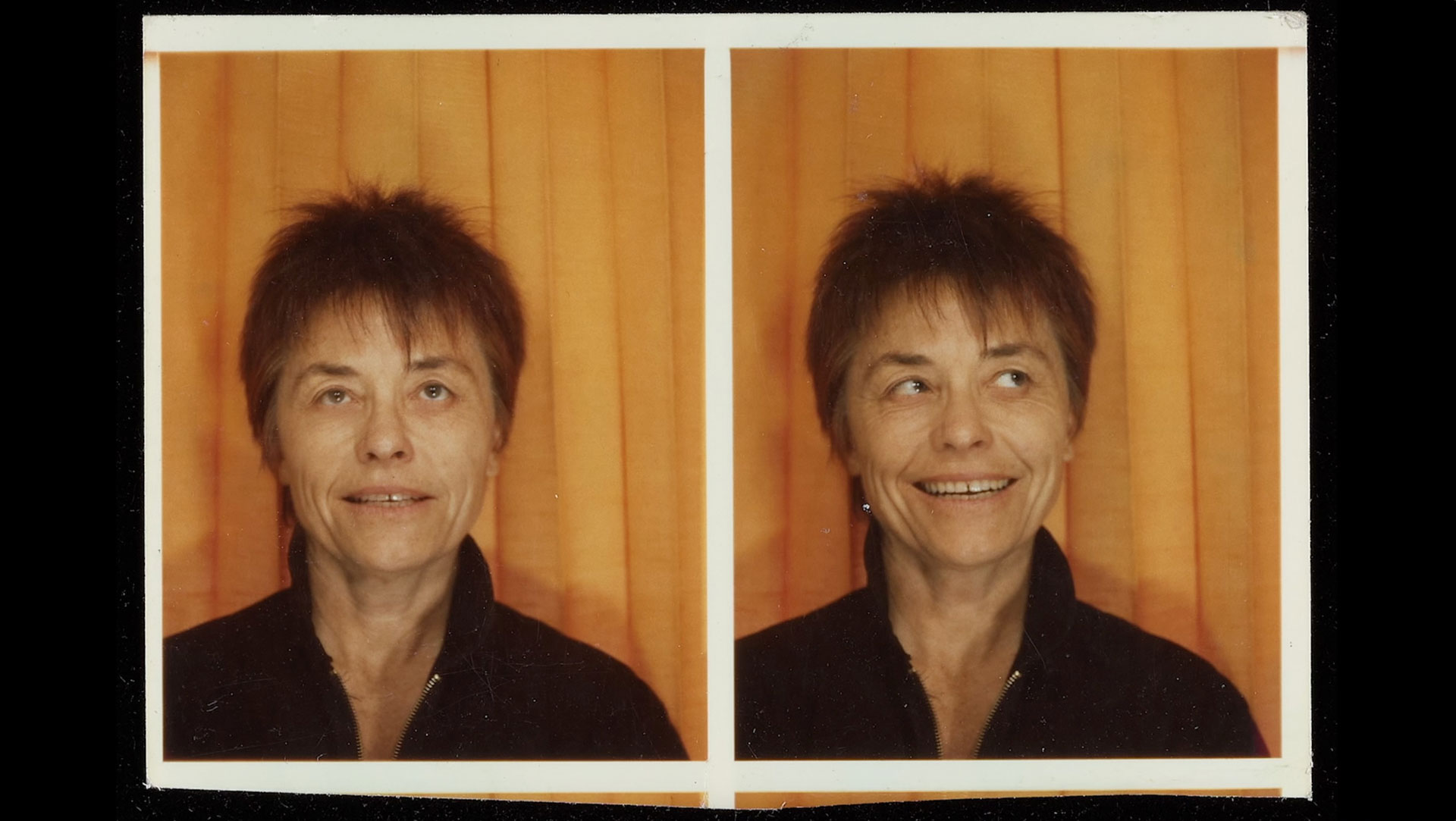
Barbara Forever (2026), a new documentary about lesbian experimental filmmaker Barbara Hammer, has enjoyed great critical success this year. At its premiere at Sundance, the film took home the Jonathan Oppenheim Award for Documentary Editing, and at the Berlinale it won Teddy award for best film with an LGBTQ theme. Barbara Forever is the first feature by American director Brydie O’Connor, whose shorts include Love, Barbara (2022)—a portrait of Hammer told through the perspective of her longtime partner, Florrie Burke.
The new full-length film is an in-depth and expansive study of Hammer’s five-decade filmmaking career, drawn from the artist’s enormous archive of film and video works, raw 16mm and Super 8 footage, along with personal ephemera to tell the emotional story of the legendary director’s life and work. Hammer, who died in 2019, made more than eighty moving image works, exploring lesbian sexuality, personal relationships, and the body, as well as the formal vocabulary of experimental moving image and burgeoning feminist culture in California and New York. Her daring work cemented her place in both the avant-garde film canon and among leading voices in lesbian and queer art.
I spoke with Brydie in June, as she was preparing to screen her film at the Castro Theater in San Francisco, marking Frameline’s fiftieth anniversary.
S. Topiary: I love the title of Barbara Forever. It’s a film about leaving a legacy and reckoning with the ambition to create your own history. In the early part of the film, there’s a scene where Barbara is packing up her papers to be donated to the Beinecke Library at Yale, and I was wondering if that was archival footage or if that was your own footage.
Brydie O’Connor: That scene is archival footage from a wonderful film that features Barbara called Queer Genius (2019) by Chet Pancake who generously gave us the outtakes.
ST: Can you talk about this idea of living in Barbara’s future?
BO: Barbara was so interested in experimenting with form and particularly the materiality of film and of filmmaking. Her last piece—really, her masterpiece—was Evidentiary Bodies (2016). In that work, her body literally dissolves visually into a film strip. The idea is not only Barbara Forever, but Barbara’s legacy—that she would live on in her work.
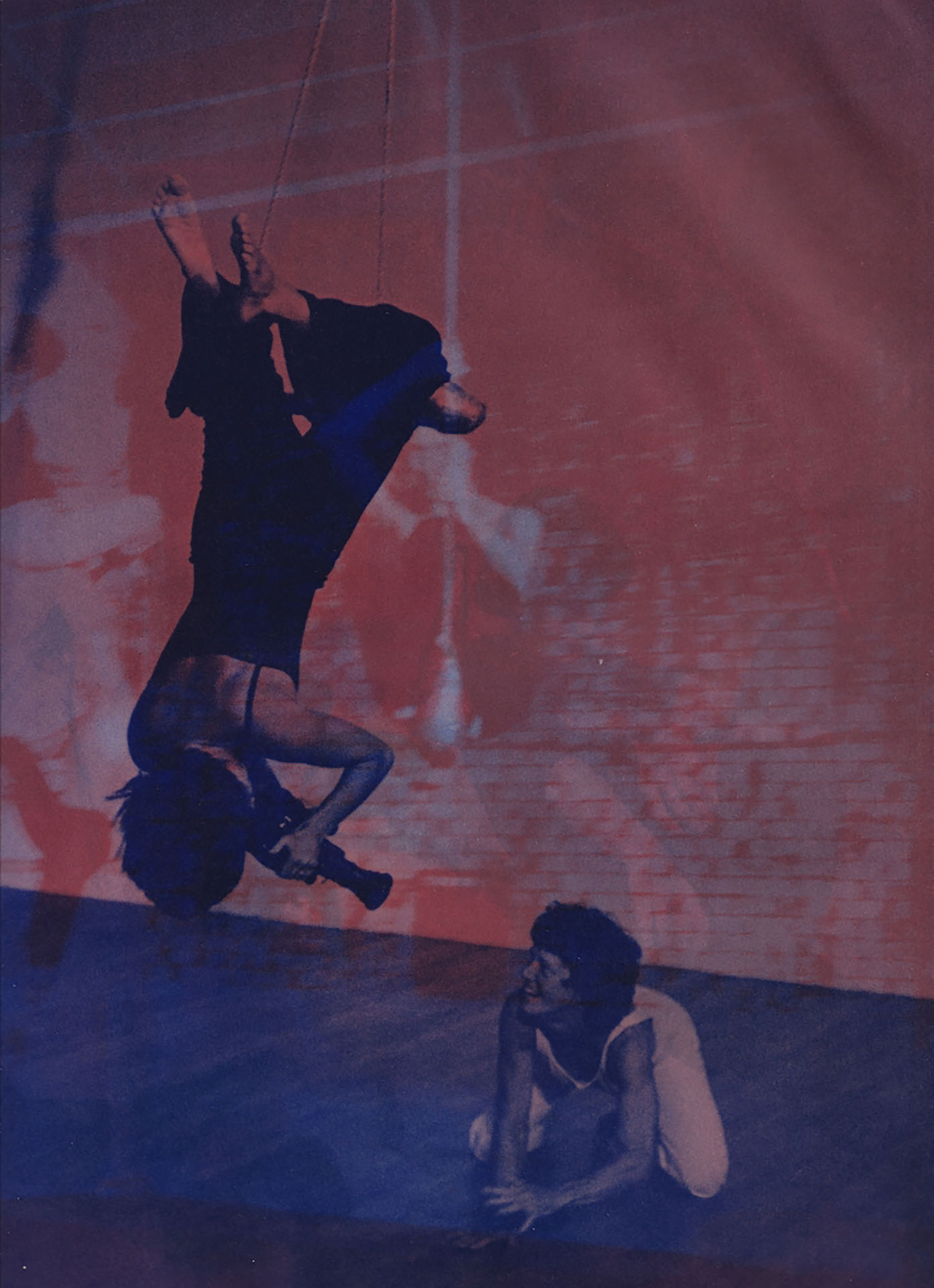
ST: Hearing you describe that reminds me of what an experimenter she was in terms of technology. Her work is so personal, it is so much about herself, her body, her sex, the things she’s discovering. But she was also very wide ranging in how she approached the materials. And throughout the film, I notice that you’re really highlighting the materiality of her work—the film grain, the compositing of layered images. For example, you start the film with outtakes in which we are hearing her voice say “is this thing on?”—testing the actual tools of recording. I think of Barbara as somebody who was promiscuous in terms of artistic format. She was working with super-8 and 16mm film, but also with video and experimenting with new forms, really up until the end of her life. Right?
BO: It is core to who Barbara Hammer was as an artist—experimenting with form and particularly the materiality of film. She says, “if we’re living an experimental lifestyle, our art deserves an experimental form.” Her process lends itself to having that learning curve—right up until the end. When we were creating the structure of the film, we were thinking in terms of specific periods: the 1970s, when she realized she was a lesbian and exploded into this dyke adolescence; the 80s, when she started to play with form and to contend with the expectations of museums and galleries; then the 90s, during the New Queer Cinema movement, when she began making feature-length work. She continued to expand her artistic approach until her death. Evidentiary Bodies—again, her last piece—is both a single channel film and a three channel installation.
ST: Tell me how you became interested in Barbara. I know you made the short film Love, Barbara (2022) just after she died. But I read that you had been corresponding with her earlier, when you were an undergraduate.
BO: I learned about Barbara when I was a student at George Washington University and writing my thesis on queer cinema. I was interested in how her early work reflected a lesbian life and the lesbian subculture that was developing and naming itself in San Francisco in the 1970s. But I couldn’t find her films anywhere—not in any of the library systems, or screening at galleries or museums in Washington. So I emailed her to ask if I could buy her DVD. She gave me a hard time initially, writing back, “I’d love to sell you my DVDs, but if you’re actually a professor and not a student, it will be much, much more expensive.” She was just double checking, and I respect that about her. She had to make sure she was being paid what she deserved. So she sent me her DVDs, and sent her a copy of my thesis. And then, when I moved to New York after graduation, I would see her around. I spoke with her in the lobby at Metrograph. I was really a big fan. And then in January of 2019, I was making my first film, going into pre-production and I emailed Barbara for some advice. And she wrote back to say, “I’m at the very end of my life.” I didn’t realize how sick she was at the time. She died two months later.
I remember learning that Barbara had just started making films in her late 20s. She didn’t have formal training. She just decided to go for it. I’d thought I would be a writer or a film critic, and learning from Barbara, I thought to myself, well, I could try making my own work. I don’t have a background in experimental cinema. I dove off the deep end and did a backflip into the water of it. I have her to thank for that, truly.
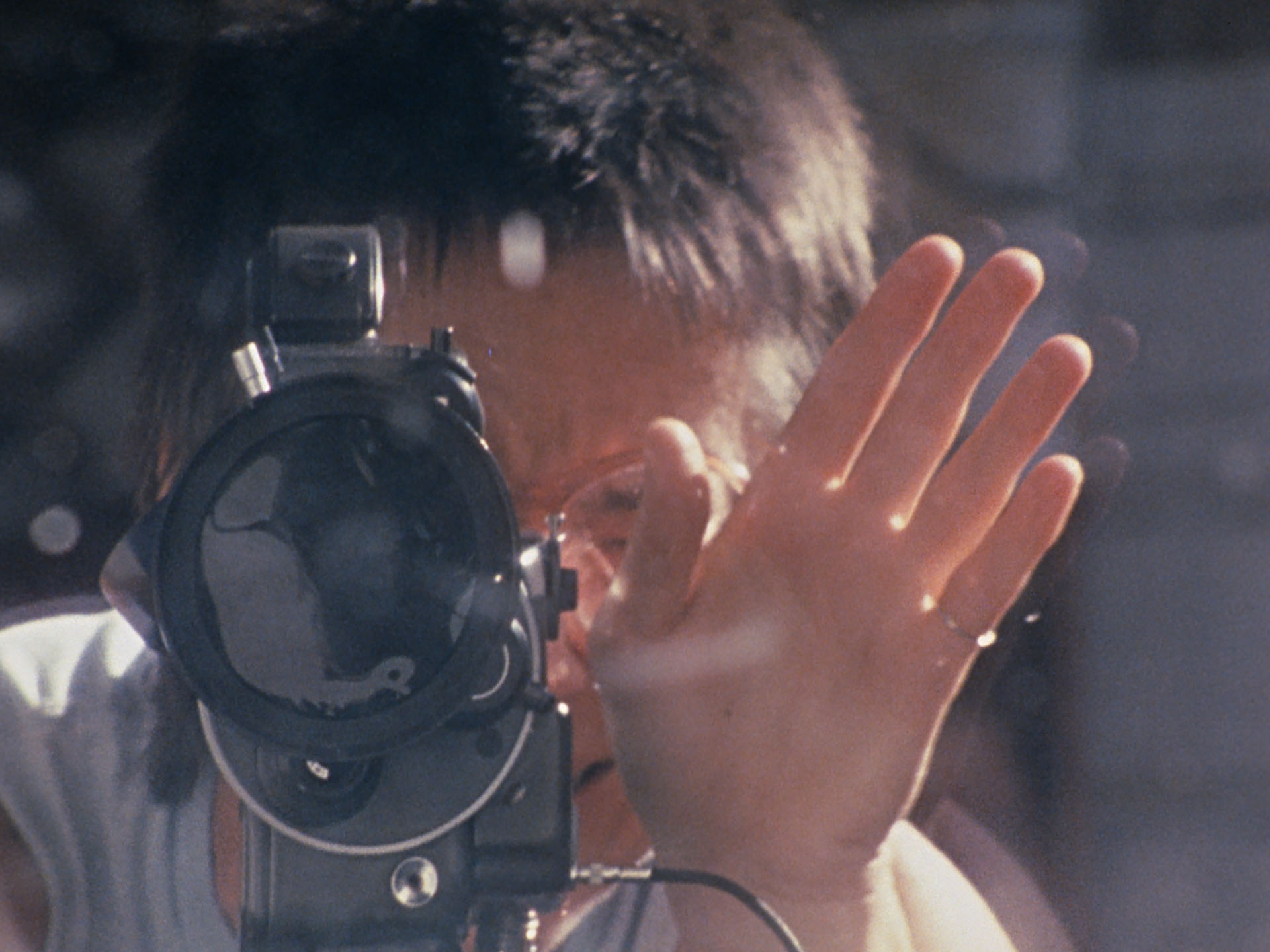
BO: It’s important to me, and to Florrie, and very true to Barbara and how she envisioned a future of queer filmmaking, that our future includes trans people. It includes trans men. Lesbian art includes trans masc people. That is how Barbara felt. The film that Joey made, A Video Letter to Barbara Hammer (2019), in which he comes out to Barbara over the outtakes of Tender Fictions, in which Barbara is dressing up as a man, calling herself Bob Hammer… It’s Joey coming out to Barbara through his own film, which is also a collaboration with Barbara’s work. As Barbara said: “To create life-affirming art is the point!”
ST: Let’s talk about the archival aspect of your film. I know that you’ve told me you work as an archival producer as your day job.
BO: The archival is such a core part of my love for Barbara and this entire ten-year project. You know, it’s been different iterations of Hammer projects, but I’ve been in this world creating something for Barbara Hammer for over ten years at this point. And the archive is the core of that. Everything that we collected of Barbara’s, including her films, her outtakes, footage that she shot just at home, unfinished films that were never published, along with footage of Barbara—either from other people or that she saved in her own archive, all of her audio recordings, even footage that appeared on all of her hard drives that we had access to through the estate. We regarded everything as part of her archive because together it paints a kaleidoscopic portrait of the artist. And of course, there’s photographs and documents—Barbara even saved candy wrappers.
My editor, Matt Hixon, and I collected everything, gave it a file name with a year and a little descriptor. And then we watched everything within a period of six months. Once we’d digested the material we created clusters—every time Barbara filmed herself in the mirror, every time she filmed her shadow, every time she filmed herself with a lover, every time she laughed. All of these different moments that we gravitated toward, or couldn’t look away from.
Then I wrote a radio edit of the film using Barbara’s voice, and at the same time, Matt started doing what he calls tone poems. He was invigorated by this idea of creating feeling through editing, just like Barbara did—she talked about wanting to create a sense of tactility in her films. Emulating this idea, Matt edited two of these tone poems—an orgasm sequence and a cancer treatment sequence. In neither do we hear Barbara speak. We’re just inside of her body. The sound design and the visuals give you this experience of what it was like, essentially, to be Barbara Hammer. Those early tone poem scenes remained so similar to the very first initial pass that Matt did. They were so intuitive. And, it was really eager to dive into the deep end of the edit from these two moments. Okay, we said, we know where we’re starting.
We always knew it needed to be an overall story structure that was not just cradle to grave. We wanted to create something that played with collapsed time. Because, firstly, Barbara says, “I was born when I became a lesbian.” So, right off the bat, we’re queering time there. She feels like her whole life just exploded when she realized that she was a lesbian. And, second, I think that the way Barbara communicates feeling—for example, when she realized that she was physically attracted to a woman, she said her knee touched the knee of another woman and she felt it in her entire body and she felt it in her mind. She felt it logically and emotionally. So, something we tried to convey in these tone poems is that the experience of feeling is not necessarily logical. It can exist across time, and it has all this context and it’s really personal to feel something, anything. So, we wanted to find a structure that moves through the past, present and future in an associative way. Instead of driving the story, even in the sections where we live in the archival and it feels more chronological, like in the 70s and 80s, in the 90s, 2000, we’re moving through time, even within these windows, through associative feeling—showing who Barbara was as she drove her own life instead of telling her story through what happened.
ST: I read that Matt had been an associate editor of Laura Poitra’s All the Beauty and the Bloodshed, a portrait of the photographer Nan Goldin, and I was very curious about your collaboration with him. Was the structure inspired by any particular films?
BO: All the Beauty and the Bloodshed was definitely a reference for us. Matt had worked on it, of course, but it also had two important elements: the archival chapters and the contemporary threads. We were also inspired by Going to Mars, the Nikki Giovanni Project (dirs. Joe Brewster, Michèle Stephenson, 2023). I love the way that these films move between the archival and the present. You feel like you’re existing with someone across time.
For our film, we talked about the structure as a queer chronology. We named it as such during creative conversations with one of our consulting producers, the artist and filmmaker Zachary Drucker, who had great suggestions for thinking about chronology beyond a linear “birth-to-death” framework. Zachary recommended some theoretical texts on queer temporalities.
Then other films that I was just generally very inspired by throughout the process was the Velvet Underground (dir. Todd Haynes, 2021) and The Cockettes (dirs. David Weissman & Bill Weber, 2002), which is so energetic, with an anticipatory, exciting pace. I’m proud of how Barbara Forever shares this sort of propulsion, which hopefully works to refract Barbara’s energy into the world.
ST: One of the really brilliant things in the film is the use of Barbara’s voice as narration. You allow that voice to exhibit these quite different qualities—clearly recorded at very different times in her life.
BO: The film is pretty much entirely narrated by Barbara’s own voice, with the exception of Florrie Burke has a few lines, and Joey Carducci has a section.
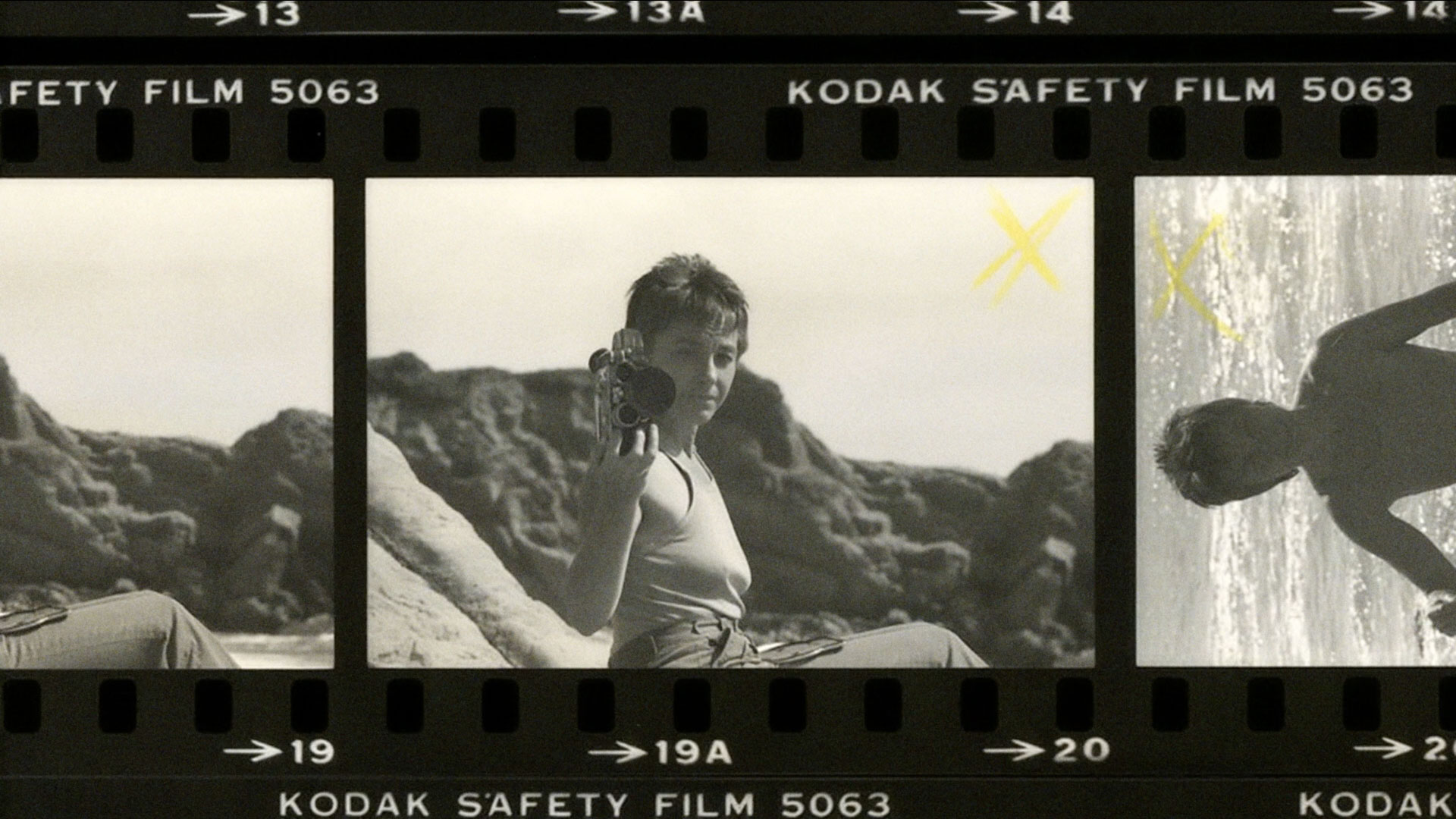
ST: These structural aspects raise the question of how you thought about the film’s larger aesthetic. Barbara was obviously an experimental filmmaker, and I was thinking about the incredible reception that your film has been getting so far at Sundance and Berlin, and it will be the centerpiece film at Frameline. I wonder how you thought about doing justice to the experimental nature of her work and her legacy, while also transposing the experimental nature of Barbara’s work while also creating something more… I don’t know if mainstream is the right term—an indie feature documentary, a biography, an archival work, something that would screen at these big festivals and meet the expectations of your executive producers, Kartemquin and Killer Films.
BO: It’s something we considered so acutely as a team throughout the process. I felt a responsibility to Barbara and her stylistic approach, but also hoped to create something new with my own filmmaking perspective Barbara would have wanted that, and it’s something that Florrie has pushed me to do. She gave us no stipulations on how we could use the footage, how we needed to make this film. Her attitude the entire time has been like, I am just excited to see what you come up with, given everything that you express to me about what inspires you about Barbara Hammer.
Christine Vachon and Killer films have been such great supporters since we were just developing this project. They loved Barbara.
ST: You make a really lovely point in the film that her identification as lesbian was a means of empowering the lesbian community more generally. She didn’t choose whether she was going to make “lesbian films” or to claim “avant-garde filmmaker” sui generis in order to be taken seriously by the straight, white, male-dominated art and film establishments. And her insistence on being taken seriously as a full person is part of a much larger story of empowerment of marginalized people.
BO: When she realized she was a lesbian, she didn’t know where to find guidance on how to exist in the world. That’s so destabilizing. I remember feeling that way, too. I couldn’t say that I was a lesbian until I got my first computer when I graduated high school. I just related to how she talks about that moment. Her life’s mission after that point was to create something that felt true to her experience as it unfolded, that it could be shared and understood as a sprawling, collective experience of like you’re saying, being queer, being a woman, being someone who’s ambitious, who wants to make art that is not necessarily mainstream or palatable.
One thing that Barbara was up against is many people didn’t want to see the womens’ nude bodies on screen. And she was really uncompromising about including her own life and body in ways that felt honest. This is Barbara’s way of creating a history that couldn’t be erased and would be accessible to future generations. Her project of archiving her whole life is part of that alternative history.
ST: I know that the film just screened at New Fest in NYC and will be screening as the centerpiece film at Frameline, the San Francisco LGBTQ+ film festival, at the Castro Theater.
BO: Yes, and we will also have a screening at the Roxie Theater in the Mission as well. We’re excited to show the film in San Francisco, where Barbara essentially grew up as a lesbian. In the film we see her living here, accepting an award on stage at the Castro and showing her work and speaking to an audience at the Roxie. So these screenings will be incredibly special.
ST: And after the festival run, what is your distribution plan?
BO: We’re thrilled to be working with Strand and Marcus Hu, who released Nitrate Kisses, Barbara’s first feature film, in 1992. It feels very aligned and “in the family.” We are releasing at Film Forum on September 4th, and then we will go on to release in theaters in markets nationwide. We’re thrilled to share this film with people who know and love Barbara, and those who will be learning for the first time Barbara, her way of living, being, and making art.
Interview by S. Topiary Landberg
Disclaimer: This page is for your personal use only. It is not to be duplicated, shared, published or republished in whole or in part, in any manner or form, without the explicit permission of the publisher, author, and copyright holder(s) of the images.