
Loading cart contents...
European bricks: A conversation with Christopher Harris
Cinema Spoutnik, Geneva, Switzerland
23 May 2025
Interview conducted by Greg de Cuir Jr
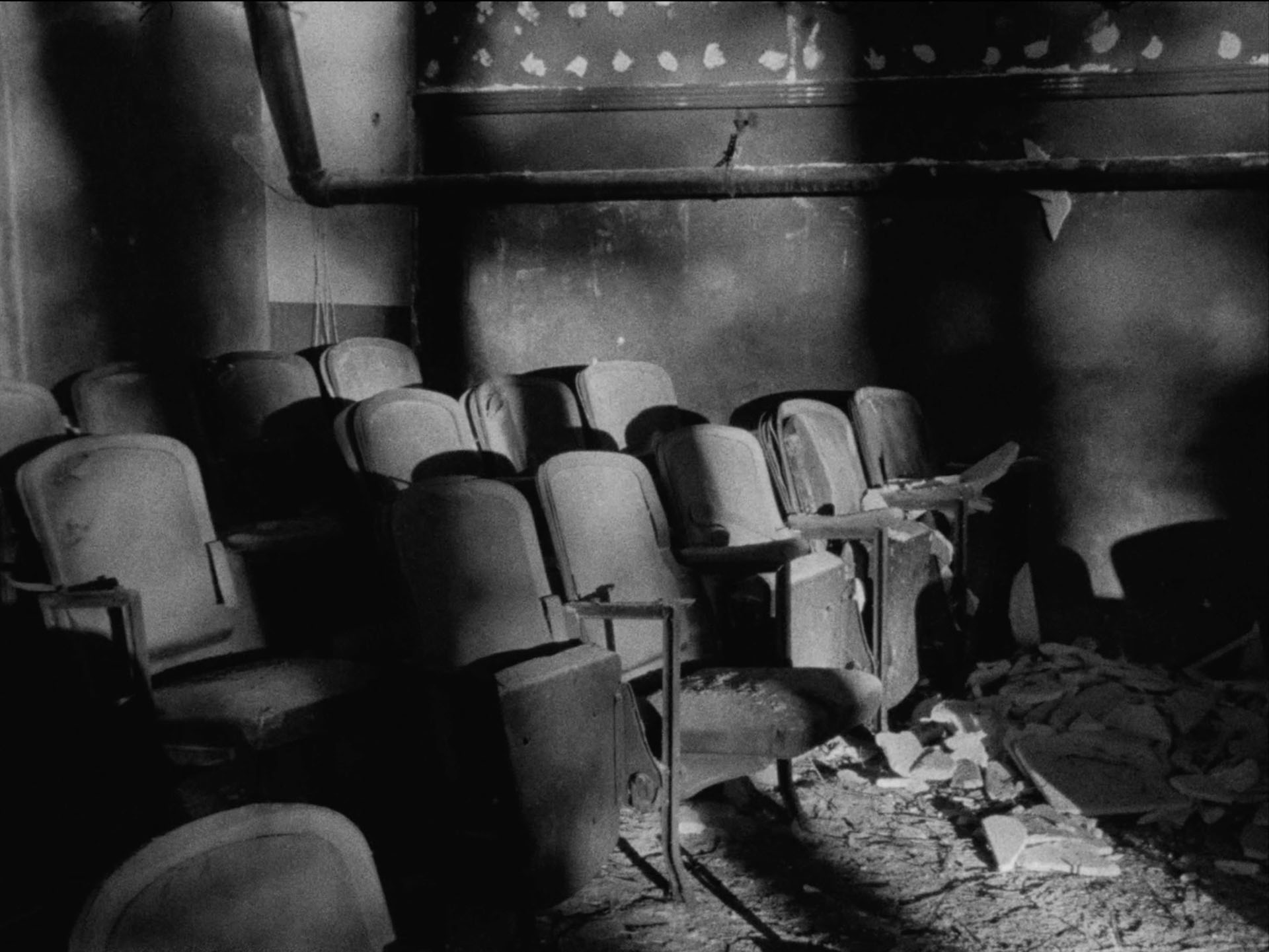
Christopher J. Harris had a banner year in 2024. A few years prior to that, restoration work began on his debut film still/here (2000-01), handled by Mark Toscano of the Academy Film Archive in Los Angeles. For a film artist, to have your work restored by Toscano is something like winning a career achievement award. There are just not that many options for true photochemical restoration of experimental film, plus the costs can be exorbitant. The Academy has the resources to pull off miracles, and it might be something of a miracle in itself that this august institution, which in effect is one of the centers of gravity for Hollywood, has the inclination to both collect and restore unconventional and subversive film works that are often created in opposition to all that Hollywood and commercial filmmaking stands for.
A brand new, pristine, restored 16mm print of still/here was ready just in time for Harris’ solo presentation as part of the Whitney Biennial in New York City in September 2024. One could make an argument that the Whitney Biennial is like the Venice Biennale of North America – it is hard to imagine an art world event that attracts more attention from press and public alike, and that mints more stars and confirms more careers. Film artists have long had a presence at the Whitney Biennial, and they benefit from the platform in a similar way as visual artists do. The Whitney Biennial show was the largest stage in the biggest city that Harris had ever received for his work. It confirmed what even those in a small but partisan segment of the film world have slowly but surely come to realise: that Harris is one of the most important film artists of his generation. This wider recognition has come a bit late for Harris, relative to the length of his career – but slow chefs craft meals for slow appreciation.
Harris was born in 1962 in St Louis. Where he is uncommon in his generation is that he did not make his first film work until 2000, when he was in his late 30s. Compare him to Arthur Jafa, who was born in 1960, did his first work and gained recognition as a cinematographer in the early 1990s, but did not step forward as a solo artist until the 2010s. Or Cauleen Smith, who was born in 1967, made her debut feature film in 1998, but quickly recalibrated herself to the art world and made her mark beginning in the 2000s. Or Kevin Jerome Everson, who was born in 1965, distinguished himself in sculpture and photography in the 1990s, but picked up a 16mm camera and dedicated himself to a film practice only in the 2000s. This is a special cohort of Black film artists. We might also compare them to their Black British counterparts John Akomfrah and Isaac Julien, who also belong to the same generation, but started working with the moving image at a much earlier stage in their careers. Harris is an outlier because he would have been able to see and study and celebrate the body of work by his peers that was already circulating by the time he began shooting his debut film. Whether or not he came of age late as an artist, his time is right now.
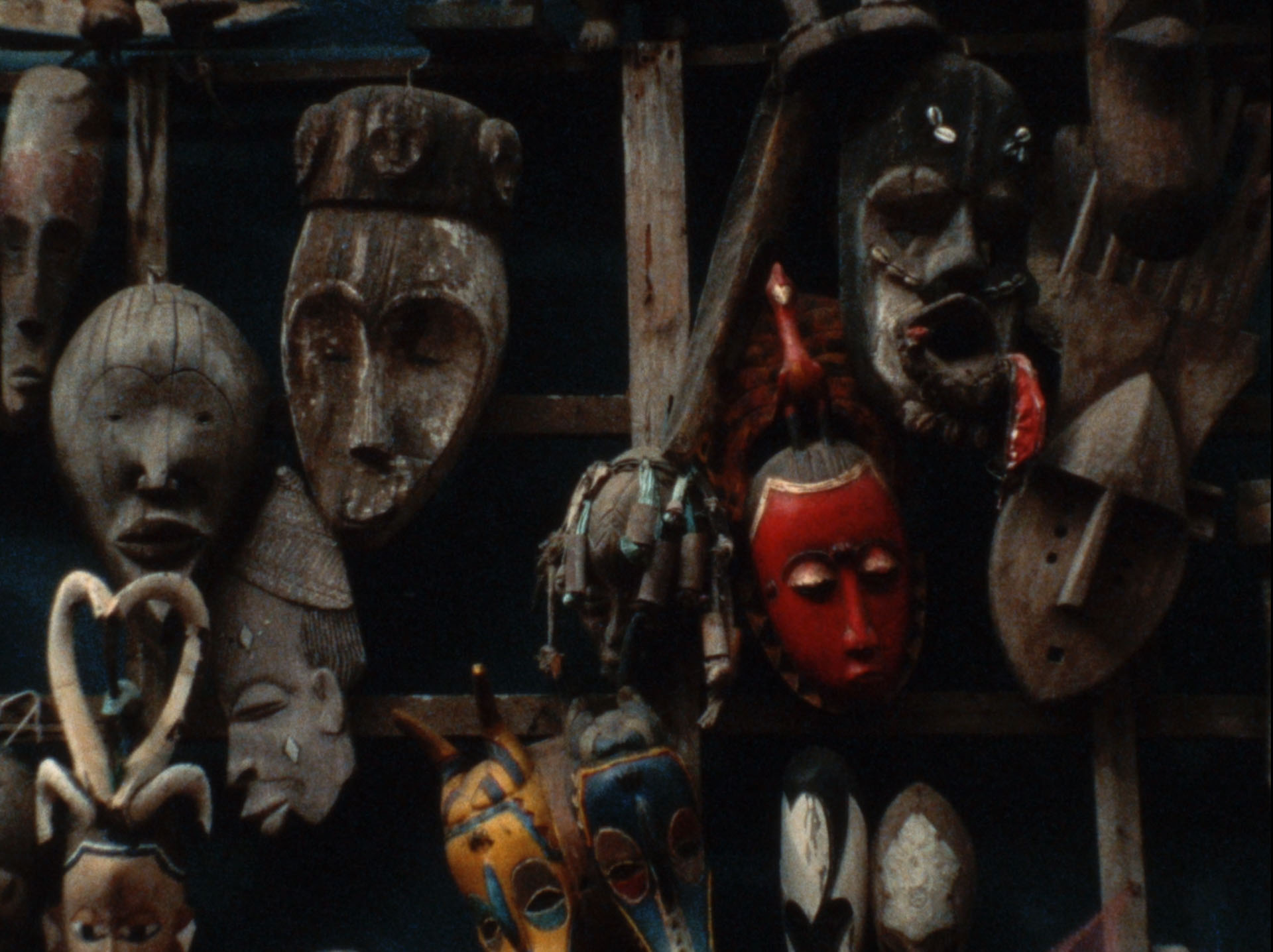
Immediately following the Whitney Biennial in 2024 Harris was given a retrospective at Anthology Film Archives in New York City – his first retrospective anywhere. This temple of film culture sets the standard for how to champion film artists and place them in a lineage of excellence. After all, it is not often that a film artist gets the opportunity for a career retrospective in the Maya Deren screening room. On this occasion Harris also presented a work in progress titled God Bless the Child, which he executed in the form of a performance lecture. In this piece Harris reveals intimate details about his childhood and family life while growing up in St Louis, which he scores to songs that have influenced him over the years. For an artist that has rarely included autobiographical notes in his works, now, after 25 years of activity, it would seem that he is turning the camera on himself – though that remains to be seen, because his most recent completed film, Speaking in Tongues: Take One (2024), is composed solely of archival footage.
To close out 2024, Harris was hired as Professor of Art at Princeton University. Now tasked with educating young artists at one of the elite institutions of higher education in North America, Harris has ascended to a position (and location) where one can imagine him becoming very influential on the next generation. Surely this new position will keep him busy, but in a career where he has made only 10 films and one installation in 25 years (though two of those films were made in the last two years) one can just hope that he will maintain his pace. A new Christopher Harris film is an event.
The year 2025 has been treating Harris just as good. In the spring he embarked on a European tour with his retrospective and his 16mm restoration. Stops included: Videoex in Zurich; Cinema Spoutnik in Geneva; Tate Modern and Barbican in London; Austrian Filmmuseum in Vienna (as part of the festival Vienna Shorts). On the occasion of screening still/here at Spoutnik in Geneva, an essential space dedicated to analog film and to radical politics and aesthetics, we recorded a lengthy post-screening discussion that was the basis for this interview. Topics covered included his early life in St Louis, his time as a graduate student in Chicago, his first steps in filmmaking, and a detailed consideration of the form and content of still/here.
Harris shot still/here in 2000 as his thesis film while a student at the School of the Art Institute of Chicago. It is a masterpiece of Black film art. I like to associate it with another masterpiece of Black film art: Killer of Sheep (1977) by Charles Burnett. Not necessarily because they share an aesthetic or an overarching thematic, but because they may very well be the two greatest student films ever made. A lot has already been written about Burnett’s work, which went unseen for decades (similar to still/here). Its legendary status as the standout film of the so-called LA Rebellion has long since been solidified. The moment has come to inscribe Harris’ film into the canon. Let this conversation then serve as a prologue.
Greg de Cuir Jr: I’m so glad we showed the 16mm print. It was the right choice.
Christopher Harris: Why do you think so?
GdC: I don’t know. You can just feel it. Film is living, breathing material – like the city, as was spoken in the film. It’s a living, breathing thing. It decays, it recomposes itself, it twists itself into new meanings, new spaces, new places. This is for those of us that are real film people, that really love film. We’re used to seeing things on digital, we’re used to seeing things on videotape, on DVD, online, whatever. But there’s nothing like a projector and celluloid. And an audience. There’s nothing like that combination. It’s a real séance.
CH: Yes, I agree. There’s nothing like it for me. That’s why I haven’t given up on working with 16 after all these years. It’s becoming increasingly difficult, and I still do it.
GdC: I have a lot of questions. Let’s start with the title of the film, still/here. You keep both words in lowercase. It’s almost like playing a composition in minor key. There is a lot about musicality in this film. Also, with the title you use a slash. Not necessarily to create a dialectic but to equalise or merge this concept of continuity or presence. Talk about the construction of this title and why you wrote it that way, and what this duality means.
CH: I was thinking about dialectic, not necessarily duality. I like that you used the word séance. Every film screening is a kind of séance, particularly if it’s on celluloid. It’s a kind of resurrection. It has a ritual aspect to it. Films do something. They summon.
‘Still’ has a double meaning. It could be something that remains, or it could be something that is static. Often static is associated with death – and yet there is a remnant. And that is something associated with an afterlife, I suppose. I’m very interested in Saidiya Hartman’s notion of the afterlife of slavery. ‘Here’ functions in multiple ways as well. The ‘here’ in cinema is always indeterminate. There is a here in the cinema, and a here up on the screen that is another place that is re-presented. All films have this alchemy.
GdC: Let’s talk about the beginning of the film, or what I like to call the preamble to the film. There’s a wonderful moment in the beginning that is a kind of condensed, complexly-edited sequence. In some ways it’s a manifesto in miniature for everything you want to do with the film – in terms of the views of the city, the camerawork, the cutting, the in-camera cutting. There are a lot of things happening. It’s a brilliantly-edited sequence, really one of my favorite parts of the film. Can we talk about technique a little bit? Was that all done in the camera? How did you conceptualise this sequence? It feels very much like free jazz, or what I would call freestyling.
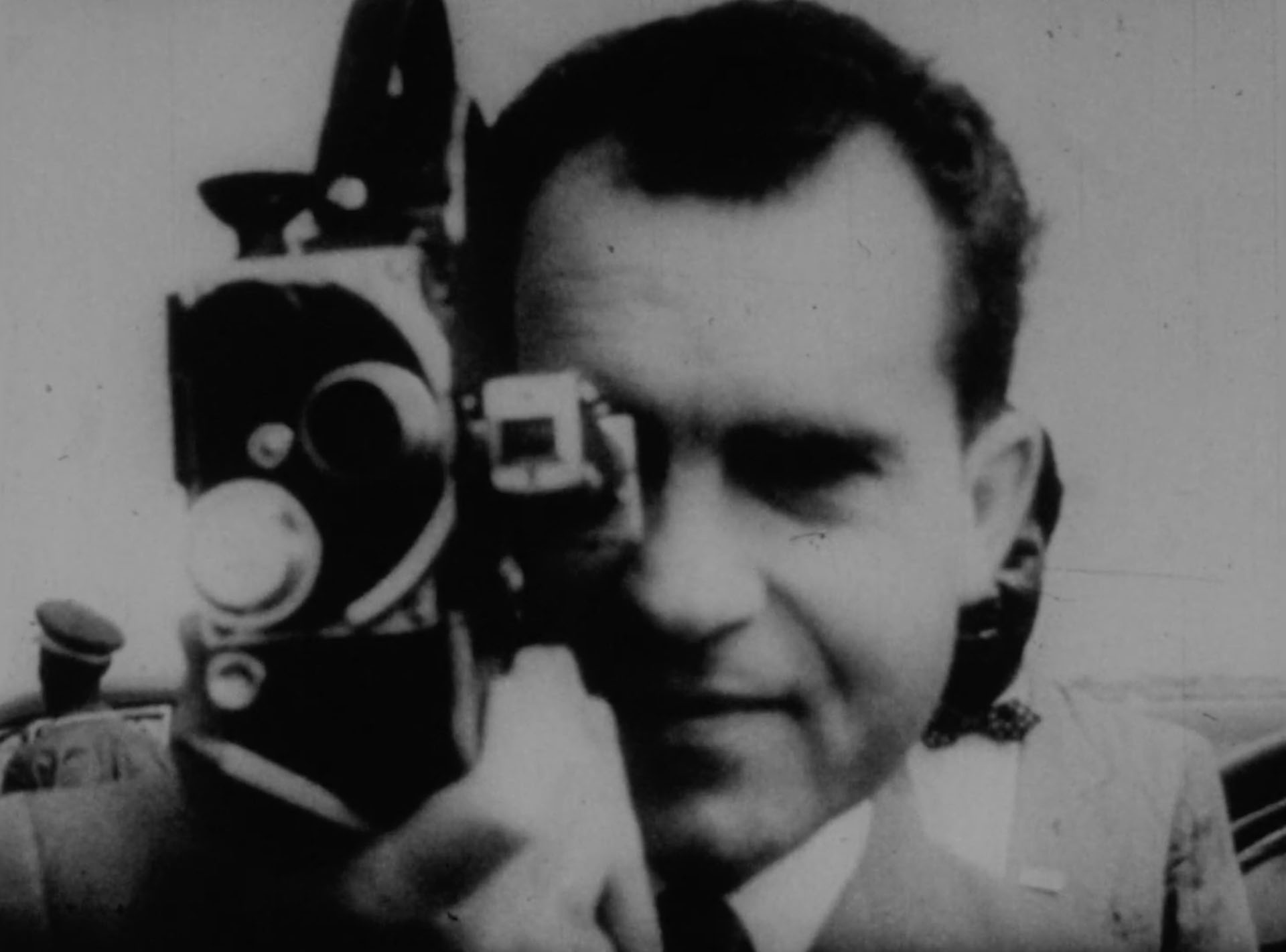
CH: The strategy came out of the limitations of the camera I was working with. I used two different cameras, one was an Eclair. The opening sequence was shot with a Bolex. You can outfit the Bolex with a 400-foot magazine, but every time I use it I have a 100-foot load, which is the standard load. One of the things a Bolex can do is shoot single-frame for animation. So that opening sequence is just a composite of single frames shot continuously. I’m only shooting two or three frames per image, at the outset. Then I’m increasing the number of frames. If you notice, the staccato visual rhythm that you see in the opening is rapid, then it becomes a little less rapid, almost legato.
Another thing about the Bolex is that it has a turret on it. You can attach three lenses to it, and you can turn the turret to change from wide angle to telephoto to a normal 25mm lens. I decided to turn the turret and change lenses while the camera was rolling. That’s rarely done. You usually change lenses between takes. I wanted to make the change in perspective part of the image itself. So the ideas for composing that opening sequence, at least the visual strategy, came out of the characteristics of the camera itself.
This is what I tell my students: use the characteristics and limitations of your tools in order to create the work. In other words, the work should be created out of the friction between your camera and yourself. Your ideas should come out of trying to work through what the camera can do. You play your camera like an instrument – like Roscoe Mitchell plays his saxophone. He thinks about the characteristics of the saxophone and makes sound and music out of that, as opposed to having a composition where he uses the saxophone as a mere tool to realise it.
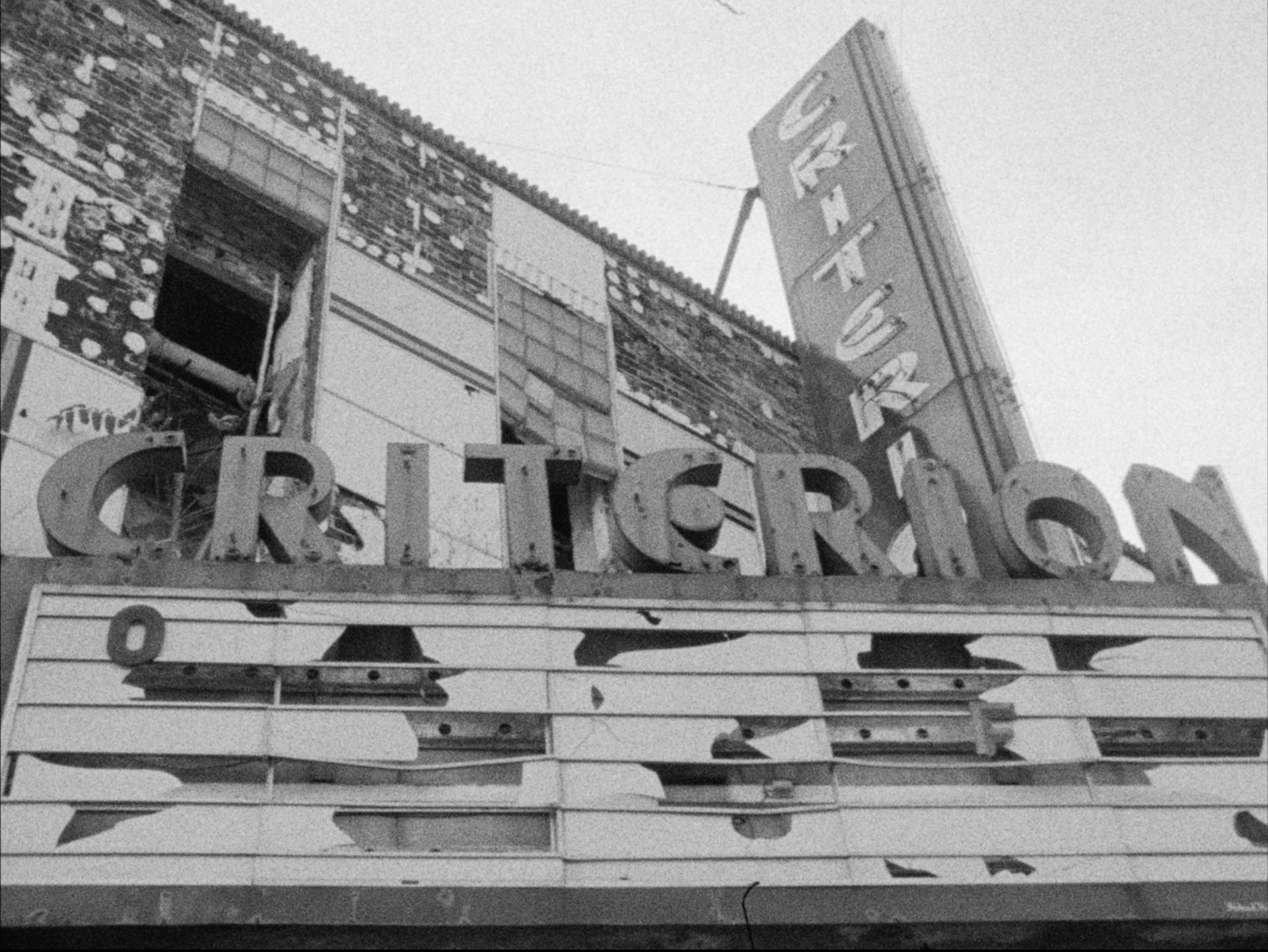
GdC: We’re gonna come back to jazz, because you do function under the influence of music and musicians. Certainly you play the camera like an instrument. Speaking of references and other artists, the opening spoken passage is what lays out the aesthetic and thematic principle of the film. That first voice we hear is Roy DeCarava, a historically-significant photographer who was first active during the time of the Harlem Renaissance. He is a legend for those who are interested in Black image-making, particularly in photography. How important is he to you, as an artist?
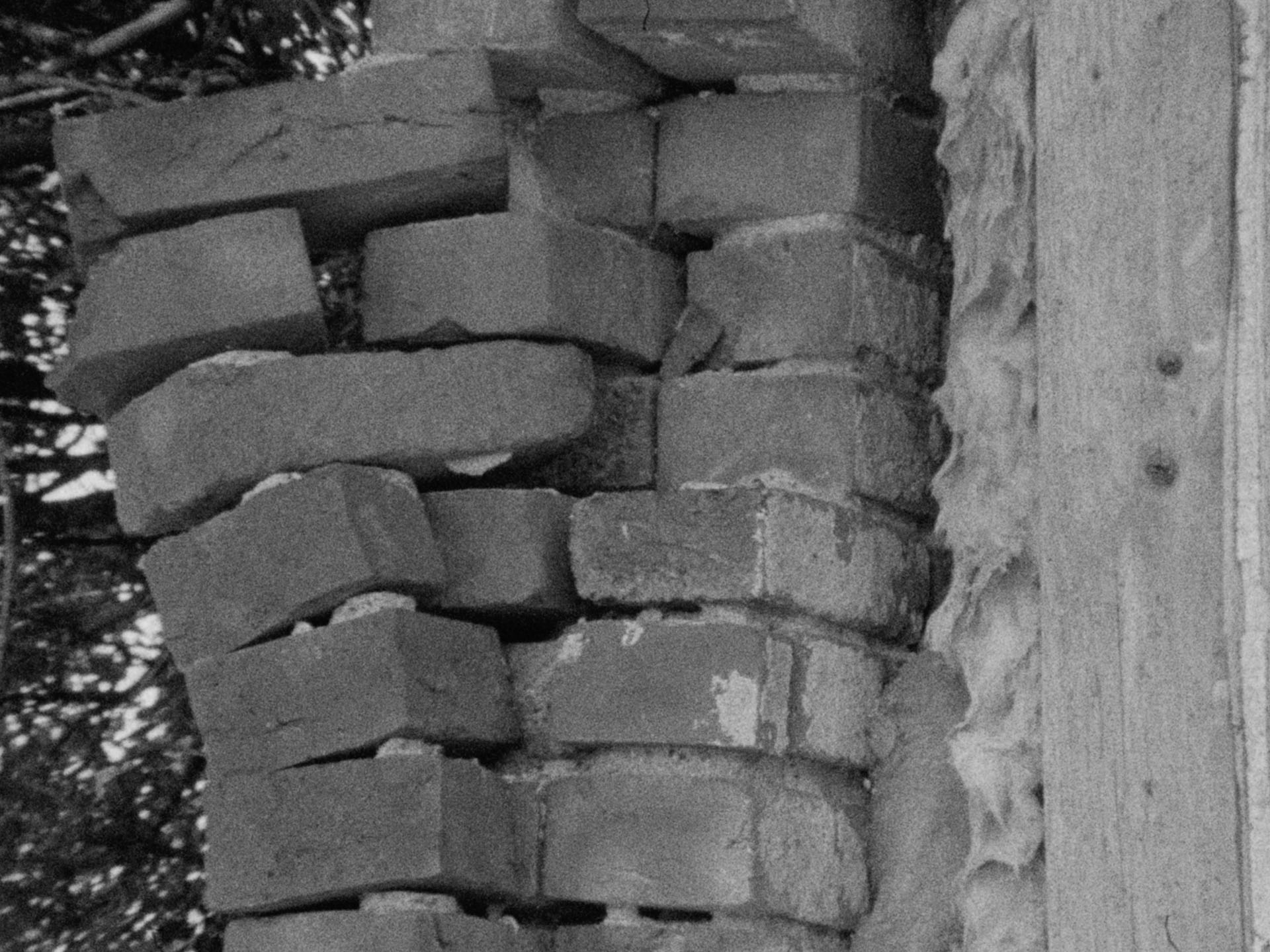
I’m also wondering how you came across that audio recording and decided to use it. Maybe you can speak a little about what he is saying in this audio fragment, particularly about the brick. We realise what the structuring motif of your film is at this moment – it’s the brick. It’s constructivist. Relate that brick, if you can, to the film frame or the film strip and its constructivist or deconstructivist principles.
CH: Roy DeCarava is a really important artist to me – so much so that I don’t really think about him anymore, because I’ve sort of assumed his significance. When I encounter his work in museums and galleries it reaffirms for me his use of darkness. The thing that struck me about his work is his use of shadow. Shadow becomes negative space in the image – but not negative space as absence, rather as potentiality. The way he shot in low-light situations was tremendous and incredible.
You said he was active in the Harlem Renaissance, but he was active all his life, through his late 80s. I don’t know how long he lived. I recall going to hear him talk in St Louis at Washington University, a few years before I went to graduate school. It was a packed auditorium, maybe 5,000 people there. The source for that audio came to me through the Duke University archive. I can’t remember the name of the institute, but my friend and roommate while I was in Chicago, Joel Wanek, who is in the credits of the film, understood from talking to me that the interview might be important. He was working in Duke’s archive, and he gave it to me. It became immensely important for the film, because as you said, it’s the prologue to the film.
DeCarava talks about there being no machine that can lay bricks, that you can only lay bricks by hand. For me, the idea of touch and traces of visible labor in the city are important. The bricks themselves are not so important to me as the fact that they’ve all been touched. There are hundreds of thousands of bricks that you see in this film. Every one of them was touched by hand. There were probably millions or billions of bricks that went into building the city, and all of them were touched at some point. All those spaces were touched and lived in. These kinds of domestic spaces are holy places for me, because they are containers and repositories of so many lives. The brick is not so important, per se, even though it seems central. The brick is a way of getting at other things.
GdC: Let’s stay with bricks. In your mind, when you were conceiving this film, you were making a postwar rubble film, as you say. You also say that when you went back to St Louis it looked like a bomb had fallen. That’s probably the only landscape you’ve ever seen like that, that wasn’t going through a war. We can of course talk about war in the United States of America and what it means in urban communities and Black communities, but that’s a different story.
So we have the rubble film, we can also talk about the city symphony film. That’s what I see in it. But it’s more like a city fugue. It’s also a wonderful example of an essay film. There’s an argument in this film, sometimes it’s explicit, about housing, about lives lived. So we have an interesting genre pastiche happening in this film. Talk a little bit about your influences in terms of genres, and how you put those together.
CH: I do think it’s a postwar film, actually.
GdC: I don’t know about ‘post’!
CH: Post might be too much! It’s an ongoing war film. It’s the afterlives of slavery. There are other ways to bomb a community. You don’t need to drop ordnance on it – you can drop policy on it. That’s what happens to the Black community in the United States. Policy is dropped on it every day, in order to attack and kill it. This film is post-battle, the aftermath of one installment of the ongoing war on Black people in the United States.
I was thinking about Rossellini’s film Germany Year Zero. I was thinking about how Rossellini uses this small boy to guide you through the rubble – the actual rubble of postwar Germany. These aren’t sets, they are places that were bombed by the Allies a few years earlier, and the city is still in ruins. And Rossellini says, I’m going to tell a story about this family that’s trying to survive, and I’m going to follow this boy, and the camera is going to document the ruins by following him, ostensibly in a narrative. I was inspired by that. Initially I wanted to have characters in the film. Not in a classical narrative but more of a pastiche, maybe inspired by Godard. Like when he used Lemmy Caution in Germany Year 90 Nine Zero. Then I realised I didn’t need characters and that the spaces were strong enough by themselves, and that they told their own story.
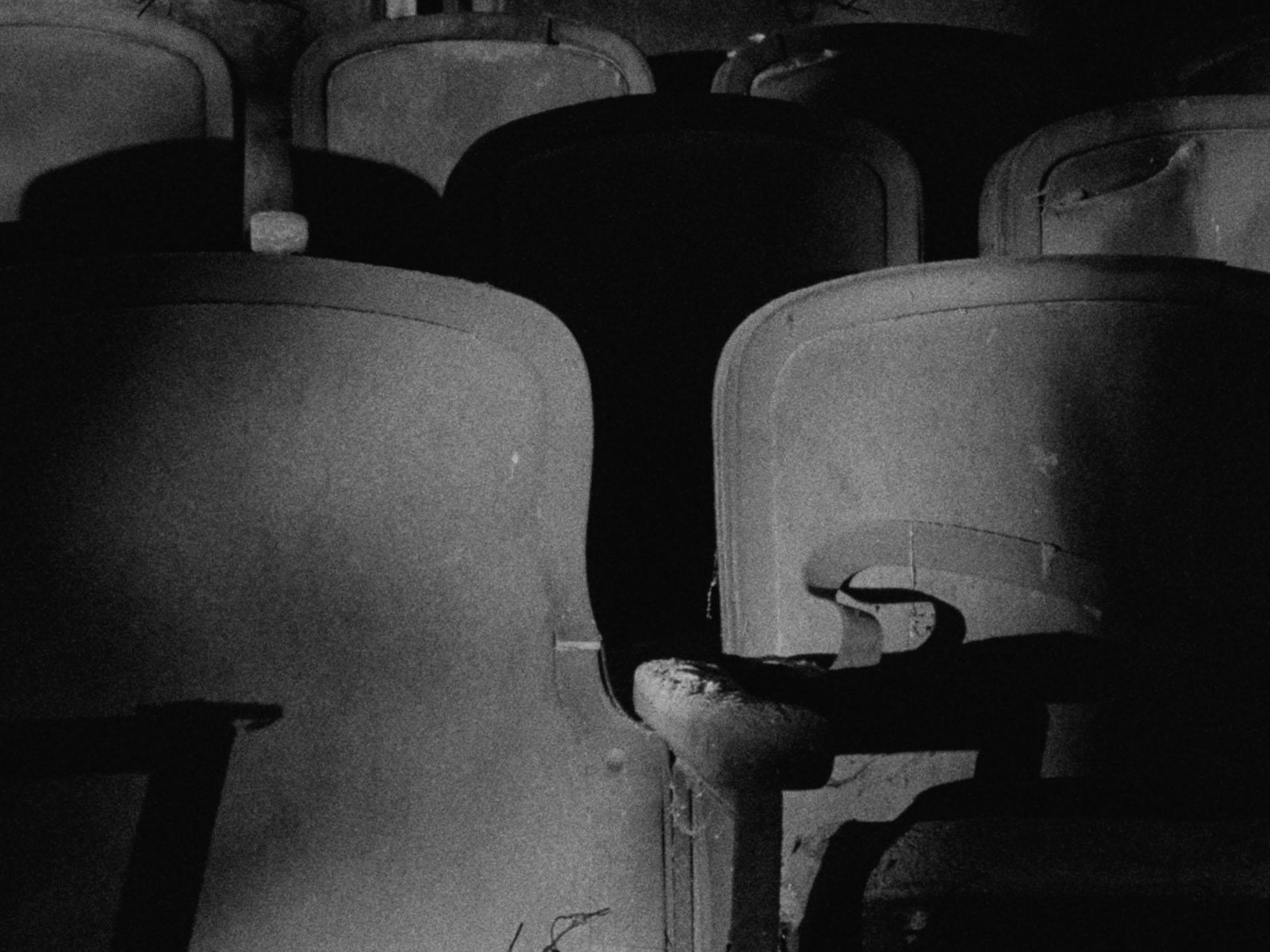
The first important decision I made was that I would not focus on people in these spaces. The people would be there sonically, but they wouldn’t be there visually. The reason I decided that was because at the time critical discourse around Blackness was heavily invested, overinvested – and in my opinion overdetermined – by embodiment. The idea of Blackness was inseparable from embodiment. It became reductive, in that Black people were reduced to their bodies. I wanted to make a film that flew in the face of that. Now, it’s much more common to think about Blackness conceptually, in varying ways that have nothing to do with embodiment. At the time, nobody was doing that. There was no critical discourse about Blackness that went beyond embodiment. That was an important part of my decision-making process.
GdC: Let’s talk about music a little bit. We have to talk about the score. Tatsu Aoki is the bassist that provides the music. The more I hear it, the more I love it. It’s becoming one of my favorite scores in any film. Tell us a little bit about this particular bassist, and how you came to select this particular track. It wasn’t composed for the film, it wasn’t played for the film. As with other things in the soundtrack, you appropriated it, cut it up, mixed it and laid it the way you needed it.
CH: It wasn’t appropriated, it was actually given to me by Tatsu. Tatsu Aoki is a filmmaker and a musician – an experimental filmmaker and a jazz bassist, living in Chicago. He was teaching at the School of the Art Institute of Chicago when I was studying for my MFA there. I was looking around for some music for my film. As an aside, at that time, having music in your film, if you were an experimental filmmaker, it was sort of déclassé. It was seen as too manipulative, because you were using music to make people feel something. I just said fuck it, I’m gonna put music in my film! It was needed.
Very stupidly and naively, I asked Tatsu if he would mind improvising something on the bass to my film. I groan when I think of that now, because I’m a teacher, and if a student asked me to do something like that for their film it would be funny, because they have no idea how busy we are. There’s no time to do that stuff. He was very gracious. He gave me some CDs and said, “If you like any of this music you can take anything you want.” It was a very gracious way of telling me to bug off!
It’s undeniable. That’s the right music. I don’t think he could have improvised something better than that. I don’t know what I would have asked him to do anyway. It was fortuitous.
GdC: I love his music. I love what you selected and how you use it. But I also want to talk about the sound design of the film, which for me is a masterwork of musique concrete. We have the bells, we have the steps, the rings, the dishes, the voices. There is a circularity to the way you use certain sounds. There is a sort of absurdity to the way we hear things continue, and then how you discontinue them. You push things to the limit. Talk about yourself now as a musician, and how you use these sound effects in a musical way.
CH: I had a bank of sounds. I knew what sounds I wanted to use. I collected all of that audio, and I collected all of the images. That’s how I work, I collect voiceovers, sound effects, and imagery first. I know what the pieces are. I never know how they are going to assemble together. It’s a lot of trial and error. If it works, you feel it. If I don’t get a rush the first time I see a sequence, or a sound-image relationship, it’s not right. It has to lead me forward. If something is working I keep following that direction. I can usually tell if I’ve hit a dead end.
My process is really intuitive. I like to put things in a constellation with one another. For example, the sequence with the two staircases next to each other. You see it in shadow, and then the sun comes out, then the clouds cover the sun. You can hear a basketball game on television. While watching it this time I heard that one of the teams was Delaware. I was kind of curious who was playing. I wish I could find that game somehow! It’s such a throwaway, and that was exactly the point. I didn’t put an iconic basketball game on. It was just a Saturday afternoon in a hotel room in Chicago, the TV was on, and I thought, oh, I want television sounds! I just didn’t know what it would be. It’s perfect, for lots of reasons we could talk about.
We adjusted the sound live in the mix. We did a live mix. I think we did a rehearsal mix, and then the mix used in the film is the second take.
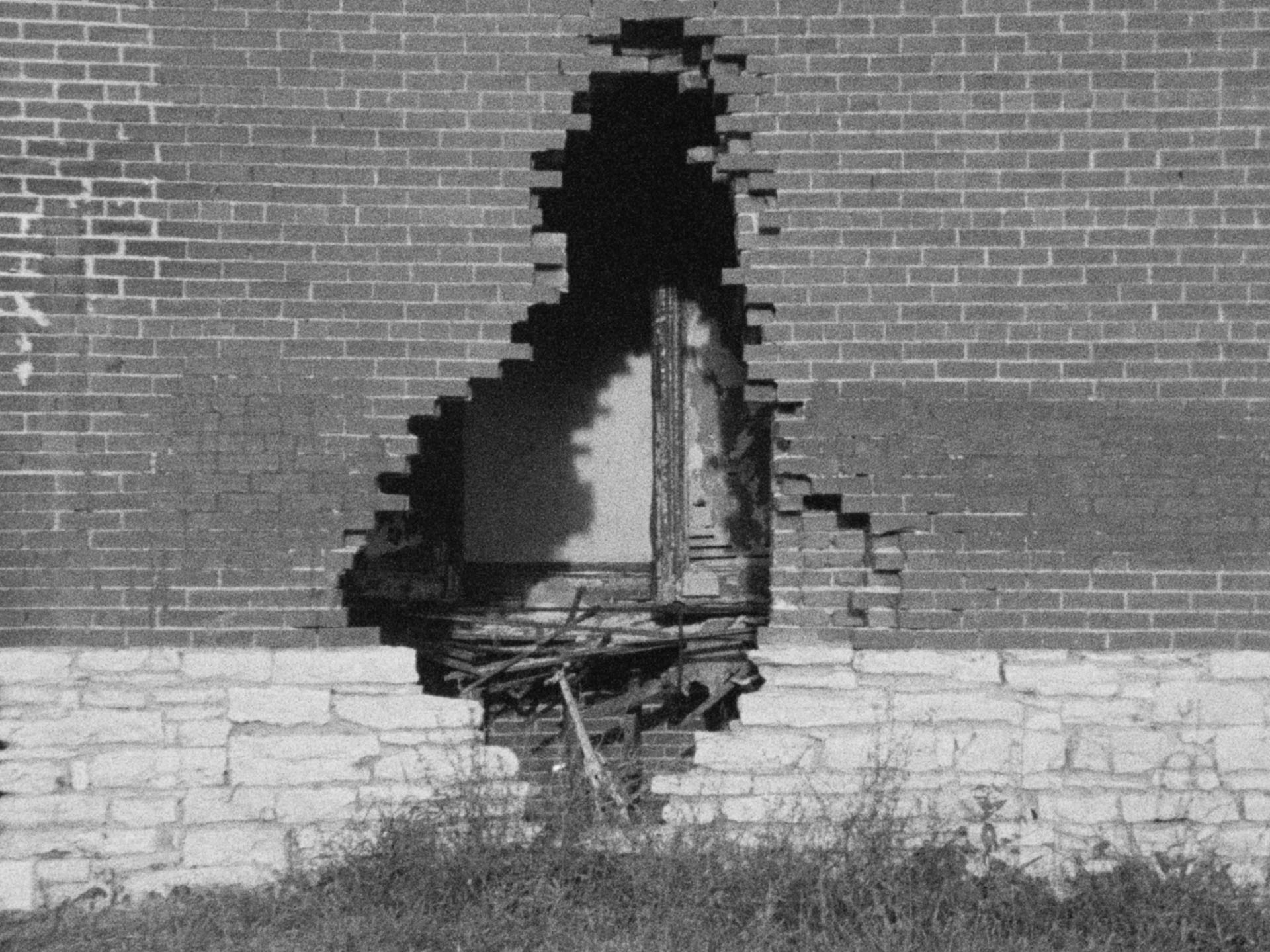
GdC: Earlier you said that you utilise the camera, including all of its limitations, and you make your art out of that. It has to go into the work – that is the work. So, 16mm is a format you are dedicated to. It’s a format that you love, and obviously you have been using it since the beginning of your career. In this film we really see a deep love for the material – we actually see the material. We see the film strip, we see the edges of the frame, we see the sprocket holes, we see the light leaks, we literally see the film slip off of the screen, and then back into it. It’s a panorama of all the different techniques and methods you can use to express the materiality of film. And when we look at this film, we see how the film falls apart and comes back together before our eyes. It is a mirroring of the city, and how the city has been disassembled and reassembled before our eyes, for all the reasons you said before.
Talk about 16mm as a format and how you came to it immediately with this deep love and this deep knowledge. You must have received a great education at the School of the Art Institute of Chicago. Because you’re using the film camera and the film strip like a maestro already, in a thesis film!
CH: There’s so much to say. My mind is racing! I wanted the seams to show. I’m kind of an unrehabilitated vulgar modernist, in a way. I know we’ve gone through postmodernism already, and now we’re in a digital age. We’re supposed to be thinking about AI all the time and nothing else. I’m really dedicated to some of the values and principles of modernism, in a couple of ways. One thing you can do when you make work is to use the medium itself as a way to articulate a feeling and/or an idea. For me, the materiality of 16mm allows me to do that.
This is a film that is coming apart at the seams. Much like the spaces it documents, the film itself is a kind of ruin. The reason I’m able to produce the film as a kind of ruin is because of the characteristics of 16mm film. When the film rolls out you see the image gradually become blown out, because it is moving more slowly through the camera, and therefore it is getting overexposed, and that’s why you see those light leaks. It’s rhythmically slowing down at the end of the roll. I know that’s going to happen every time I stop the camera, so I’m courting that. In other works of mine the light leak is a constituent element of the film. One of the things about film is that it is a time-based medium, so duration becomes part of the grammar of the film as well. The idea of time is embedded in the ruin; the ruin is a liminal space between the past and the present, just like a film image. A film image is a liminal space between the past and the present. It’s a reversible space – it is both past and present at the same time. That’s the idea of still/here, to go back to the title and the slash. A film image is always the past re-presented.
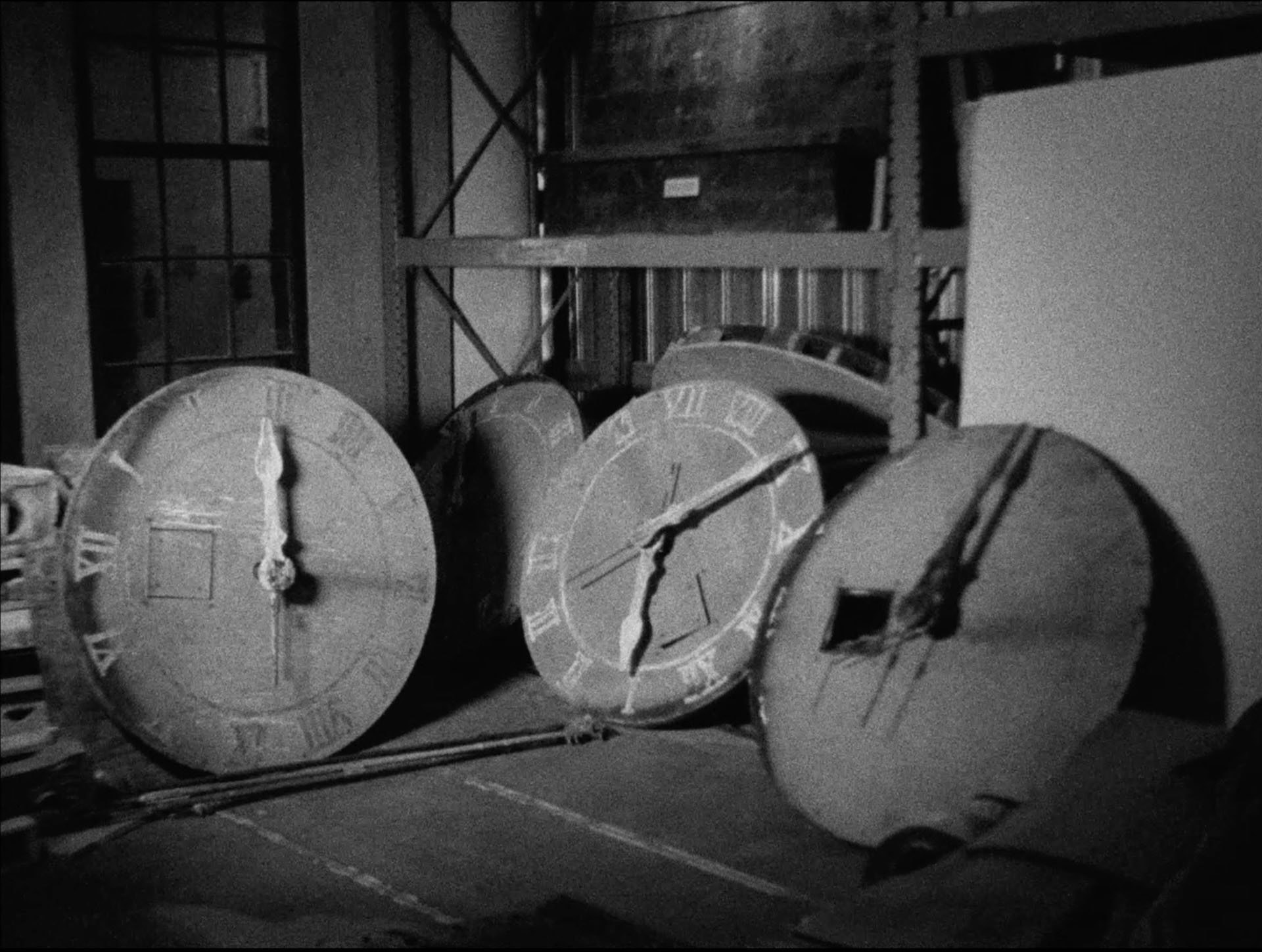
Time had to be a constituent element of the film. I had to foreground that, because ruins are temporal spaces. What I hope is that somehow you as the viewer are also ruined in watching the film, that there is something in your spectatorial address that is also coming apart when watching the film. I wanted to make a film that broke you up into fragments and pieces in different ways as a viewer. One of the ways the film does that is by the discontinuity or division between sound and image. The sound and image don’t coalesce. They are at odds with one another. They split your consciousness. Your ear is separated from your eye.
Offscreen space is particularly important. It isn’t clear where the sound is coming from in still/here. People have told me they were wondering or expecting that someone would walk into the frame from offscreen at any moment. I actually thought about that and toyed with that, but decided not to do that. I thought that would destroy something.
GdC: You’re very careful with the depiction of bodies in the film. The film is the body, the buildings are the bodies, but the film is very hesitant to expose any living bodies. We very rarely see outlines of figures and bodies.
CH: Figures exist on the periphery of this film.
GdC: Yes. I want to mention just a few more things. The final spoken passage in the film. This beautiful passage about dreams and memories and the liminal space between them. This is where you finally get autobiographical. This is your story, talking about St Louis as your city, as your return, as your feeling, as your dream. What was the passage for you between dream and memory? As you were constructing this film, did you start from documentary and wanting to get to the facts, or did you start from dreams?
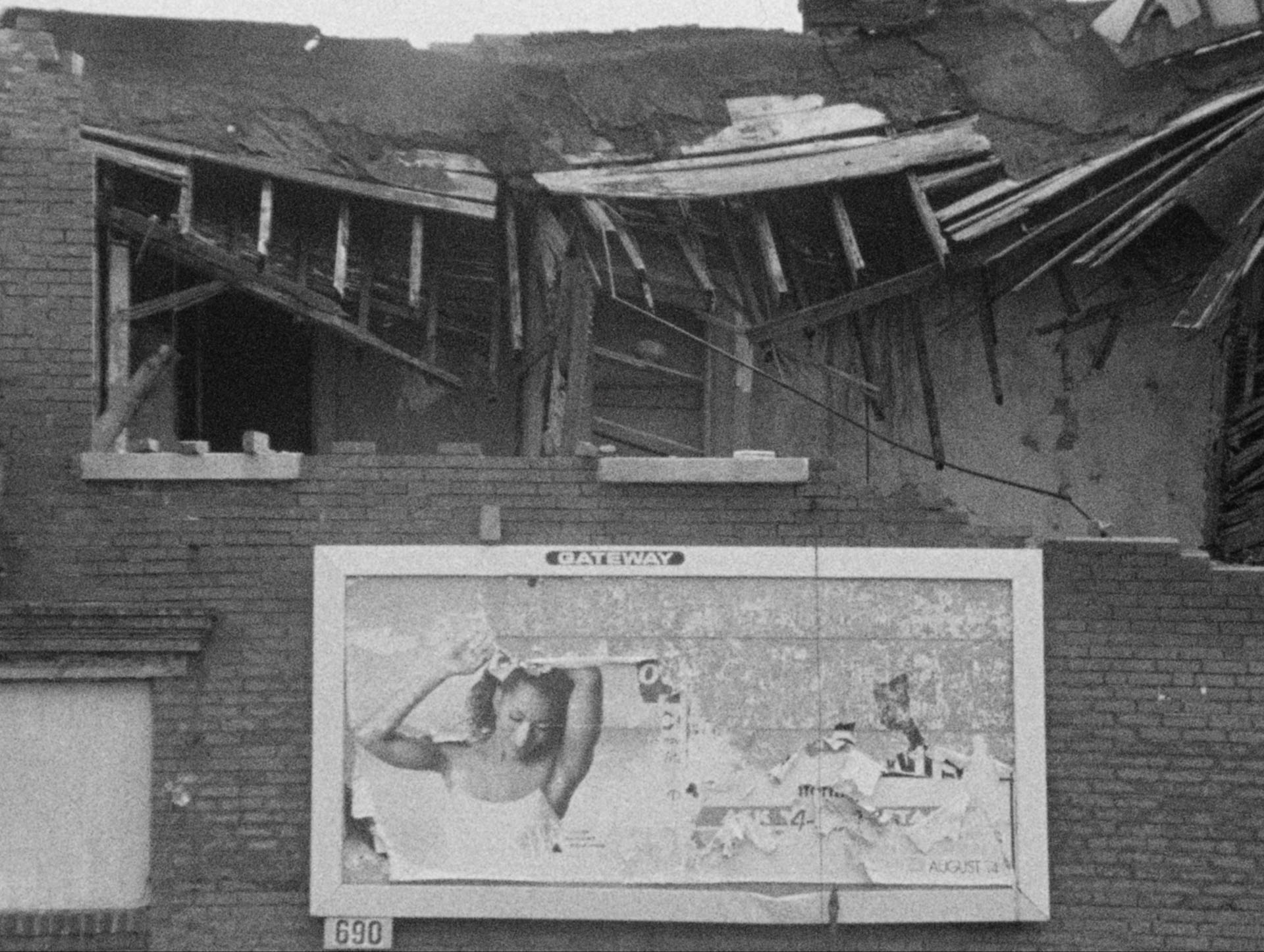
CH: I wanted this film to be a document – and it is a document. It’s a portrait of a certain sector of the city, at a certain time in history, at the end of the twentieth century. This is post-1980s, which in US history was the notorious Reagan era, which was a twelve-year era. He had two four-year terms, and then he was succeeded by his vice president who extended Reaganism another four years. I came back to St Louis immediately after this, during the neoliberal Bill Clinton era. I left in 1980 and did not come back until the early 1990s. When I left, North St Louis didn’t look like that. So for me it happened in an instant, but it was a twelve-year period. That was my impression. It was like a jump cut for me.
So what I wanted to do was make a film that embedded the emotions of what I experienced into its form. I wanted the viewer to feel some of what I felt. It isn’t a fact, it’s a feeling. I want to traffic between feeling and fact, because the facts produce the feelings. Everything about the dream and the memory is indeterminate, because I often cannot distinguish between a memory of something I lived and a memory of something I dreamed. Sometimes it’s ambiguous to me. It’s more like feelings and moods and impressions.
The story about the dream is definite. That’s a dream I actually had after I came back to St Louis. I dreamt about being a little boy in my bed at night. I slept in the attic and my parents’ bedroom was directly below mine. My father snored very loudly. His snoring woke me up one night, and I listened to it. The house was black, I was a little uneasy in the dark. I was probably 7. I laid there listening to him snore for a while and it was something incredibly comforting. The sound of him snoring lulled me back to sleep. I never thought about that moment again for the rest of my life until I had a dream about it after I returned to St Louis. I remembered the dream, not the actual moment.
GdC: Let’s talk about the life cycle of the film. When it was first made it was rarely shown. It took a while for it to catch on. At that time films weren’t circulating so easily. We weren’t in this hyper-connected world that we’re in now, in terms of online networks. But also, you weren’t really in the film festival world, you weren’t really in the art world. You probably weren’t really shopping your work to curators. The point is, it took a while for the film to catch on – and then it caught on, in a big way. It’s been rejuvenated. It’s now in a restored print. The film is traveling the world to all the biggest institutions, art spaces, and cinemas that you can imagine. It’s slowly being recognised as a masterpiece of contemporary Black film art.
So this is a tough question, maybe the toughest of all. How does that make you feel? I know it makes you feel proud and happy, but this is your first film, the one that’s been with you the longest. Talk about that feeling, but also, what do you see for the future of the film? Is there still a long way to go for this film? What roads do you think it still needs to travel?
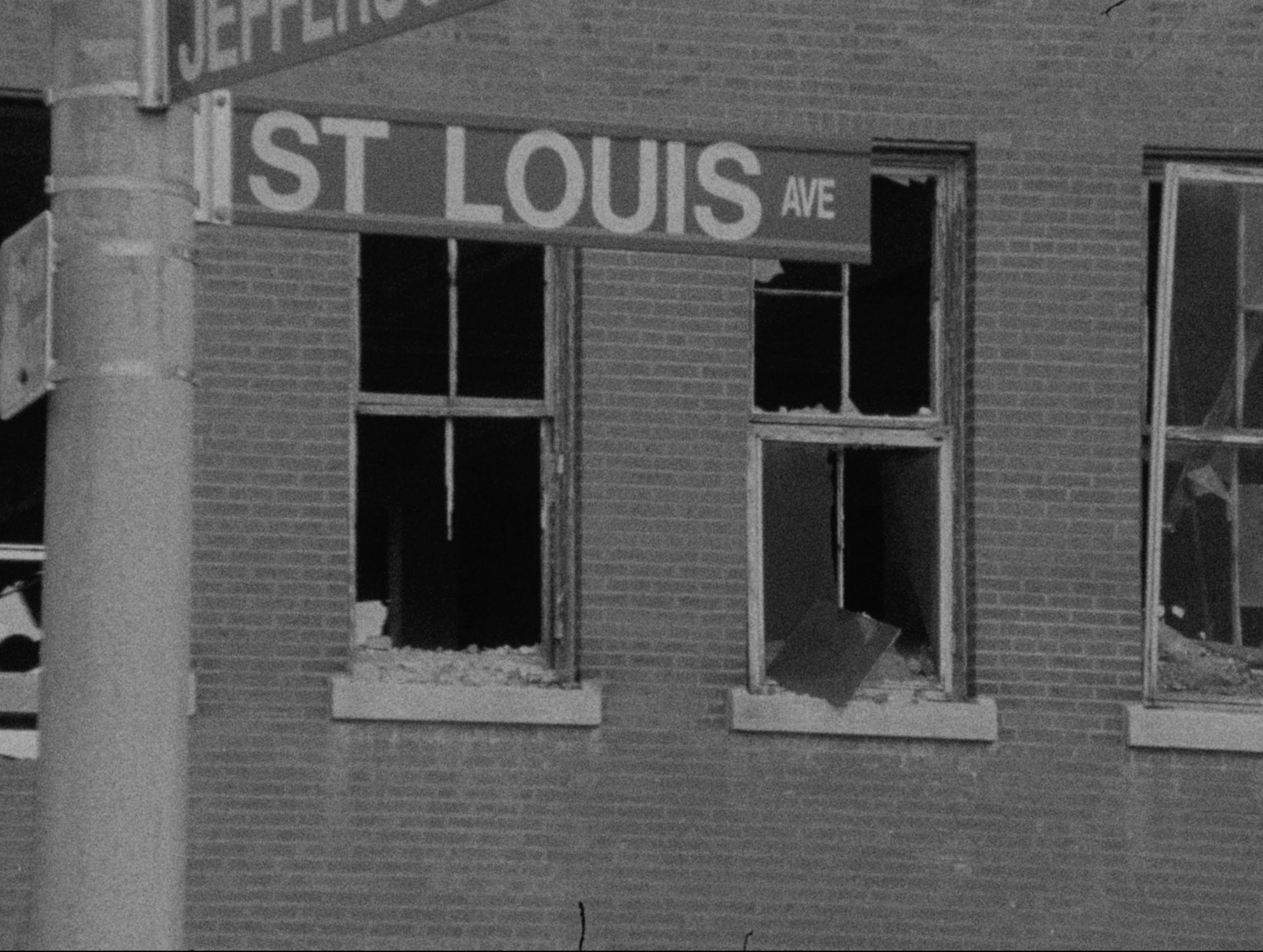
CH: I really do think there is so much in that film to be unpacked. I would like to see more critical writing about the film. This is my hope for the future of the film. I rarely watch the film. These last two screenings I’ve sat in the audience and watched it. When we watched it in Zurich it was kind of refreshing, because I hadn’t seen the film all the way through in a really long time. I was moved by new things in it.
So my fantasy is that there will be a collection of essays about the film, by writers who I really admire and trust with it. I ask people to write about it. I asked you to write about it! You know, there was an eight-year period where this film never screened once in public. But from the beginning it always had its partisans. A small, dedicated following is what the film had. Then there was the Flaherty Seminar screening, a packed house of a few hundred people. These were programmers, critics, and writers who saw the film. That is what elevated the film. It raised the profile of the film in the United States from down here to way over my head.
One other thing about the film that I’m really grateful for is that it actually shed light on the rest of my films. My body of work is getting exposed more, to a large degree because of this film. This film is unique in my body of work in that it’s the most personal thing that I’ve made. Other films have not dealt directly with my personal life in the way that this film has. That monologue near the end is very important to the film and its meaning. At the same time, it is a film very much about the social. It’s not about one person. It is inherently about a community.
I’m inspired by this film. I feel ambitious when I watch it. I wonder if I can make something that will rival this film. I want to make something else that is personal and large in scale. Most of my other work is relatively short. I would like to try to make a very different film, formally and conceptually. That’s an ambition. You’re always competing against yourself and trying to outdo yourself as an artist.
Interview by Greg de Cuir Jr
Disclaimer: This page is for your personal use only. It is not to be duplicated, shared, published or republished in whole or in part, in any manner or form, without the explicit permission of the publisher, author, and copyright holder(s) of the images.